
In 2026, online gambling has entered the Year of the License. Governments across the globe are tightening rules around online casinos, betting sites, and real-money gaming platforms. Instead of fighting a losing battle against offshore gambling, regulators are choosing to license, tax, and monitor it more closely.
For players, this new era of regulation is both empowering and risky. You now have more legal protection and clearer rules, but the landscape is changing so fast that it’s easy to fall foul of tax obligations, payment restrictions, or jurisdiction-based bans. If you enjoy real-money online casinos in Brazil, Canada, or India, understanding the law in your region is now essential, not optional.
This 2026 guide breaks down the legal status, tax rules, and payment habits in three of the world’s most explosive online gambling markets.
1. Brazil: The Rise of the “Bet.br” Era
Brazil has officially evolved from a gray online gambling market into one of the most tightly regulated environments in the world. As of early 2026, the Secretariat of Prizes and Betting (SPA/MF) controls who can operate, how they are licensed, and what players can legally access

Is Online Gambling Legal in Brazil?
Yes, online gambling is legal in Brazil in 2026—but only on properly licensed platforms. To stay on the right side of the law:
- Look for federal licenses and authorized operators.
- Legitimate sites typically use a .bet.br domain, signaling local authorization.
- If you are playing on a .com or .io site without Brazilian approval, you are essentially in a legal gray area with no consumer protection.
Brazil Online Casino Tax Rules in 2026
Brazil takes online gambling taxation seriously. For 2026, there is a 15% tax on net winnings for players. This means you should track your total wins and losses carefully instead of assuming everything you withdraw is tax-free.
On top of that, there is an ongoing debate around “CIDE-Bets”—a proposed 15% tax on deposits themselves, not just on net wins. While this is not universally in force yet, the direction is clear: the overall cost of playing at Brazilian online casinos is increasing. Players should monitor deposit slips and transaction receipts to understand how much of their bankroll goes to tax and fees.
Key Online Gambling Rules in Brazil (2026)
- No credit cards are allowed for gambling payments. Approved methods include PIX, debit card, and bank transfer (TED).
- Biometric verification is becoming standard. Facial recognition and selfie checks help platforms comply with anti-fraud and anti-money-laundering rules.
For safer play, always choose regulated Brazilian online casinos with local licensing, clear payment policies, and transparent tax information.
2. Canada: The “Ontario Model” Versus the Rest
Canada remains a patchwork market where online gambling laws and licensing vary by province. The federal government allows provinces to regulate iGaming independently, which creates very different player experiences across the country.
Is Online Gambling Legal in Canada?
The answer depends on where you live:
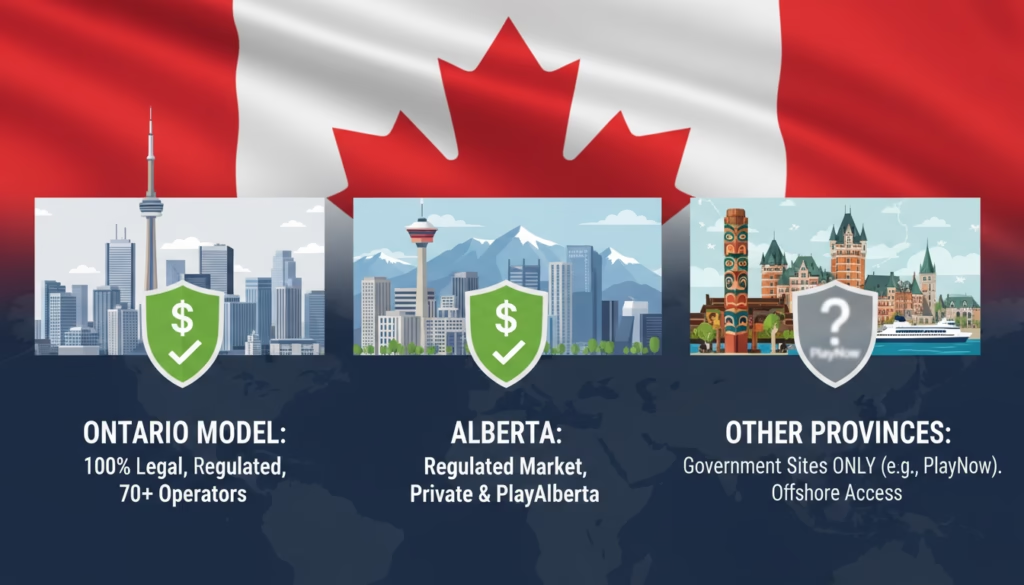
- Ontario: Often referred to as the “Ontario iGaming model,” this is the most advanced and open market in Canada. With 70+ licensed operators, Ontario offers a fully regulated, legal, and competitive online casino ecosystem.
- Alberta: Inspired by Ontario’s success, Alberta launched its regulated online gambling market in late spring 2026. Private operators now compete alongside the government-run PlayAlberta platform.
- Other Provinces (e.g., British Columbia, Quebec): Government-run platforms such as PlayNow remain the only officially legal options. However, many players continue to use offshore sites, typically without direct legal penalties, but with less protection.
Do You Pay Tax on Gambling Winnings in Canada?
For most casual players, online casino winnings in Canada are tax-free. The Canada Revenue Agency (CRA) usually only taxes gambling income if you qualify as a professional gambler, meaning:
- Gambling is your primary or one of your main sources of income.
- You treat it like a business (consistent strategies, staking plans, record keeping, etc.).
If you only play recreationally, there is generally no tax on casino or sports betting winnings. However, serious or high-volume players should seek professional tax advice to avoid disputes with the CRA.
3. India: The 28% GST Shockwave
India’s online gambling and real-money gaming sector has undergone dramatic change between late 2025 and early 2026. While past debates often revolved around “skill vs chance,” the conversation now largely focuses on tax and compliance.
Is Online Gambling Legal in India?
The short answer: it’s complicated.
- The Promotion and Regulation of Online Gaming Act 2025 sought to restrict or ban many forms of “money gaming,” especially where chance is dominant.
- Enforcing this is heavily state-dependent, so the legal status of real-money gaming can vary from one region to another.
- Several states have taken an explicitly hard stance against online betting.
Banned or highly restrictive states include:
- Telangana
- Tamil Nadu
- Gujarat
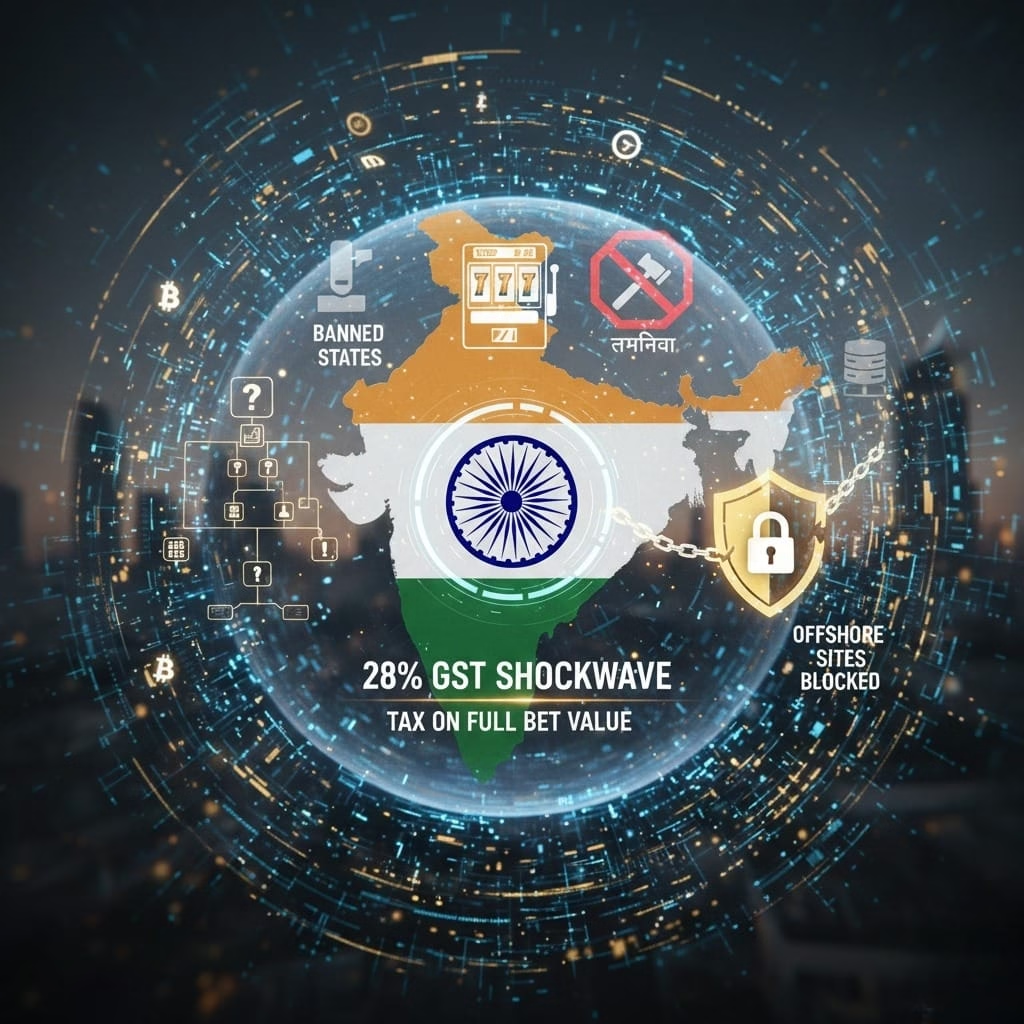
At the federal level, there is also a strong push to block offshore betting platforms. Banks, UPI apps, and payment gateways are required to identify and block transactions linked to unauthorized gambling sites. This financial blockade makes it harder for players to fund or withdraw from offshore online casinos, even if those sites still accept Indian users.
How Does the 28% GST Affect Indian Players?
The 28% Goods and Services Tax (GST) is applied on the full face value of the bet, not just on the operator’s commission or net win. That means:
- If you wager ₹1,000, the tax is calculated on ₹1,000 right away.
- Your effective playable amount and long-term return shrink noticeably.
This high GST rate fundamentally changes the economics of online gambling in India, making it more expensive and reducing the potential profit margin for frequent players. When optimizing content, target phrases like “India online casino GST 28%,” “legal online gaming in India 2026,” and “money gaming tax rules India.”
The VPN Trap: Why “IP-Hopping” Can Cost You Everything
With tighter local rules, many players are tempted to use VPNs to access foreign gambling sites. In 2026, this is one of the riskiest moves you can make as an online casino player.
Modern casinos rely on:
- Advanced geolocation checks.
- Deep Packet Inspection (DPI).
- AI-based fraud detection tools.
These systems can often detect VPN usage, mismatched IP locations, and suspicious connection patterns.
How VPN Use Can Backfire
- KYC Conflicts: When you try to withdraw significant winnings (for example, $5,000 or more), casinos must perform “Know Your Customer” checks. If your documents say Brazil or India but your login location is consistently another country, your account may be frozen.
- Voided Winnings: Most online casinos explicitly prohibit VPN use in their Terms of Service. If they detect it, they can close your account and legally confiscate your balance and winnings.
- Security Risks: “Free” VPNs frequently log and monetize user data. When you’re entering card details, banking passwords, or crypto wallet keys, routing traffic through an untrusted VPN is a major security risk.
Instead of relying on VPNs and IP-hopping, the safer strategy in 2026 is to use locally licensed online casinos that align with your country’s laws.
Final Thoughts for the 2026 Online Casino Player
The golden rule for 2026 is simple: stay local and stay compliant. Whenever possible, choose online casinos that are fully licensed in your jurisdiction, whether that’s a .bet.br operator in Brazil, an Ontario-licensed brand in Canada, or a compliant platform in an Indian state that allows money gaming.
You might pay a bit more through taxes or stricter verification, but you gain something far more valuable: reliable payouts, legal protection, and a regulator you can complain to if things go wrong.
The mindset of the modern online casino player is shifting from “How do I win big?” to “How do I stay safe and get paid?”. By respecting your local laws, avoiding risky VPN shortcuts, and using trusted, licensed platforms, you dramatically increase the odds that when you finally hit that life-changing jackpot, the money actually reaches your bank account