I’ve noticed lately that online casinos aren’t even pretending anymore.
Everything’s faster. Smoother. Cleaner. Payments feel instant, games load in seconds, and the whole experience? It’s borderline frictionless.
A few years ago, you had to try to gamble online. Now it just… happens.
And that got me thinking—if everything feels easier for players, does that mean casinos are making less?
Yeah, not even close.
They’re making more. Way more. Just not in the obvious ways people think.
So let’s break this down properly—no myths, no “house always wins” clichés. Just how the system actually works, and why it works so well.
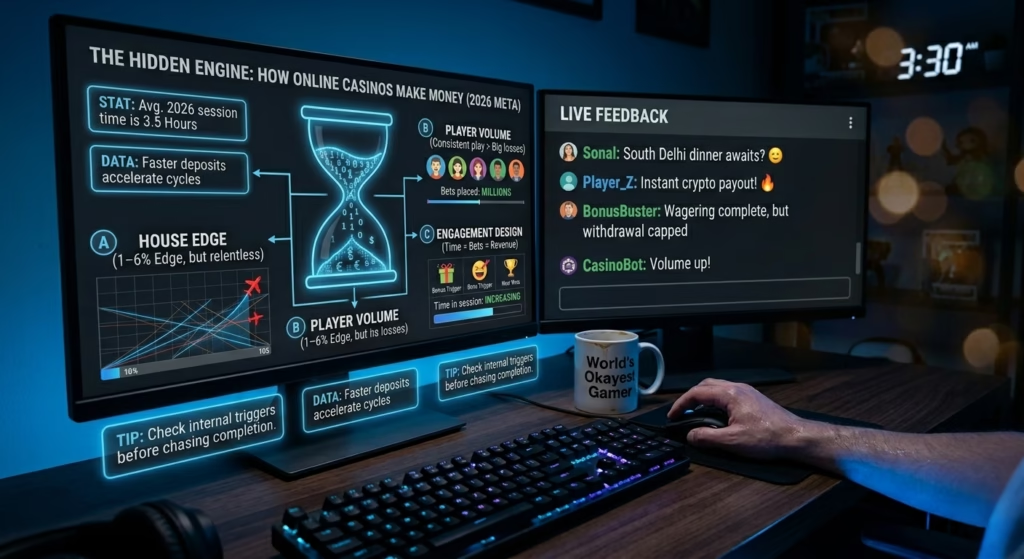
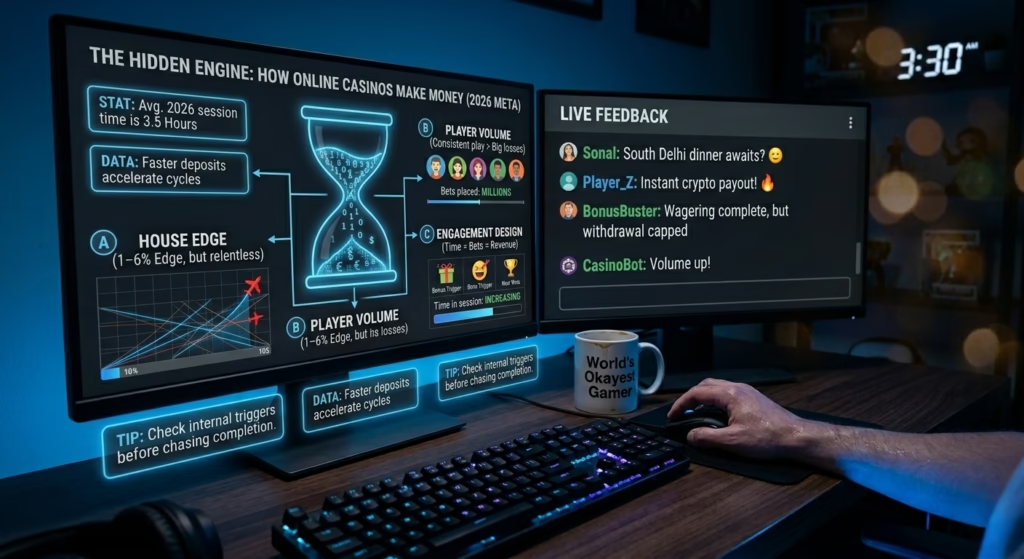
The Core Engine: House Edge (Small, But Relentless)
I remember when I first heard about the “house edge,” I thought it meant casinos were cheating.
They’re not.
Most games today operate under fair play gaming systems, meaning outcomes are random, audited, and statistically consistent. No rigging. No hidden switches.
But here’s the thing—fair doesn’t mean equal.
Every game is designed with a tiny mathematical advantage for the casino:
- Slots: ~2–6% edge
- Blackjack: ~1–2% (if played perfectly)
- Roulette: ~2.7% or higher
That sounds small, right?
It is. On one spin.
But multiply that across:
- Thousands of players
- Millions of bets
- Hours of play
And suddenly, that tiny edge turns into a steady revenue stream.
Vibe Check
Subtle power. It’s not about big wins—it’s about consistent, long-term advantage.
Volume Beats Everything (And Casinos Know It)
I’ve noticed something most players underestimate: casinos don’t need you to lose big.
They just need you to keep playing.
Let’s say:
- You bet $1 per spin
- You play 500 spins
That’s $500 in total wagering.
With a 4% house edge, the casino expects to keep around $20 from that session.
Not dramatic. Not flashy.
But scale that across thousands of players doing the same thing every day… and yeah, it adds up fast.
This is why modern platforms push engagement:
- Quick reload times
- Endless game libraries
- Seamless transitions between games
Especially with mobile slots 2026, where everything is optimized for speed and convenience, the barrier to “just one more spin” is basically gone.
Hot Take
Casinos don’t make money from big losses—they make money from consistent play.
That’s the real business model.
Bonuses Aren’t Generosity—They’re Strategy
I remember thinking bonuses were rewards.
They’re not.
They’re tools.
Bonuses—especially ones with wagering requirements—are designed to:
- Extend playtime
- Increase total bets
- Keep players engaged longer
Let’s say you get a bonus with a 30x wagering requirement.
That means you’re required to place 30 times the bonus amount in bets before withdrawing.
More bets = more exposure to the house edge.
Simple.
And even when players understand this, they still engage. Why?
Because bonuses change the feeling of risk.
You’re not spending your money (at first), so you play differently:
- Higher bets
- Longer sessions
- Riskier decisions
And that behavior? It feeds directly into the casino’s revenue model.
Vibe Check
Shift in mindset. It feels like a reward, but it’s actually a loop.
Game Design: It’s Not Just Math—It’s Experience
I’ve noticed that modern casino games aren’t just about outcomes anymore. They’re about how you feel while playing.
Lights, sounds, animations—everything is tuned to keep you engaged.
Slot games, especially, are built around:
- Near wins (almost hitting the jackpot)
- Frequent small payouts
- Bonus rounds that feel exciting
It creates a rhythm:
Win → lose → almost win → bonus → repeat
And your brain? It locks into that pattern.
This is why people stick around longer than they planned.
Even when the math is clear.
Hot Take
Casinos don’t just design games—they design attention.
And attention turns into time. Time turns into bets.
Live Games and the Illusion of Control
I remember when live dealer games started getting popular. It felt like a shift—more transparency, more realism.
And to be fair, they do offer a different experience.
But here’s the catch:
Even if you’re using a solid live dealer strategy, the house edge is still baked in.
The difference is psychological.
When you:
- See a real dealer
- Watch cards being dealt
- Interact in real time
It feels more controllable.
But the math hasn’t changed.
In fact, this sense of control can make players:
- Stay longer
- Bet more confidently
- Take bigger risks .
Vibe Check
Comfort mixed with illusion. It feels more real—but the system is the same.
Payments: Speed Changes Behavior
I’ve noticed how much payment systems have evolved.
Deposits? Instant.
Withdrawals? Faster than before (depending on where you play).
And with crypto gambling trends becoming more common, transactions are even smoother:
- No bank delays
- Fewer restrictions
- Faster movement of funds
At first glance, this feels like a win for players.
But think about it:
The easier it is to move money in and out, the less friction there is.
And friction used to act as a natural brake.
Now? It’s gone.
Even discussions around fast payout casinos often focus on convenience—but speed cuts both ways. Faster withdrawals are great, but faster deposits mean quicker re-entry.
Hot Take
The faster the system, the faster the cycle.
And casinos benefit from cycles, not single sessions.
The Real Profit Driver: Player Behavior
Let’s zoom out.
Casinos don’t rely on:
- One big winner
- One big loser
- One lucky session
They rely on patterns.
I’ve seen players:
- Come in for “just 10 minutes”
- Stay for an hour
- Deposit again after a loss
- Keep chasing a break-even point
Not because they’re reckless—but because the system is built to encourage continuation.
This is where responsibility comes in—not as a disclaimer, but as awareness.
Ask yourself:
- Am I playing longer than I planned?
- Am I adjusting bets to recover losses?
- Am I still enjoying this, or just continuing?
Because once it stops being intentional, it becomes automatic.
And that’s where casinos quietly make the most money.
Vibe Check
Self-awareness. The game isn’t just on the screen—it’s in your habits.
So… Are Online Casinos “Rigged”?
Short answer? No.
Long answer?
They don’t need to be.
Between:
- House edge
- Volume of play
- Behavioral design
- Bonus structures
The system works without cheating.
That’s the part people don’t expect.
They assume there’s a trick.
But the real trick is that there isn’t one.
It’s just math, scaled up.
Final Hot Take
Online casinos don’t win because they cheat—they win because the system is built to outlast you.
Final Thought
I remember when I used to think casinos made money from people losing big.
Now I see it differently.
They make money from people staying.
Staying longer.
Playing more.
Coming back again.
And once you understand that, your approach changes.
You stop trying to “beat” the casino.
You start deciding how much of your time—and attention—you’re willing to give it.
Because in the end, that’s the real currency here.
Not just money.
Time.
And whether that trade is worth it?
That’s something no casino can decide for you.