Traditional slots usually make you scan for matching symbols across fixed lines. cluster pays slots take a different approach: wins are formed when matching symbols connect in a group on a grid, usually by touching horizontally or vertically. That simple change makes the game feel more dynamic, easier to read, and often more active spin to spin.
These games are still chance-based casino products, though. The visual style may look more modern and the board may feel busier, but the result is still driven by random number generation. If you play them, treat them as entertainment and check the game rules, the casino licence, and the slot’s official information before you start.
What Are Cluster Pays Slots and How Do They Differ?
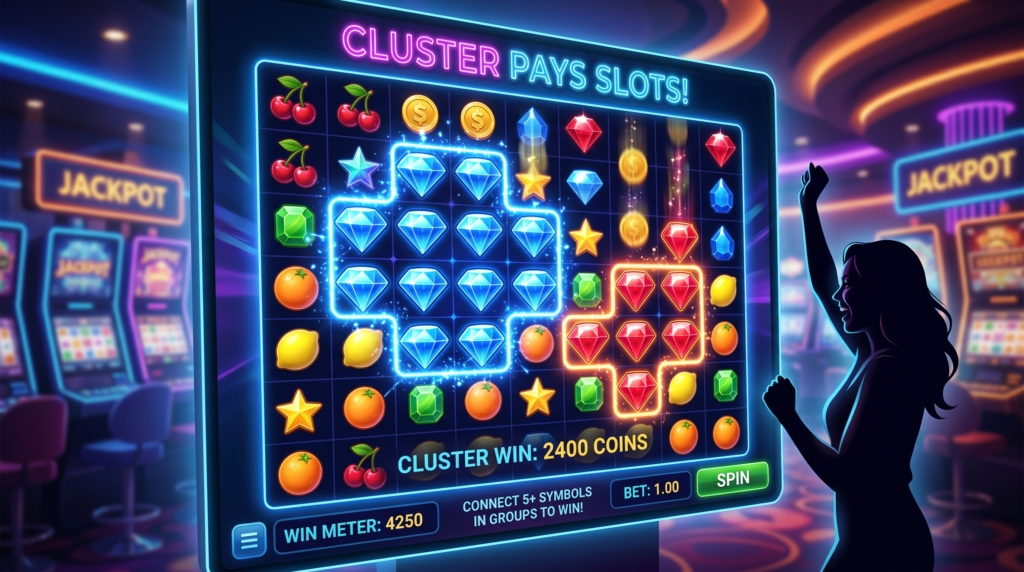
Cluster pays slots are grid-based games where a win happens when a group of matching symbols lands next to each other. The symbols usually need to connect horizontally or vertically to count as a cluster. In many games, a cluster must reach a minimum size, such as five or more symbols, but the exact number depends on the title.
This is the main difference from traditional payline slots. On a standard slot, you usually need matching symbols to line up across one of a fixed number of paylines. Those paylines can run left to right, right to left, or both, depending on the game. With cluster pays, there are no fixed lines to follow. The board itself becomes the winning area.
That difference changes how the game feels. Instead of watching one row or one line at a time, you watch the whole grid. A symbol landing in the right place can turn a near miss into a win because it connects to a nearby group. For many players, that makes the screen easier to interpret at a glance.
The Mechanics of Grid-Based Wins
To understand cluster pays slots, it helps to think in terms of adjacency rather than lines. The game checks the grid after each spin and looks for matching symbols that touch each other. If enough of those symbols connect, the game counts them as a cluster and awards the win according to the paytable.
Some players compare this to all-ways slots, but the systems are not the same. All-ways games pay when matching symbols appear on adjacent reels in a set pattern, and the pattern often depends on reel position. Cluster pays slots ignore fixed paylines entirely and focus on connected groups within the grid.
This design gives the board a more open feel. A symbol landing in one corner might not do much on its own, but it can still matter if it joins a larger group. That is why cluster slots often feel more fluid than line-based games.
Understanding Cascading Reels (Avalanche Feature)
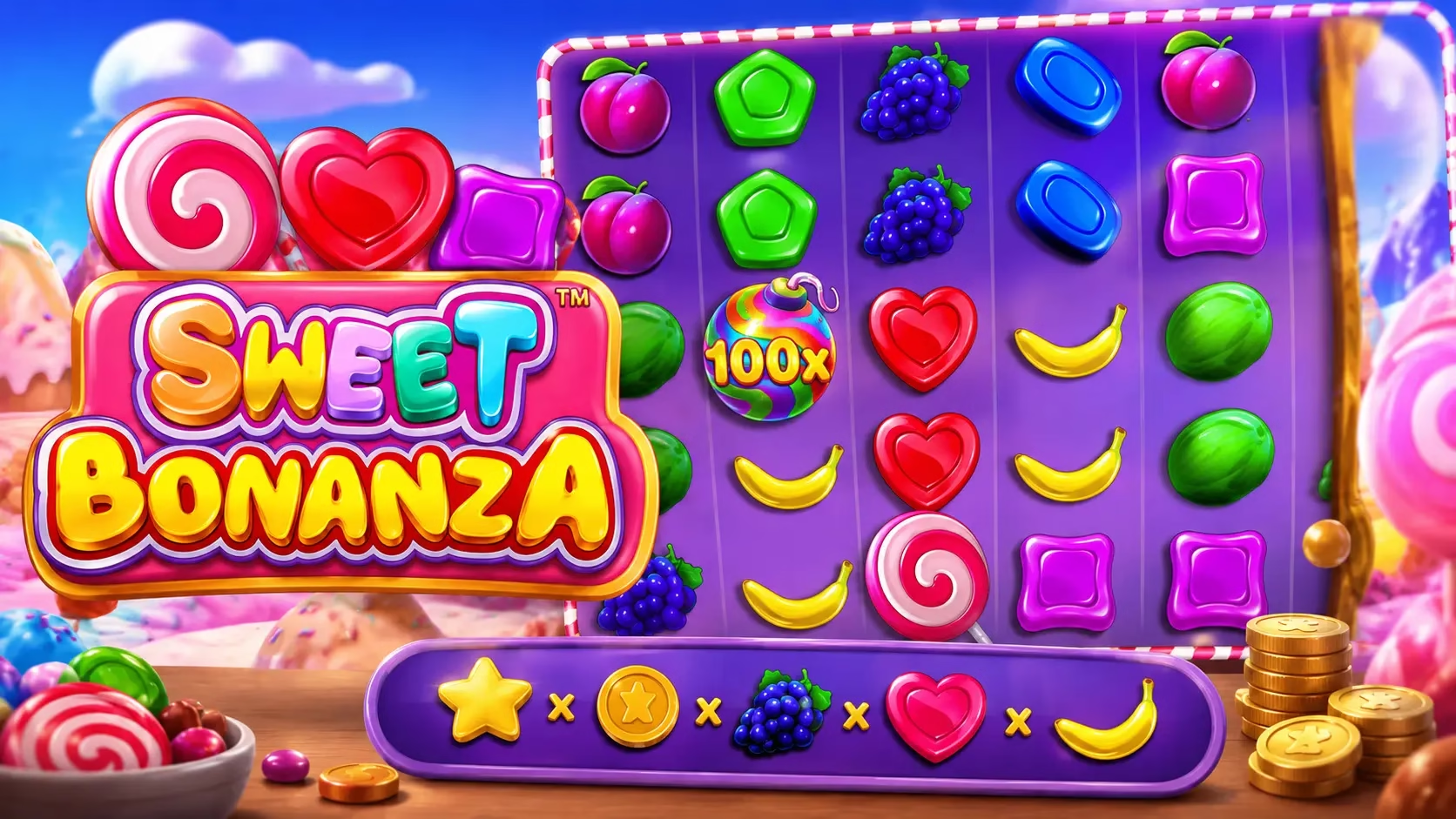
Many cluster pays slots also use cascading reels, sometimes called an avalanche or tumble feature. When a winning cluster appears, those symbols usually disappear from the grid. New symbols then drop or slide into place to fill the empty spaces.
If the new symbols create another cluster, the game can trigger another win from the same spin. That chain reaction is one reason players enjoy these games. A single spin can lead to several back-to-back wins, although nothing about that process is guaranteed.
It helps to separate the feature from the outcome. Cascading reels do not make a game predictable or “better” in the sense of removing risk. They simply change the rhythm of play and can make a spin feel more eventful when the board keeps refilling.
Why Cluster Pays Slots Are Changing Player Preferences
Many players like cluster pays slots because they offer a clearer and more animated experience. On a payline game, it is easy to focus only on a few rows and miss the bigger picture. On a cluster game, the whole grid matters, so each spin feels more visually active.
The appeal is not only visual. Cluster mechanics can make wins feel more varied because the winning groups may appear in different shapes and sizes. Instead of waiting for one specific line, players watch for any connected match that grows into a cluster. That creates a sense of constant movement across the board.
For some players, the effect is simply more engaging. Exploding symbols, disappearing clusters, and refill effects provide strong feedback after each win. That feedback can make the game feel lively, even when the actual odds are still governed by the same random process as other casino slots.
| Feature | Traditional Payline Slots | Cluster Pays Slots | Impact on Gameplay |
|---|---|---|---|
| Win structure | Symbols must land on fixed paylines | Matching symbols must connect in a group | Cluster games feel less linear and more open |
| Board layout | Rows and reels with defined lines | Grid-based playfield | The whole screen matters, not just one line |
| Winning pattern | Pre-set line combinations | Adjacent symbol groups | Wins can appear in unusual shapes |
| Cascades | Sometimes included | Very common | One spin may lead to more than one win |
| Player experience | More familiar to classic slot players | More visual and dynamic | Often feels faster and more interactive |
Key Gameplay Metrics: Volatility and Hit Frequency
When you compare slot games, two terms matter a lot: volatility and hit frequency. Volatility describes how a game tends to distribute wins over time. High-volatility games may produce fewer wins but larger ones when they hit. Lower-volatility games may pay more often but usually in smaller amounts.
Many cluster pays slots lean toward higher volatility, but not all of them do. Because the board relies on connected groups and often uses cascading reels, the math can be built to allow longer quiet stretches followed by bigger board reactions. That is one reason players should check the game’s information screen instead of assuming all cluster games behave the same way.
Hit frequency is simpler. It refers to how often a game lands a win, at least in the long run. A higher hit frequency means the game tends to produce winning outcomes more often, while a lower one means you may see more spins without a win. This does not change the house edge or guarantee better results. It only describes how the game feels during play.
It is also worth remembering that an individual symbol in a cluster game may not pay a lot by itself. The value usually comes from the group size, feature triggers, multipliers, or chain reactions. That is why these games can look generous on the screen while still carrying the same casino risk as any other slot.
Identifying Fair and Licensed Cluster Pays Slots
If you play casino games, safety matters as much as game design. A cluster slot should come from a recognised developer, and the casino offering it should operate under a valid licence. Good starting points include well-known regulators such as the UK Gambling Commission or the Malta Gaming Authority, but the right licence depends on your location. Always check the latest local rules before you deposit.
Inside the game itself, look for the Info, Help, or Paytable section. That is usually where the developer lists the official RTP, volatility rating, symbol values, bonus features, and cluster rules. RTP means Return to Player, and it is a long-term statistical average, not a promise of what you will get back in one session.
If a casino or game provider publishes verification details, take a moment to check them. Reputable games are often tested by independent labs such as eCOGRA or iTech Labs, and that testing helps confirm that the random number generator is operating as intended. If you cannot find licensing details, testing information, or clear game rules, that is a warning sign.
Here is a simple checklist to use before you play:
- Confirm the casino licence and check whether it applies in your jurisdiction.
- Identify the game provider and make sure it is a known studio with published rules.
- Open the game’s help screen and read the RTP, volatility, and cluster size details.
- Look for independent audit references where available, such as RNG testing seals.
- Read bonus terms carefully if you are using a promotion, because wagering and game restrictions can apply.
Essential Tips for Playing Responsibly
Cluster pays slots can feel more lively than classic line games, but they are not easier to predict. They still use random number generation, which means every spin is independent of the last one. A run of misses does not make a win more likely on the next spin, and a strong-looking board does not guarantee a result.
The safest approach is simple: set a budget before you start and treat that money as entertainment cost. If the session ends quickly, avoid chasing losses. If you are enjoying the game, stick to the limit you set in advance instead of increasing stakes to recover what was spent.
It also helps to use the tools most licensed casinos provide. Deposit limits, loss limits, session reminders, and time-outs can make play easier to manage. If gambling ever stops being fun, take a break and step away.
For extra support, you can visit BeGambleAware. If you are outside the UK, check your local responsible gambling organisation or regulator for region-specific help and guidance.
When you play any slot, including cluster pays slots, remember the basics: check the rules, confirm the licence, read the paytable, and understand the risk. That is the most practical way to enjoy the format without overestimating what it can do.
FAQ
What is the minimum cluster size needed to win?
It varies by game. Many cluster pays slots require five or more matching symbols, but some use a different minimum. Always check the paytable or help screen for the exact rule.
Are cluster pays slots higher variance than payline slots?
Often, yes. Many cluster games are built with higher volatility, which can mean fewer but more dramatic wins. However, variance depends on the specific game, not just the mechanic.
Do all cluster pays slots have cascading reels?
No. Cascading reels are common in cluster games, but they are separate features. A slot can use clusters without using cascades, and some cascade games use other win systems.
Can I predict when a cluster win will occur?
No. Cluster outcomes are random and controlled by the game’s RNG. Past spins do not help you predict the next one.
Where can I verify if a slot is fair?
Check the game’s help or information section for RTP and rules, then look for independent testing references such as eCOGRA or iTech Labs and confirm the casino’s licence with the relevant regulator.
Author note: Written with 10+ years of slot machine analysis and regulatory review experience, with a focus on clear game mechanics, licensing checks, and responsible gambling guidance.