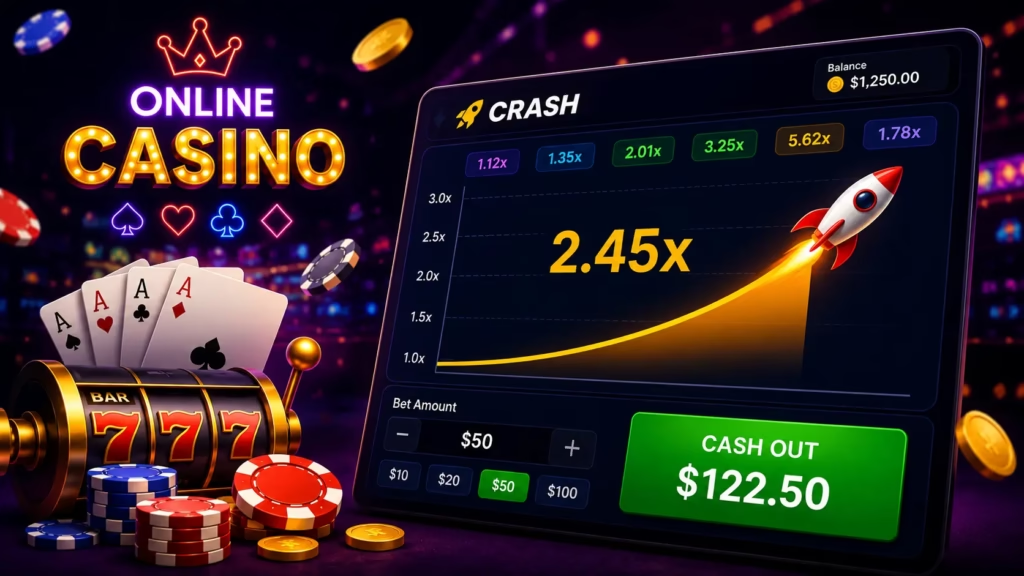
A crash game is a fast-paced online casino game where you place a bet on a multiplier that rises from 1.00x and keeps climbing until it suddenly stops. Your goal is simple: click cash out before the game crashes. If you cash out in time, you lock in your winnings. If you wait too long, you lose the bet. So, when people ask what is a crash game, the short answer is: it is a chance-based game of timing, speed, and risk.
Crash games became popular because this style of fast-paced online casino gameplay feels very different from slots or table games.They are quick, interactive, and easy to understand. But that simplicity can be misleading. The result is still random, and the pace can make players act faster than they planned. That is why crash games should always be treated as high-volatility gambling products, not as a reliable way to make money.
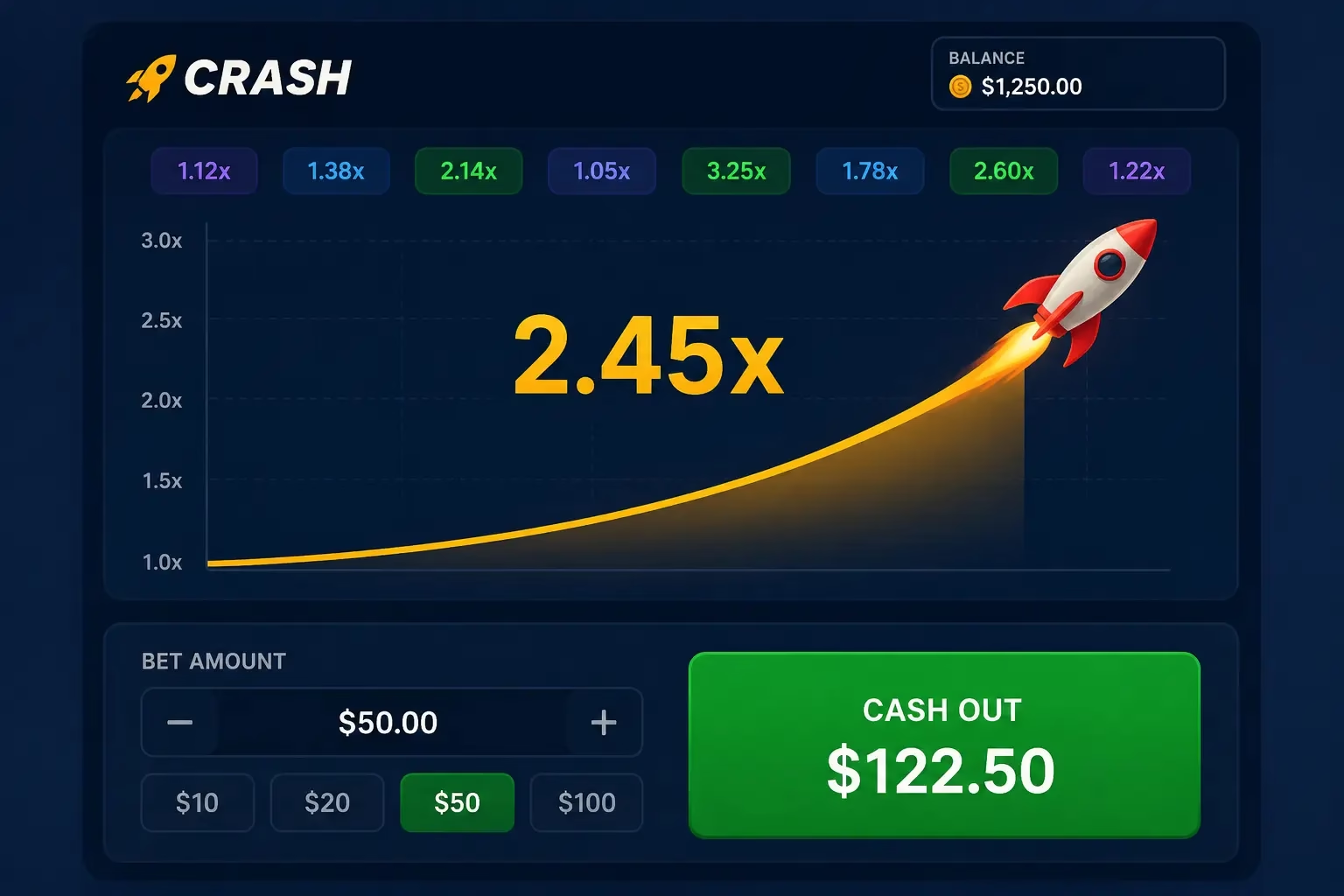 What Actually Happens in a Crash Game?
The Core Mechanics: How the Game Functions
The Role of the Multiplier
Crash Game Risk vs. Reward Visualizer
The visual below is a simple educational idea for explaining risk. It shows how the target multiplier changes the chance of a round reaching that point. This is for demonstration only. Actual games are based on RNG and outcomes are not guaranteed.
| Target Multiplier | Simple Demonstration of Risk | What It Means |
|---|---|---|
| 1.5x | About 1 in 1.5 | Lower target, faster cash-out, lower exposure time |
| 2x | About 1 in 2 | Moderate target, still risky because the crash may happen early |
| 5x | About 1 in 5 | Higher reward target, but many more rounds end before this point |
| 10x | About 1 in 10 | Much higher volatility and a smaller chance of reaching the target |
In simple terms, the higher the target multiplier, the less likely it is to be reached in any single round. A basic way to think about it is: Multiplier X has roughly a 1/X chance of occurring in a simplified example. Real games are more complex than that, but this model helps explain why high targets are so risky.
Safety note: This visual is only for learning. It does not predict real outcomes, and it should never be used as a winning method.
Manual vs. Auto-Cashout
Helpful Interactive Tool or Visual to Add
A simple visual can make crash game risk easier to understand, especially for new players. A “Crash Game Risk vs. Reward Visualizer” can show how quickly the probability of missing a target grows as the multiplier rises. This helps explain the game without hype and makes the volatility easier to see.
If you build this as a web tool, keep it very simple. A slider for the target multiplier and a text output showing an estimated chance of reaching that point is enough. The goal is not to create a prediction tool. The goal is to show that higher multipliers come with higher risk and that the player is always making a trade-off between possible payout and likely loss.
For WordPress, a short visual module can sit near the multiplier explanation section. It should include a clear notice that it is only a demonstration and that actual outcomes depend on the live game’s RNG and fairness system. This is useful for both user education and responsible gambling messaging.
Why Crash Games Feel Different from Slots
Crash games feel more interactive than traditional slot games because the player has to make a decision during the round. In a slot, you spin and wait for the result. In a crash game, you watch the multiplier rise and decide when to leave. That makes the game feel more active, even though the underlying outcome is still random.
The speed is a big part of the experience. Rounds are short, and the next one starts quickly. That creates a loop of anticipation, action, and instant feedback. Many players find that exciting because it feels like they are participating instead of just watching.
There is also a strong psychological effect. Cashing out early can feel safe, while staying in longer can feel like you are being brave or making a smart read. In reality, you are still reacting to randomness. The game gives an illusion of control because your click matters, but your click only decides when you leave, not when the round ends.
This is where loss aversion comes in. People often feel the pain of losing more strongly than the pleasure of winning the same amount. In crash games, that can lead to emotional decisions: cashing out too soon out of fear, or staying too long because you want to recover a missed bigger win. Both reactions are normal, and both can be costly.
Understanding the Risks: House Edge and Volatility
Crash games have a house edge, which means the math is designed to favor the operator over time. Even when a game is fair and licensed, the casino still keeps a long-term advantage. That is true of most casino games, including crash games.
High volatility is another important idea. Volatility describes how uneven the results can be. In a volatile game, you may see several fast losses in a row, then an occasional larger win. That pattern can make the game feel dramatic, but it also means your bankroll can disappear quickly if you keep chasing bigger multipliers.
The fastest mistake is assuming that a good-looking streak means the next round is “safer” or that the game is “ready to pay.” It does not work that way. Each round is a separate event. The software keeps the math advantage, and no timing habit can remove that edge.
That is why responsible gambling matters so much with crash games. Set a budget before you play, decide your stop point in advance, and do not increase stakes to recover losses. If a game starts to feel stressful or compulsive, take a break and step away.
Essential Safety Checklist for Crash Game Players
If you want to try a crash game, use a safety checklist before you deposit money. The biggest mistake is focusing only on the multiplier and ignoring the operator, rules, and payment process. A safer experience starts with choosing the right platform.
| Feature | What to Look For | Why It Matters |
|---|---|---|
| Regulatory Licensing | Clear license details from a recognized authority | Helps confirm the operator is monitored and follows basic standards |
| Provably Fair Verification | A visible way to check seeds, hashes, or round history | Lets you confirm the game result was generated fairly |
| Responsible Gambling Tools | Deposit limits, time limits, reality checks, self-exclusion options | Helps reduce harm and keep play under control |
| Payout Processing | Clear withdrawal rules, fees, and processing times | Prevents surprises when you try to cash out real winnings |
Before playing, also check the minimum age rule in your location, local gambling laws, bonus terms if you are using a promotion, and whether the game has demo mode. If the site hides important rules or makes withdrawals difficult, treat that as a serious warning sign.
Most importantly, do not use crash games to chase losses. If you lose your set budget, stop. The fast pace can make it easy to keep going, but that usually increases damage rather than fixing it.
FAQ
Are crash games rigged?
Legitimate crash games should not be rigged if they come from a licensed operator and use a verifiable RNG or provably fair system. If a site is unlicensed, unclear, or does not explain fairness checks, avoid it.
Can I use a strategy to win every time?
No. There is no strategy that overrides the house edge or guarantees profit. You can choose when to cash out, but you cannot control the random crash point.
What is the difference between a crash game and a slot?
A slot gives you a fixed spin result after you press play. A crash game keeps moving in real time and asks you to cash out before it stops. Crash games also feel faster and more interactive.
Is there a minimum bet?
Usually yes, but the minimum bet depends on the operator and the specific game. Many platforms allow small entry stakes, but you should check the game rules and cashier page before playing.
Can I play these games for free?
Some operators offer Free demo crash games can help beginners understand the mechanics modes or play-money versions. These can help you understand the mechanics without risking real money, but they do not predict live outcomes.
Bottom line: a crash game is a simple idea with fast, high-risk gameplay. You bet, watch the multiplier rise, and decide when to cash out. The game can feel exciting and interactive, but it is still based on chance, licensed fairness systems, and a built-in house edge. If you play at all, treat it as entertainment, not income.