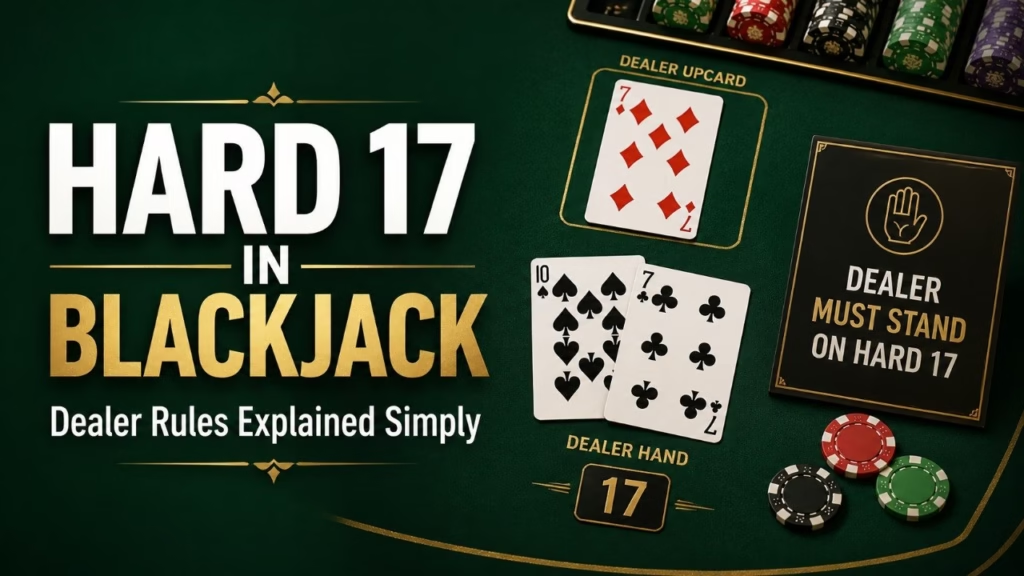
A hard 17 in blackjack is a hand that totals 17 without an Ace counted as 11. If an Ace is present, it must count as 1 to keep the hand at 17. For the dealer, a hard 17 is a fixed hand: it cannot improve without busting, so it is often treated as a “dead” hand in the sense that the dealer must stop drawing cards once the rules say 17 stands.
The key point is that a hard 17 is not the same as a hard 17 in blackjack . That difference matters because many blackjack tables use different dealer rules for soft hands, and beginners often confuse the two. If you are checking the table felt or the game rules screen, you may see labels like “Dealer stands on all 17s” or “Dealer hits on soft 17.” Those rules affect the dealer’s action, the house edge, and how you read the table before you play.
What Makes a Hand a Hard 17?
 A hard hand is any blackjack hand where either there is no Ace, or the Ace has to be counted as 1 because counting it as 11 would bust the hand. That is what makes the total “hard.” It means the hand has no flexible Ace value left to save it.
For example, these are common hard 17s:
- 10 + 7
- K + 7
- 9 + 4 + 4
- 8 + 5 + 4
- A + 6 + A where the first Ace must count as 1, not 11
By contrast, a soft hand contains an Ace counted as 11. That means the hand can usually change value without busting. For example, Ace + 6 is a soft 17 because the Ace can be 11 and the hand still totals 17. If the dealer draws another card, that Ace can drop from 11 to 1 if needed.
This is the mathematical difference that matters: a hard hand has no “backup” value from the Ace, while a soft hand does. Once a hand becomes hard, the dealer’s options are much more limited.
| Hand Type | Example | Ace Value | What It Means |
|---|---|---|---|
| Hard 17 | 10 + 7 | No Ace, or Ace counted as 1 | Fixed total of 17 |
| Soft 17 | Ace + 6 | Ace counted as 11 | Flexible total of 17 |
Understanding Dealer Rules: H17 vs. S17
When people talk about dealer 17 rules, they usually mean one of two table settings: S17 and H17. These abbreviations are standard casino shorthand, and they are worth checking before you sit down or join a game online.
- S17 means Dealer Stands on All 17s.
- H17 means Dealer Hits on Soft 17.
Here is the important part: the hit/stand rule applies only to soft 17, not hard 17. A dealer does not get to hit a hard 17 under normal blackjack rules. The dealer must stand on any hard 17, regardless of whether the table is an S17 or H17 game.
| Rule Type | Dealer Action on Hard 17 | Dealer Action on Soft 17 | Impact on Player |
|---|---|---|---|
| S17 | Stands | Stands | Usually slightly better for the player because the dealer stops on soft 17 |
| H17 | Stands | Hits | Usually slightly better for the house because the dealer gets one more chance to improve |
That extra draw on soft 17 is why H17 games are generally considered a little tougher for the player than S17 games. The difference is not dramatic in every hand, but over time it affects the house edge. If you care about game rules, this is one of the first things to look for.
Why the Dealer Must Stand on a Hard 17
Under standard blackjack rules, the dealer must stand once the hand reaches 17 if it is hard 17. The reason is simple: there is no flexible Ace left to protect the hand. Any additional card could improve the total, but it could also bust the dealer immediately, and the rule removes that choice.
So if a dealer has 10 + 7, the hand is finished. If the dealer has 9 + 4 + 4, that is also a hard 17 and must stand. The “hit on 17” conversation only applies when the 17 is soft, meaning the Ace can still be treated as 11.
This is one of the easiest places for beginners to make a mistake. They hear “dealer hits on 17” and think all 17s are the same. They are not. Hard 17 and soft 17 are different hand states, and the table rule only changes how the dealer handles the soft version.
Does a Hard 17 in blackjack Change Your Strategy?
A hard 17 does not create a special move for the dealer beyond standing. For the player, though, knowing the dealer’s 17 rule helps you understand the game setup more clearly. It does not tell you how to win every hand, and it should not be treated as a shortcut or a guaranteed edge.
What it does tell you is how favorable the table rules may be. In an S17 game, the dealer stops on all 17s, which is usually a little better for players than an H17 game. In an H17 game, the dealer may draw on soft 17 and sometimes improve to 18, 19, 20, or 21. That extra chance changes the odds slightly.
For your own hand, this means the table rule can influence how risky a borderline decision feels. You still need to play your hand based on the cards you have, but it helps to know whether the dealer has a slightly stronger or weaker rule set behind the scenes. In other words, the dealer’s hard 17 is fixed, but the table’s soft hard 17 in blackjack rule helps shape the overall game.
Remember that blackjack outcomes are chance-based. No table rule removes risk, and no rule creates a sure win. The best practice is to know the rules, understand the dealer behavior, and choose tables that match the level of house edge you are comfortable with.
Helpful Interactive Visual: Identifying Your Hand
Use this quick check to separate the two hand types at a glance:
Hand Type Quick-Check
| Hand Type | Simple Example | What to Remember |
|---|---|---|
| Hard 17 | 10 + 7 | No Ace, or Ace must count as 1 |
| Soft 17 | Ace + 6 | Ace still counts as 11 |
Rules are set by the house and vary by table. Always check the table rules before playing.
If you are in a live casino, the felt or printed table text often gives the answer in plain language. Look for wording such as “Dealer stands on all 17s” or “Dealer hits on soft hard 17 in blackjack
Common Mistakes Players Make Regarding Dealer 17s
One common mistake is assuming a dealer’s hard 17 is somehow “bad” in a way that changes the rule. It is not. A hard 17 is simply the point where the dealer must stop. It is not a special exception, and it does not trigger another draw.
Another mistake is confusing a dealer’s hard 17 with a soft 17. This matters because soft 17 is the hand that may be hit in H17 games. If you do not notice the Ace, you can misunderstand the table rule and misread the house edge.
Players also sometimes forget that the dealer’s action is not subjective. Dealers do not choose whether to hit a hard 17 based on intuition or the player’s cards. The rule is fixed, and the dealer follows the posted game rules exactly.
A useful mindset is to see hard 17 in blackjack as the dealer’s stopping point. It is a modest hand, but it is still a hand that forces the dealer to stand. That is why knowing the rule helps you evaluate the table, even if it does not change the fact that hard 17 in blackjack remains a game of chance.
How to Check Dealer Rules Before You Play
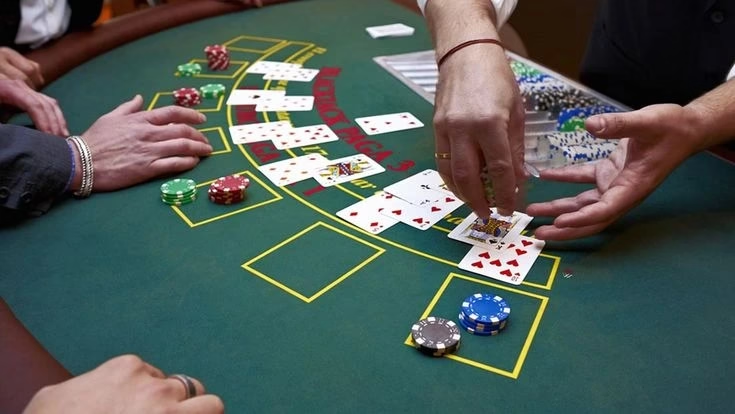 The safest habit is to check the rules before you place your first bet. This is especially important because blackjack rules vary by casino, by table, and by game version online.
Here are the best places to check:
- The table felt in a live casino, where you may see “Dealer stands on all 17s” or a similar note.
- The game info screen in online blackjack, usually listed before play begins.
- The help or rules button in digital casino games.
- The casino’s official rules page, if available.
If you are playing in a regulated casino environment, the rules should be posted or accessible. If they are not clear, ask the dealer or support staff before you join the game. It is a simple check that can prevent confusion later.
It is also smart to confirm basic details such as minimum age, local gambling laws, licensing, and any side-bet or payout rules. Those details can change how the game works and what your real costs are. Responsible play starts with knowing the rules of the table you are actually sitting at.
FAQ
What is the difference between a hard and soft hand in blackjack?
A hard hand has no Ace counted as 11, or an Ace that must be counted as 1 to avoid busting. A soft hand includes an Ace counted as 11, which gives the hand flexibility.
Can the dealer ever hit a hard 17?
No. Under standard blackjack rules, the dealer must stand on a hard 17. The hit-or-stand variation only applies to soft 17.
Why do casinos have different rules for dealer 17s?
Casinos use different rule sets to balance the game. Letting the dealer hit soft hard 17 in blackjack slightly increases the house edge, while standing on all 17s is usually a little better for the player.
Is a hard 17 in black jack good hand for the player?
A hard 17 is a strong stopping point for the dealer, but it is not automatically a strong hand for the player. Whether it is good depends on the cards you hold and the table rules.
How do I know if the dealer hits or stands on soft 17?
Check the table felt, the game rules menu, or the help section. The rule is usually written as S17 for stands on all 17s or H17 for hits on soft 17.
Does counting cards change how I play against a hard 17?
Counting cards does not change the definition of hard hard 17 in blackjack or the dealer’s rule. It only affects how a player estimates the deck composition, and it is not a substitute for knowing the table rules. If you play blackjack, use legal, responsible play only.