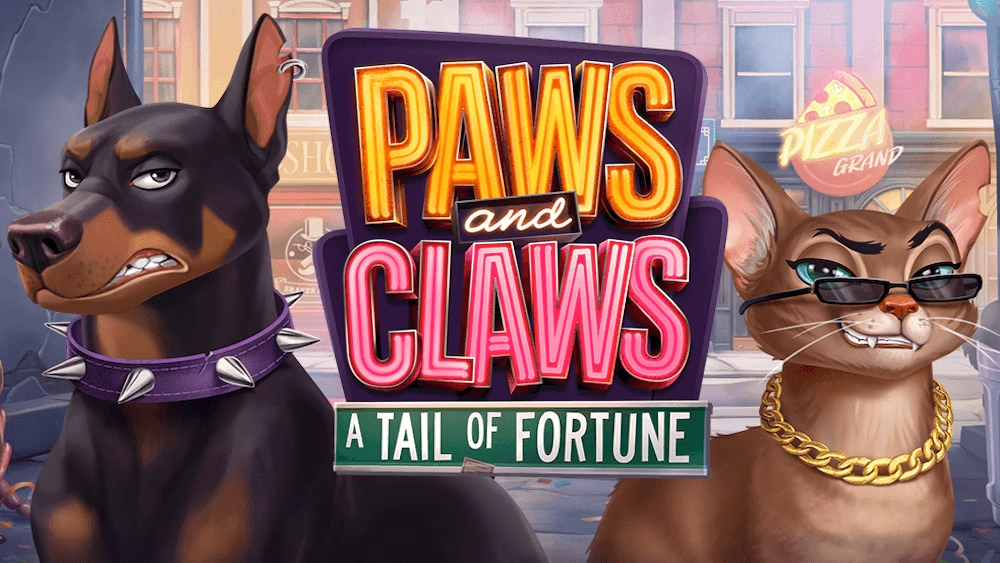
Play Paws N Claws: A Tail of Fortune is a pet-themed slot that leans into playful animal visuals while still behaving like a standard RNG casino game underneath. If you are trying to decide whether it fits your style, this review focuses on how the game works, what the main features do, and what kind of risk you should expect before you spin. The title may suggest luck and fortune, but the real experience depends on mechanics, volatility, and the casino’s published game details.
As a review, this is intentionally objective. The goal is not to hype the game up, but to explain the pacing, the feature structure, and whether play paws n claws a tail of fortune feels beginner-friendly or better suited to players who enjoy higher swings. Because casino games involve financial risk, it also helps to separate theme from outcome: a cute design does not change the math behind the slot.
Understanding play Paws N Claws: A Tail of Fortune Mechanics
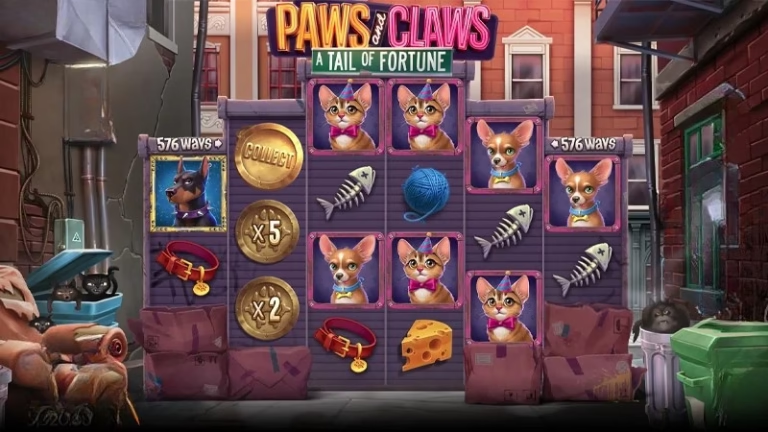 Paws N Claws: A Tail of Fortune is built around a familiar slot format. You place a bet, spin the reels, and wait for matching symbol combinations to land along the game’s payline structure. The core objective is simple: line up winning combinations according to the paytable and trigger special symbols when they appear.
Most players will find the layout easy to follow, even if they are new to slots. The game uses a standard reel-based system rather than a complicated board or multi-layered format, so the main learning curve is understanding which symbols pay, which symbols unlock features, and how often those features tend to appear. That last part matters because it shapes the rhythm of the entire session.
In practical terms, a slot like this usually feels like a mix of small base-game moments and occasional bursts of feature activity. When the base game is quiet, the experience may feel slow. When bonus symbols land, the pace can shift quickly. That contrast is one of the main reasons players often care about volatility as much as theme.
Key Features and How They Work
The most important symbols in a game like this are usually Wilds, Scatters, and the symbols that trigger the bonus round. While the exact names and artwork can vary by provider and release version, the function of each symbol is generally easy to understand once you know what to look for.
Wilds usually help complete winning lines by substituting for other regular symbols. If a Wild lands in the right place, it can turn a near-miss into a win. That does not mean every Wild creates a big result, but it does increase the number of possible matching combinations on a spin.
Scatters are typically the symbols that unlock the bonus feature. In many slots, they do not need to land on a single payline to count. Instead, a set number of them across the reels may trigger free spins, a pick-style bonus, or another special round. In player terms, a Scatter is usually the symbol that changes a normal spin into a feature round.
The main bonus round is where the game may offer its highest potential for larger wins. That does not mean the bonus is easy to reach, and it does not mean every bonus round pays well. It simply means the game’s design often concentrates more excitement into the special feature than into the base game. The exact value of the bonus depends on the provider’s math model, the number of bonus triggers needed, and how the feature pays once it starts.
From a gameplay perspective, that structure can be fun if you enjoy anticipation. It can also be frustrating if you prefer frequent small hits. In my observation, the balance between regular wins and bonus triggers is what determines whether this slot feels lively or slow over a longer session.
Slot Volatility Explained Box
Volatility refers to the frequency and size of payouts. It does not predict future results.
| Volatility level | Plain-English meaning | What it can feel like in play |
|---|---|---|
| High volatility | Wins may come less often, but bigger payouts are possible when they do | Longer dry spells followed by stronger spikes |
| Low volatility | Smaller wins may appear more frequently | Smoother pacing with fewer dramatic swings |
If Paws N Claws: A Tail of Fortune is presented as a higher-volatility game in your chosen casino, that means you should expect more patience and a larger tolerance for variance. High volatility does not mean the game is “better” or “worse.” It simply means the rhythm of wins may be less predictable, and the session can swing quickly in either direction.
Exploring the Betting Range and RTP
Before you play, check the betting range and the RTP shown in the game menu. The betting range tells you how small or large each spin can be. The RTP, or Return to Player, is the long-term theoretical percentage of wagered money a slot is designed to return over a very large number of spins. It is not a short-term promise, and it does not tell you what will happen in one session.
It is also worth noting that the RTP and even some feature settings can vary by operator or game version. That is why the safest habit is to open the game’s Help, Info, or Paytable section before you wager real money. If the casino does not clearly display the current game rules, that is a sign to pause and verify the details elsewhere.
| Game Aspect | What to Look For | Why It Matters |
|---|---|---|
| Betting range | Minimum and maximum stake per spin | Helps you match the game to your bankroll |
| RTP | Published theoretical return in the info menu | Gives a long-term math reference, not a guarantee |
| Volatility | Low, medium, or high risk profile | Shows how wins may be spaced out |
| Bonus trigger rules | How scatters or special symbols activate features | Explains what you need to land for the bonus round |
| Paytable | Which symbols pay the most and how line wins are counted | Prevents confusion during play |
A sensible approach is to treat the RTP as a background reference and the volatility as the more immediate feel of the game. RTP can help you compare slots at a high level, but volatility tells you more about the experience you are likely to have in the moment. That distinction is often missed in casual reviews, yet it matters a lot when deciding whether a slot suits your playstyle.
Is This Game Suitable for You?
 Paws N Claws: A Tail of Fortune is likely to appeal to players who enjoy animal themes, simple reels, and a straightforward slot structure. If you like seeing a game build toward a bonus round and do not mind waiting through quieter stretches, the pacing may feel comfortable. The playful theme can also make the game feel less intense than a darker or more complex slot.
On the other hand, players who want frequent small payouts may find it repetitive if the volatility is on the higher side. That is not a flaw in the game itself. It simply means the slot is designed with a different balance. Some players enjoy the suspense of chasing a feature, while others prefer steady base-game action. Knowing which camp you fall into is more useful than focusing only on the title or graphics.
Here is a practical way to judge fit:
- Good fit: casual players who want a theme-driven slot with easy rules and a clear bonus structure.
- Good fit: players who are comfortable with session swings and do not expect frequent line hits.
- Less ideal: players who want constant returns or low-variance pacing.
- Less ideal: anyone looking for a game that can be “solved” or controlled through timing.
If you are new to slots, this title can be beginner-friendly from a rules standpoint, but not necessarily from a bankroll standpoint if the volatility is high. Simple mechanics do not remove risk. They only make the game easier to understand.
Safety and Responsible Play
Like every real-money slot, this game uses a random number generator, or RNG, to determine outcomes. That means each spin is independent. A previous loss does not make a win more likely on the next spin, and a recent win does not reduce the chance of losing on the next one. The game has a house edge built into its math, which is why it should always be treated as entertainment rather than income.
The most useful safety habit is to set a session budget before you start. Decide what you can afford to lose, and do not change that number in the middle of play because of emotion or a streak of losses. Chasing losses is one of the fastest ways to turn a fun session into a stressful one.
Other good checks include:
- Confirm your local age and gambling laws before playing.
- Verify the casino’s license and reputation if you are playing for real money.
- Read the bonus terms if you are using a promotion, because wagering rules can affect withdrawals.
- Use the demo mode first if you want to learn the mechanics without risk.
- Stop if the game stops feeling enjoyable.
For the most accurate technical details, use the official provider’s game menu or help section. That is where you are most likely to find the current RTP, bonus rules, and symbol descriptions for the version you are actually playing.
FAQ
What is the RTP of Paws N Claws?
The RTP should be checked in the game’s official info or help menu, because it can vary by version or operator. Always rely on the current in-game details rather than assumptions.
Can I win real money playing this game?
Yes, if you play the real-money version at a licensed casino, winnings are possible. However, outcomes are based on chance, so there is no guaranteed result.
Is there a guaranteed way to win on this slot?
No. The game is RNG-based, which means each spin is random. No pattern, timing trick, or method can guarantee profit.
Can I play this game on my mobile?
Usually yes, if the casino offers a mobile-friendly version or browser play. Check that your device and browser support the game smoothly before staking real money.
What is the difference between demo mode and real money?
Demo mode lets you test the game for free, which is useful for learning the rules and pacing. Real-money mode carries financial risk because actual funds are used on each spin.