
The Aviator Crash Game is popular because it turns one simple decision into a high-pressure moment: cash out now or wait for a higher multiplier. The plane rises, the multiplier climbs, and every second feels like a choice between safety and greed.
That tension is the real hook of Aviator. The rules are simple, but the psychology behind each cashout is not. A player can win at 1.40x and still feel regret if the round reaches 10x. Another player can wait for 8x and lose everything because the plane disappears one second earlier.
Aviator is not a game where timing predicts the future. It is a game where timing decides how much risk you accept before the random crash happens.
What Is the Aviator Crash Game?
Aviator is a crash-style casino game developed by Spribe. In each round, a multiplier starts rising as the plane takes off. Players must cash out before the plane flies away or crashes. Spribe describes Aviator as a social multiplayer game where the curve can crash at any time.
The core idea is simple:
- Place a bet before the round starts.
- Watch the multiplier increase.
- Cash out before the crash.
- If you cash out in time, your bet is multiplied.
- If you wait too long, the bet is lost.
This makes Aviator different from many slot games. You do not just wait for symbols to land. You make a live decision during the round, and that decision creates the thrill.
Why Timing Feels So Important in Aviator
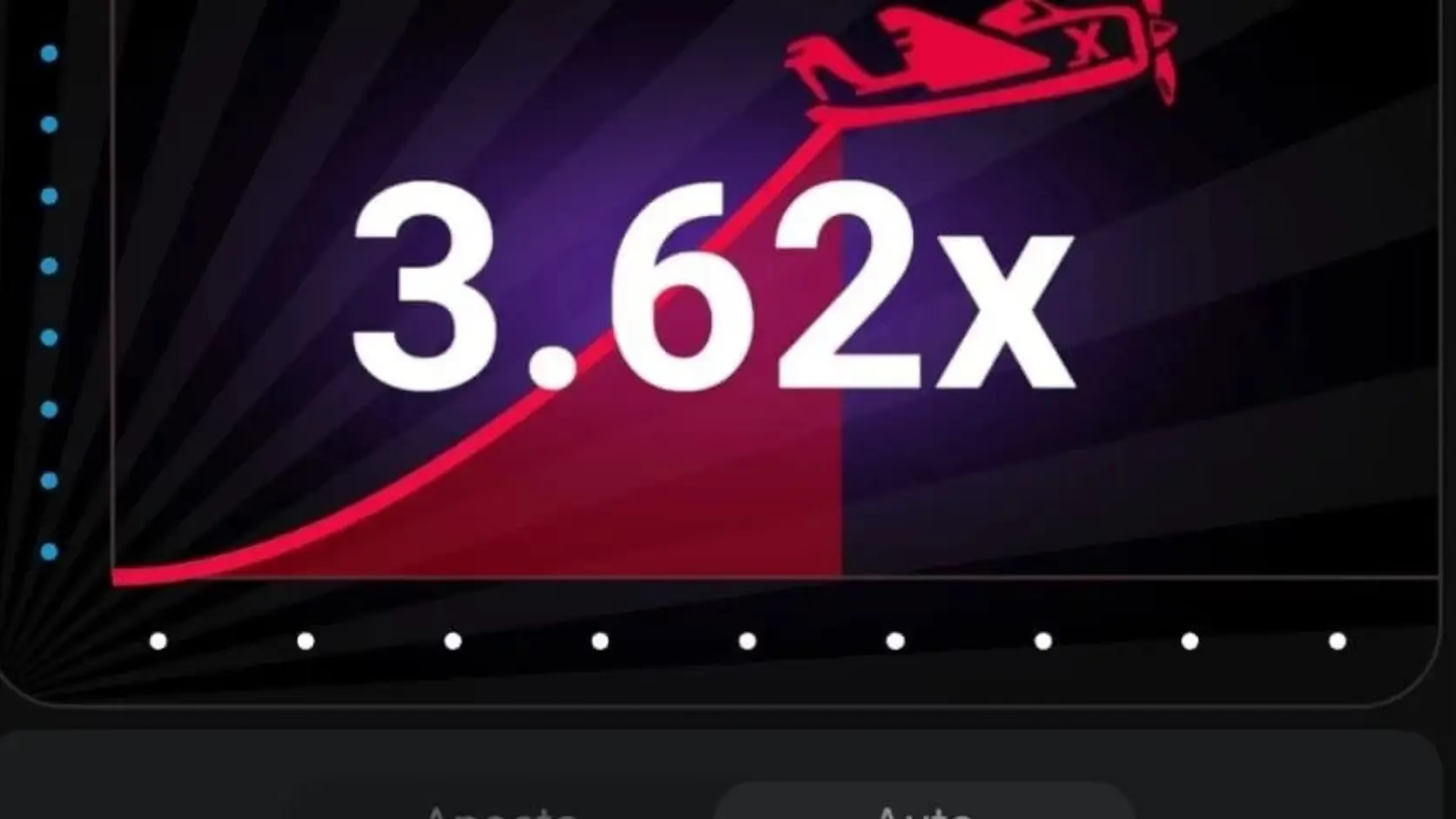
Timing feels powerful because the multiplier moves in real time. When the number is still low, cashing out feels safe but small. When the multiplier gets higher, every extra second increases the possible reward but also increases the chance of losing the bet.
This creates three common player emotions:
- Fear: “What if it crashes now?”
- Greed: “Maybe I should wait for one more second.”
- Regret: “I cashed out too early.”
The tricky part is that timing does not mean prediction. A player may feel that the plane is “due” to crash or “due” to fly high, but crash-game rounds are designed to be unpredictable. Primedope explains Aviator with a 97% RTP model and notes that rounds are mathematically independent, meaning past results do not make the next round safer or riskier.
How Risk Works in the Aviator Crash Game
Risk in Aviator is decided before you press cash out. It depends on your bet size, target multiplier, and how often you play.
A player cashing out at 1.30x may win more rounds, but each win is small. A player waiting for 5x or 10x may win less often, but one successful round can feel much bigger.
The main risk factors are:
- Higher cashout target: Bigger payout, lower chance of reaching it.
- Large bet size: Faster bankroll damage during losing streaks.
- Manual cashout delay: A small hesitation can turn a winning round into a lost bet.
- Chasing losses: Increasing bets after losses can make the session unstable.
- Overtrusting patterns: Past crashes do not guarantee future results.
Aviator’s commonly cited RTP is around 97%, which means the house edge is built into the long-term math. It does not mean you have a 97% chance to win a round. It means that over a very large number of wagers, the game is designed to return a percentage of total stakes, not guarantee profit in a session.
Best Cashout Timing Approach for Aviator
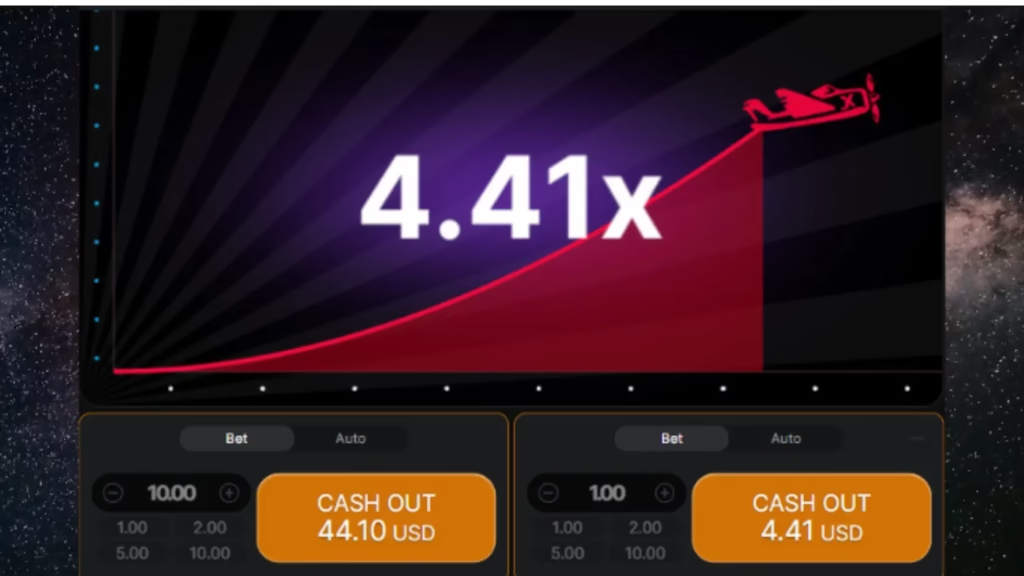
There is no perfect cashout timing in Aviator Crash Game , but players can use structured targets to control risk. The goal is not to predict the crash. The goal is to avoid emotional decisions.
A practical timing approach can look like this:
- Low-risk target: 1.20x to 1.50x
Better for players who prefer frequent small wins, but profits are limited. - Balanced target: 1.60x to 2.50x
Gives better payout potential without relying only on rare high multipliers. - High-risk target: 3x and above
More exciting, but losing rounds become more common. - Very high-risk target: 10x and above
Best treated as occasional entertainment, not a main strategy.
The mistake is not choosing a high target. The mistake is choosing a high target without accepting the losing streaks that come with it.
Why Last-Second Wins Feel So Thrilling
Last-second wins are the reason many players love Aviator. Cashing out at 7.80x just before the crash feels more exciting than taking 1.40x safely.
The thrill comes from three things:
- The multiplier is visible in real time.
- The decision is under pressure.
- The result is instant.
This makes every successful late cashout feel like skill, even when the crash point itself was not predicted. That feeling can be dangerous because one lucky late cashout may encourage the player to repeat the same risk again and again.
A last-second win can be memorable, but it should not become proof that you have found a pattern.
Manual Cashout vs Auto Cashout
Manual cashout gives more control, but it also adds emotional pressure. Auto cashout removes hesitation by closing the round at a selected multiplier.
Auto cashout is useful when:
- You already know your target.
- You want to avoid panic decisions.
- You play on mobile and want to reduce delay risk.
- You are trying to follow a fixed session plan.
Manual cashout may be better when:
- You are playing in demo mode.
- You want more flexibility.
- You are not risking large amounts.
- You can stay calm during fast rounds.
The safest approach for most players is to use auto cashout for the main bet and manual cashout only for smaller experimental bets.
Does Aviator Have a Real Strategy?
Aviator has risk-management strategies, not guaranteed winning strategies. No cashout method can remove the house edge or predict the next crash.
Useful strategy means:
- Keeping bet size small.
- Using fixed cashout targets.
- Avoiding emotional bet increases.
- Not chasing after a missed high multiplier.
- Stopping after a planned loss or win limit.
Poor strategy means:
- Doubling after every loss.
- Believing in “due” multipliers.
- Following random predictor apps.
- Increasing stakes after one big win.
- Playing longer because the game “feels close.”
Some guides correctly warn that gambler’s fallacy is a problem inAviator Crash Game because each round is independent. Seeing several low crashes does not mean a high multiplier must come next.
Are Aviator Predictor Apps Reliable?
Aviator predictor apps should be treated with extreme caution. A real crash result cannot be known before the round is resolved if the game uses proper provably fair mechanics.
Provably fair verification checks completed rounds. It helps confirm whether the revealed data matches the result after the round. It does not predict the next multiplier. GamblingCalc explains that a verifier can check completed round data, but it cannot prove the next result in advance.
Avoid any tool or app that claims:
- “100% Aviator prediction”
- “Guaranteed next crash point”
- “AI hack for Aviator”
- “Sure-shot winning signal”
- “Secret server access”
These claims are usually designed to exploit players who want certainty in a game built around uncertainty.
How to Play Aviator With Better Control
Aviator becomes risky when players let emotion decide the session. A better approach is to define rules before playing.
Use these practical controls:
- Decide your total session budget first.
- Use small bets compared to your bankroll.
- Choose a cashout target before the round starts.
- Do not change strategy after every loss.
- Take breaks after a big win or fast losing streak.
- Use demo mode to understand speed and timing.
- Avoid playing when angry, tired, or chasing money.
The point is not to make Aviator safe. No real-money crash game is safe. The point is to make your decisions less random than the game itself.
Is the Aviator Crash Game Worth Playing?

The Aviator Crash Game is worth trying only if you enjoy fast rounds, real-time decisions, and high-risk multiplier gameplay. It is not suitable for players looking for predictable income or guaranteed wins.
Aviator is exciting because every round creates a decision. The same feature also makes it risky. The longer you wait, the higher the possible payout, but the more painful the crash becomes.
The best mindset is simple: play for entertainment, understand the risk, and never treat timing as a prediction system.
Conclusion
Aviator Crash Game is built around pressure. The plane rises, the multiplier grows, and the player must decide when enough is enough. That one decision creates the thrill of last-second wins, but it also creates the risk of chasing higher payouts.
Good Aviator play is not about predicting the crash. It is about controlling bet size, setting clear cashout targets, and avoiding emotional decisions. Last-second wins may feel powerful, but disciplined cashout timing is what keeps the game from turning into reckless guessing.
Play only on licensed platforms where legal, and never gamble with money you cannot afford to lose.
FAQs About Aviator Crash Game
1. Does waiting after many low crashes improve your chance of a high multiplier?
No. A series of low crashes does not make the next round more likely to fly high. Each round is independent, so using past results as proof of an upcoming big multiplier is a risky mistake.
2. Is auto cashout better than manual cashout in Aviator?
Auto cashout is better for discipline because it removes hesitation. Manual cashout can feel more exciting, but it also makes players vulnerable to delay, panic, and greed during fast-moving rounds.
3. Why do small cashouts still lose money over time?
Small cashouts win more often, but the payout is also smaller. The game’s long-term house edge still applies, so frequent small wins do not automatically create profit. RTP works over large volume, not single sessions.
4. Are last-second Aviator wins based on skill?
The cashout click is your decision, but the crash point is not controlled by the player. A last-second win can involve good timing, but it should not be mistaken for a repeatable prediction method.
5. Can live statistics help you predict Aviator results?
Live statistics can help you understand recent outcomes, but they cannot reliably predict the next crash. They are useful for session awareness, not for guaranteed timing.