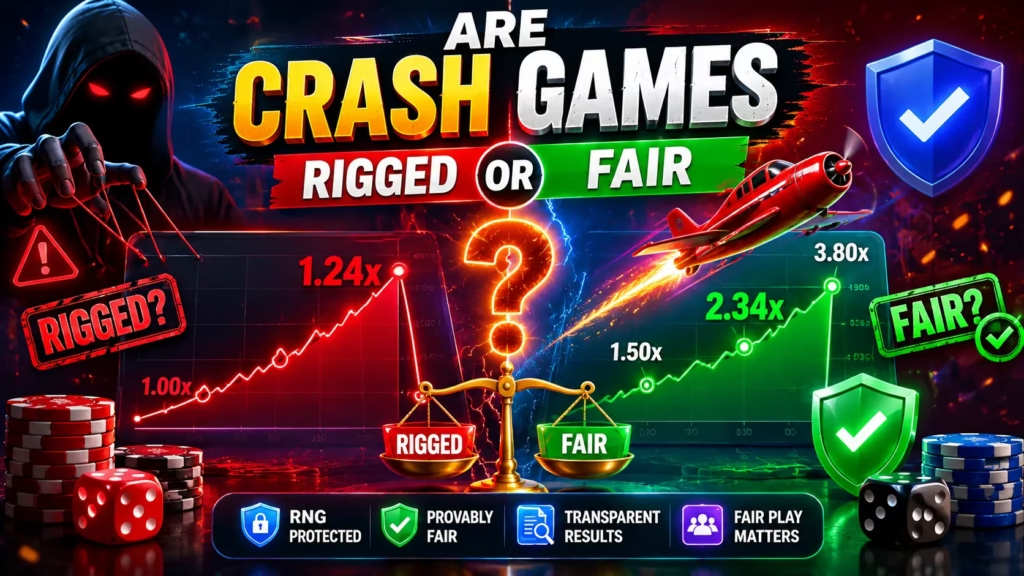
Crash games have exploded in popularity because they are simple, fast, and tense. That same speed is also why many players ask a hard question: are crash games rigged, or are they genuinely fair? The honest answer is that legitimate, regulated crash games can be fair, but the risk of manipulation is real on unlicensed or shady websites.
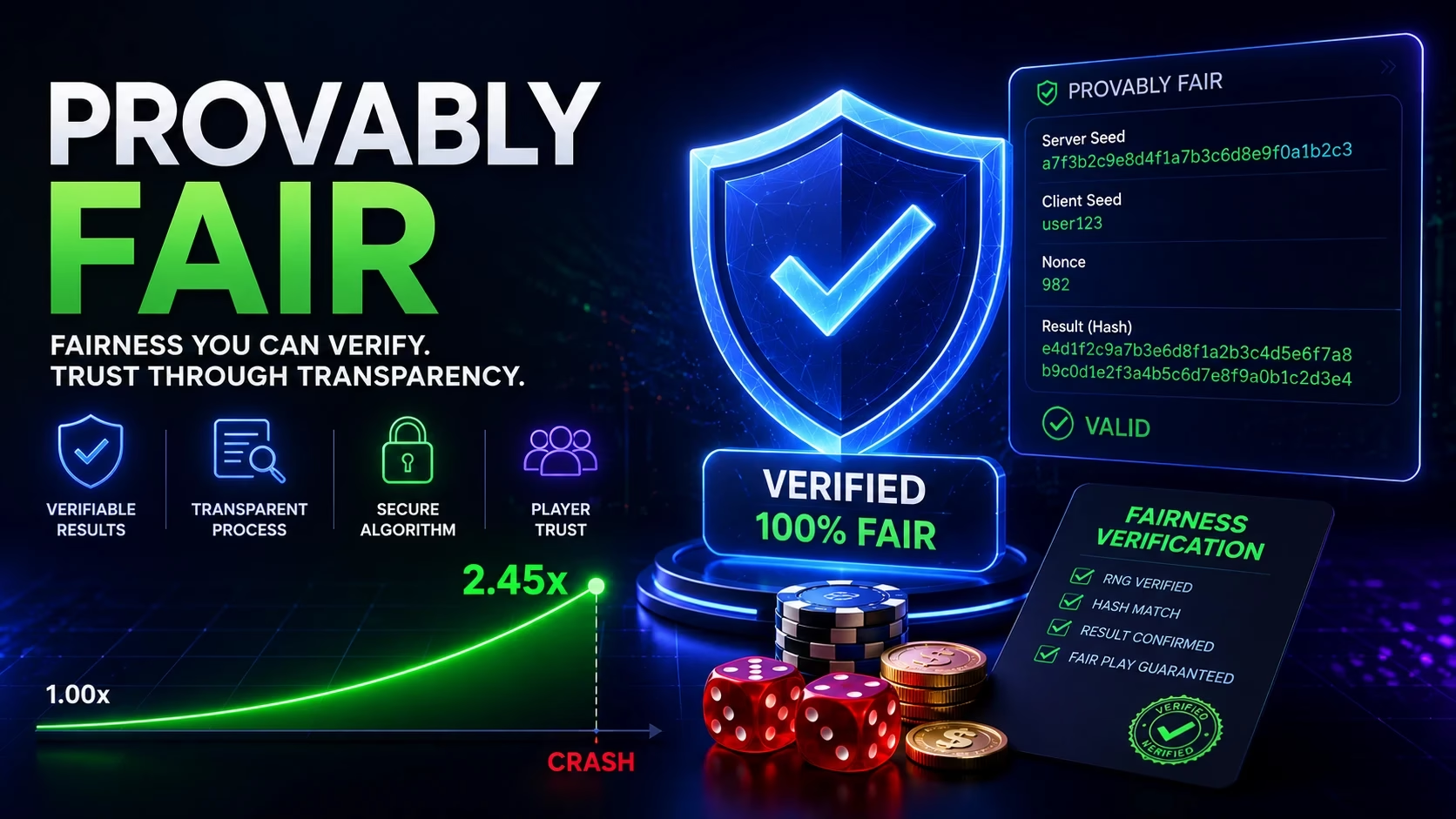
The key difference is not just the game itself. It is the platform running it, the provider behind it, and whether the result can be verified. A proper crash game should use certified random number generation or provably fair cryptography, while a predatory site may change rules, hide information, or simply refuse to prove how outcomes are created.
If you want to protect yourself, focus on two things: how the game result is produced and who is operating the site. That distinction matters more than any rumor about “hot streaks,” “predictor apps,” or miracle winning systems.
The Mechanics: Are Crash Games Rigged?
 Understanding “Provably Fair” Technology
Red Flags: Identifying Unsafe Crash Game Platforms
Many player complaints about crash games come from unsafe platforms, not from the game format itself. Before depositing anywhere, look for these red flags:
- No visible license: A serious operator usually shows its regulator in the footer or legal pages.
- Unclear ownership: You should be able to find the company name behind the site.
- No independent audit references: Legitimate games often mention testing labs or provider certifications.
- Vague game provider info: The site should identify the studio behind the crash game, not just a branded lobby.
- Hidden or missing fairness tools: No seed data, no hash history, and no way to verify past rounds are concerning.
- Pushy bonus promises: Overly aggressive promos often hide restrictive terms.
- Marketing for guaranteed wins: Any site that sells “sure systems” should be treated with caution.
- Fake support or no support: A real operator should have reachable customer service and clear complaint steps.
Also check the difference between the casino’s license and the game provider’s reputation. A platform may claim to be licensed, but if the crash title comes from an unknown studio with no public testing history, that is a weaker trust signal. Well-known providers are not automatically perfect, but they are easier to research and verify.
Crash Game Safety Checklist
This checklist is for educational purposes. Always check local licensing and official regulatory bodies.
| Check | Yes |
|---|---|
| Is the site licensed by a major regulator such as MGA or UKGC? | |
| Is the game provider a known studio with a public reputation? | |
| Can you access the hash for your last round? | |
| Does the game show server seed, client seed, or nonce data? | |
| Can you verify a completed round using official fairness tools? | |
| Does the site avoid promoting “predictor” or “signal” software? | |
| Is the company name, terms, and support information easy to find? |
Safety score: If you checked most boxes, the platform looks more trustworthy. If you missed several, especially licensing, seed verification, or provider details, the platform deserves extra caution before you deposit anything.
The Danger of “Crash Predictor” and “Signal” Scams
Practical Tips for Playing Safely
FAQ
Is the game software the same as the casino site?
No. The game software is usually made by a provider or studio, while the casino site is the operator that offers it to players. You should check both the provider and the operator.
Can I win consistently on crash games?
No. Crash games are chance-based, and the house edge means long-term consistent profit is not realistic. You may have winning sessions, but that does not change the math over time.
What is an independent audit?
An independent audit is a review by a testing lab that checks whether a game or random number system behaves as expected. Labs such as eCOGRA or iTech Labs are examples of organizations players often look for when checking trust signals.
How do I know if a site is licensed?
Look for the regulator’s name in the footer, terms, or license page, then verify it on the official regulatory database if possible. If the site cannot show a real license clearly, treat that as a red flag.
Should I trust YouTube videos of people winning big?
Not by themselves. Winning clips can be edited, staged, or selective, and they do not prove a platform is fair. Always check licensing, provider reputation, and fairness tools instead of relying on social media content.