
Online casinos have made depositing money easier than ever. A few taps on a smartphone or a quick card payment can instantly fund a gambling account. However, problems sometimes arise after a deposit is made. A player may discover unauthorized transactions, encounter a fraudulent casino, experience technical issues, or feel that the casino acted unfairly. In these situations, many players begin searching for one question:
Can I charge back my casino deposit and get my money back?
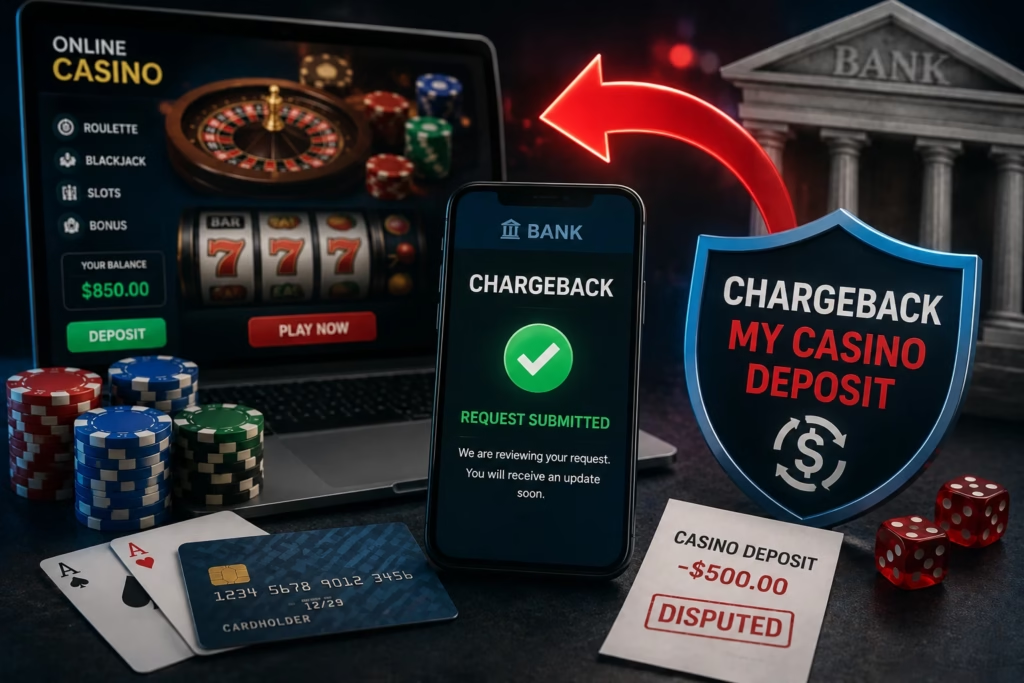
The answer is not as simple as many websites suggest. A chargeback can sometimes help recover funds, but it can also create serious consequences if used incorrectly. Many players misunderstand how chargebacks work and assume they can reverse a gambling deposit simply because they lost money. That assumption often leads to rejected claims, account closures, and even payment restrictions.
This guide explains what a casino deposit chargeback is, when it may be justified, how the process works, what risks are involved, and what players should do before considering a dispute.
What Is a Casino Deposit Chargeback?
A chargeback is a payment reversal initiated through a bank, credit card provider, or payment processor. It allows a customer to challenge a transaction and request that the funds be returned.
Originally, chargebacks were created as a consumer protection tool. Their purpose was to protect customers from fraud, unauthorized transactions, merchant errors, and services that were not delivered as promised.
For example, if someone steals your credit card details and deposits money into an online casino without your permission, a chargeback may help recover those funds. Similarly, if a casino processes a payment but fails to credit your account, a payment dispute may be justified.
However, chargebacks are not designed to refund gambling losses. Losing a bet does not automatically make a transaction fraudulent.
This distinction is extremely important because banks and payment providers carefully investigate gambling-related disputes.
Why Players Request Chargebacks Against Casinos
The most common reason is simple frustration. A player deposits money, loses it quickly, and regrets the decision. Unfortunately, regret is not usually considered a valid reason for a chargeback.
Legitimate disputes generally involve situations where something went wrong with the transaction itself.
Unauthorized transactions remain one of the strongest reasons for a chargeback request. If someone gains access to a player’s payment information and makes deposits without permission, the cardholder may have grounds to dispute those payments.
Technical failures are another common issue. Imagine depositing ₹10,000 into a casino account. The money leaves your bank account, but the casino balance never updates. If customer support fails to resolve the issue, a chargeback may become necessary.
Some players encounter unlicensed or fraudulent gambling websites that accept deposits but refuse withdrawals. In these cases, a dispute may be one of the few available recovery options.
There are also situations where a casino violates its own published terms and conditions. If a casino advertises certain services, bonuses, or withdrawal rights but intentionally refuses to honor them without justification, players may attempt to challenge related transactions.
The key factor is whether the dispute concerns the transaction or the merchant’s conduct rather than the outcome of gambling activity.
Can You Charge Back Gambling Losses?
This is one of the biggest myths in online gambling.
If you willingly deposited money, accepted the casino’s terms, played games, and lost fairly, obtaining a successful chargeback is extremely difficult.
Banks and card issuers understand the nature of gambling. They know that losses are a normal and expected part of casino gaming.
A player cannot usually claim:
“I lost my money and now I want it back.”
The financial institution will likely reject the dispute because the service was delivered exactly as intended.
The casino provided access to games, the player voluntarily participated, and the outcome resulted from gambling activity.
Attempting a chargeback under false pretenses can create significant problems and may even be classified as chargeback fraud
How the Chargeback Process Actually Works
Many people imagine that pressing a button instantly returns their money. In reality, the process is much more detailed.
When a customer files a dispute, the bank first reviews the claim and gathers supporting information. Depending on the circumstances, temporary credit may be issued while the investigation is ongoing.
The payment provider then contacts the merchant, which in this case is the casino.
The casino is given an opportunity to defend the transaction. It may provide account records, login history, IP addresses, deposit confirmations, bonus acceptance records, gameplay activity, and customer communications.
These records often become critical evidence.
For example, if a player claims a transaction was unauthorized but the casino shows the same device, same IP address, successful account login, bonus activation, and hours of gameplay, the bank may conclude that the transaction was legitimate.
The final decision depends on the available evidence from both sides.
This process can take several weeks and sometimes even months.
What Happens After You File a Chargeback?
Many players focus only on the possibility of recovering money and overlook the consequences.
Once a chargeback is initiated, the relationship between the player and the casino often changes permanently.
Most casinos immediately flag disputed accounts. Ongoing withdrawals may be frozen while the investigation takes place. Bonus eligibility may be removed. In many cases, the account is permanently closed.
Some operators share fraud-related information across networks of affiliated gambling brands. This means a dispute with one casino could potentially affect access to other casinos within the same group.
If the chargeback is found to be fraudulent, the situation can become even more serious.
Payment processors actively monitor chargeback abuse because excessive disputes increase costs for merchants and financial institutions.
That is why players should only pursue disputes when they genuinely believe they have a valid claim.
What Evidence Helps Support a Chargeback?
Successful disputes are usually built on documentation rather than emotion.
Screenshots of transactions, emails with customer support, payment receipts, withdrawal requests, account statements, and copies of casino terms can all strengthen a case.
A clear timeline is especially valuable.
For example, if a player deposited funds on June 1, contacted support on June 2, received no response for two weeks, and then filed a complaint, that sequence helps demonstrate a good-faith effort to resolve the issue before escalating it.
Banks generally appreciate customers who attempt to solve problems directly with merchants before requesting a chargeback.
This approach often improves credibility during the investigation.
The Difference Between a Legitimate Casino and a Scam Casino
Not every gambling website operates to the same standard.
Licensed casinos typically maintain clear rules, identity verification procedures, responsible gambling policies, and dispute resolution channels.
Even when disagreements occur, reputable operators usually provide a structured process for handling complaints.
Scam casinos behave differently.
They may delay withdrawals indefinitely, ignore support requests, manipulate bonus terms, hide licensing information, or make it impossible to contact customer service.
When players encounter these warning signs, the risk of needing a payment dispute increases significantly.
This is why researching a casino before depositing is one of the most effective ways to avoid future problems.
Alternatives to a Chargeback
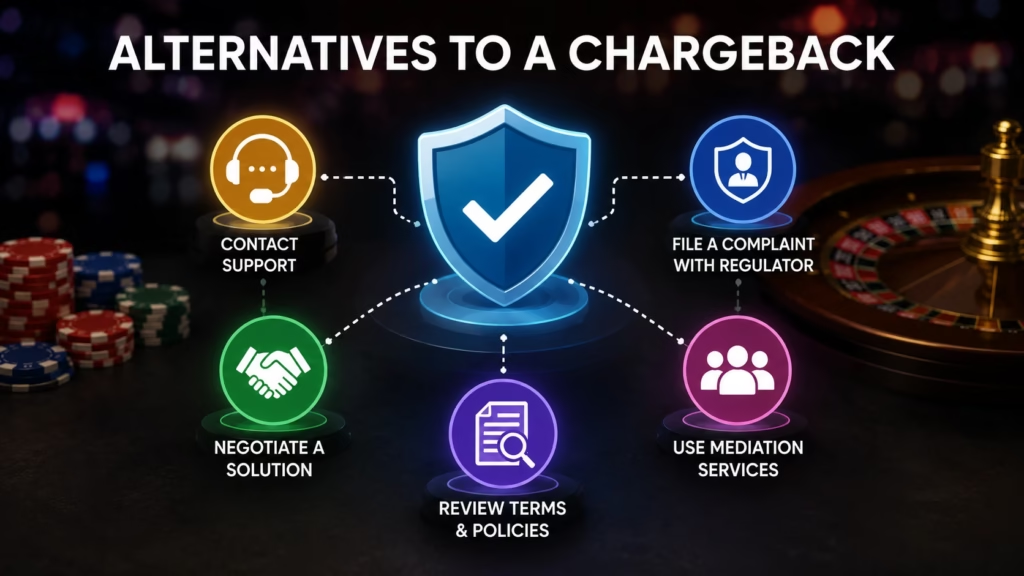
Filing a chargeback should rarely be the first step.
The first action should almost always be contacting casino support and attempting to resolve the issue directly.
Many payment errors are caused by technical delays, verification requirements, or misunderstandings that can be corrected without involving a bank.
If support fails to help, players can escalate the complaint through the casino’s official dispute process.
When dealing with licensed operators, regulatory authorities or independent mediation services may also be available.
Only after these options have been exhausted should a chargeback become a serious consideration.
Approaching the situation in stages often leads to better outcomes and reduces the risk of unnecessary account restrictions.
Common Mistakes Players Make
One of the biggest mistakes is filing a chargeback immediately after losing money.
Banks see gambling disputes every day and can often identify situations where a player is simply experiencing buyer’s remorse.
Another mistake is ignoring the casino’s terms and conditions before depositing.
Many disputes arise because players fail to understand wagering requirements, withdrawal limits, verification policies, or restricted payment methods.
A third mistake involves providing inconsistent information during the investigation.
Any contradiction between statements, account records, and transaction history can weaken a claim.
Accuracy and honesty are essential throughout the process.
Is a Chargeback Worth It?
The answer depends entirely on the circumstances.
If the issue involves fraud, unauthorized transactions, payment processing failures, or a genuinely dishonest casino, a chargeback can be an important consumer protection tool.
If the issue is simply losing a wager or regretting a gambling decision, a chargeback is unlikely to succeed and may create additional complications.
The strongest disputes are supported by evidence, reasonable communication attempts, and a legitimate concern about the transaction itself.
Understanding this distinction can save players significant time, frustration, and potential account restrictions.
Final Thoughts
A casino deposit chargeback is not a shortcut to recovering gambling losses. It is a financial protection mechanism designed to address genuine problems such as fraud, unauthorized payments, merchant misconduct, or service failures.
Before filing a dispute, players should gather evidence, contact the casino, review the applicable terms and conditions, and explore available complaint procedures. In many cases, issues can be resolved without involving a bank.
When a chargeback is justified, acting honestly and providing complete documentation gives the best chance of a fair outcome.
The most effective strategy is prevention. Choosing licensed casinos, understanding payment rules, reading bonus conditions carefully, and maintaining transaction records can dramatically reduce the likelihood of ever needing a chargeback.
FAQs
Can I charge back a casino deposit after losing money?
Generally, no. Losing money through normal gambling activity is not usually considered a valid reason for a chargeback.
Will a casino ban me for filing a chargeback?
Many casinos suspend or permanently close accounts once a chargeback is initiated, especially if the dispute is related to completed gambling activity.
How long does a casino chargeback investigation take?
Most investigations take several weeks, although complex cases can take several months depending on the bank and payment provider.
Can I charge back an unauthorized casino transaction?
Yes. Unauthorized transactions are one of the most common and legitimate reasons for filing a chargeback.
What evidence should I provide during a chargeback?
Transaction records, screenshots, emails, support conversations, account statements, and any documentation showing the issue can strengthen your claim.
Is filing a false chargeback illegal?
Knowingly submitting a false dispute may be considered chargeback fraud and can lead to account restrictions, financial penalties, or legal consequences.
Should I contact the casino before requesting a chargeback?
Yes. Most banks expect customers to attempt resolution directly with the merchant before initiating a formal dispute.
Can a chargeback recover funds from a scam casino?
In some situations, yes. If the casino engaged in fraud or failed to provide promised services, a chargeback may help recover part or all of the deposited funds.