Travel to a time that is both ancient and new-Welcome to Heroes of Might and Magic: Olden Era, a turn-based strategy game that has managed to generate significant buzz throughout its early access period on Steam. We delve into every significant aspect of the game from the rich gameplay that evokes the “golden age” of the franchise to the enhanced graphics that breathe new life into a familiar world.
From long-time fans who recall fond memories of noble quests, fortress-building tactics and great battles to recent devotees of the rising sensation, this review will shed light upon the current state of Olden Era. This review will compare Olden Era with classics such as Heroes III, mentioning its innovations over them regarding resource allocation, development of heroes, and the multiplayer mode; while also touching on the few Early Access shortcomings. Having played for 50+ hours, with multiple races and difficulty settings, this review will tell you whether this new installment is for you.
Gameplay Mechanics: Reviving Classic Strategy Depth
The gameplay in Heroes of Might and Magic: Olden Era successfully captures the spirit of the series’ golden era while introducing thoughtful modern improvements that keep the experience engaging. Players guide heroes across expansive maps filled with neutral enemies, hidden treasures, and rival armies, carefully balancing exploration, resource management, and tactical combat within a smooth turn-based system.
Core mechanics such as town development feel familiar yet refined. Upgrading structures to recruit a wide variety of units—from knights and dragons to undead forces—is more intuitive thanks to cleaner menus and quality-of-life features like quick-save options. At the same time, the game maintains the resource scarcity that made earlier entries so strategically demanding.
Hero progression stands out as one of the strongest elements, offering flexible skill trees that allow players to specialize in areas like magic, logistics, or combat. This opens the door to diverse playstyles, such as necromancers who raise fallen enemies during battle or mobility-focused heroes who outmaneuver opponents on the map. Combat itself requires careful positioning, effective spell usage, and smart unit coordination, especially on higher difficulties where the AI becomes noticeably more aggressive and adaptive.
Both single-player and multiplayer modes offer plenty of depth. Campaigns deliver story-driven experiences across factions like Haven and Inferno, along with new additions that expand the universe. If you enjoy strategic, high-stakes decisions in gaming, you might also appreciate the thrilling environment of online casinos where similar skill-based thinking applies. Meanwhile, multiplayer modes—ranging from hot-seat to online matches—support up to eight players and provide highly replayable strategic encounters. While minor issues like occasional pathfinding glitches remain, the overall gameplay experience is rich, challenging, and highly rewarding.
Graphics and Art Style: A Visual Renaissance
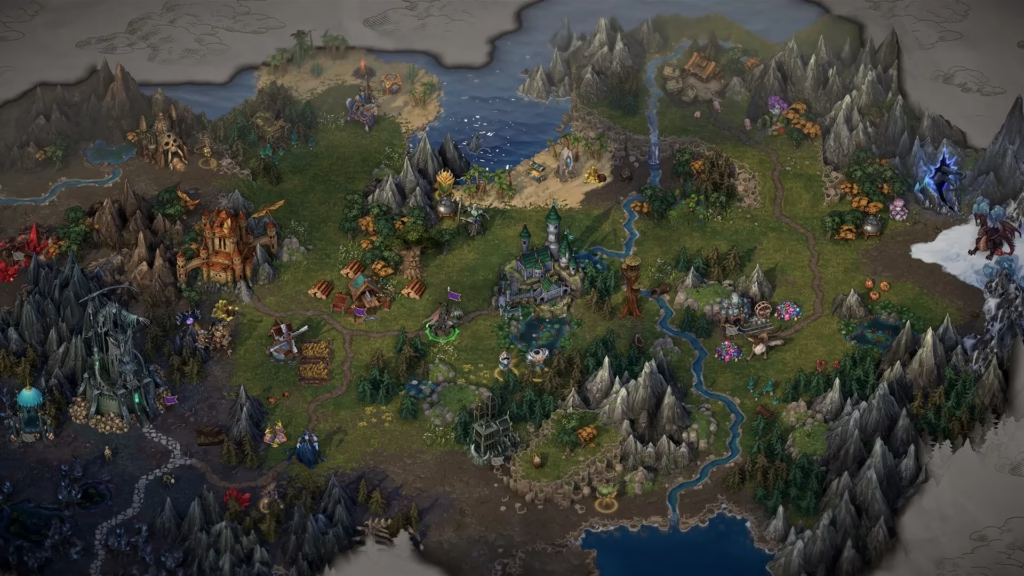
The visual presentation of Heroes of Might and Magic: Olden Era strikes an impressive balance between nostalgia and modern design. The game blends classic pixel-art inspiration with high-resolution 2D and 3D elements, creating environments that feel both familiar and visually updated for today’s standards.
Maps are filled with detail, from dense forests and fog-covered swamps to towering castles that evolve visually as players invest resources into their development. Dynamic lighting, weather effects, and day-night cycles enhance immersion, making each map feel alive and reactive. Battles are equally engaging, with smoothly animated units and satisfying visual effects that give weight to every action, whether it’s a dragon unleashing fire or a unit falling in combat. Fans of immersive visual gameplay may also enjoy exploring online slots games that offer equally rich animations and engaging themes.
The user interface is clean, customizable, and easy to navigate, providing helpful information without cluttering the screen. Compared to older entries in the series, the visual upgrade is significant, with support for higher resolutions, including 4K, and stable performance even on mid-range systems. Optional retro filters also allow players to recreate the classic look if they prefer a more traditional aesthetic.
Sound design complements the visuals perfectly, with orchestral music and ambient effects enhancing the overall atmosphere. Together, these elements create a polished presentation that respects the series’ roots while embracing modern expectations.
Soundtrack and Audio Design: Epic Orchestrations
The soundtrack in Heroes of Might and Magic: Olden Era plays a crucial role in shaping the overall experience, delivering a rich and immersive audio landscape that enhances both exploration and combat. The music blends orchestral compositions with distinct themes tailored to each faction, creating a strong sense of identity and atmosphere throughout the game.
From triumphant melodies that accompany castle management to darker, more intense tones during battles, the soundtrack adapts naturally to the pace and mood of gameplay. Voice acting adds another layer of depth, with characters delivering lines that feel fitting for the game’s fantasy setting, while creature sounds and environmental effects provide consistent and satisfying feedback.
Players also benefit from a range of customization options, including adjustable audio levels and subtitles, ensuring accessibility without compromising immersion. Continuous updates during Early Access have already improved track variety and reduced repetition, making the audio experience more dynamic over extended play sessions. Overall, the sound design not only supports the gameplay but actively enhances the emotional and strategic impact of each moment.
Performance and Early Access Status: Stability Check
From a technical perspective, Heroes of Might and Magic: Olden Era performs reliably for an Early Access title. The game runs smoothly across a range of systems, maintaining stable frame rates even on large maps with numerous units and ongoing battles. Load times are short, and autosave features work consistently, helping players avoid losing progress during longer sessions.
Additional features such as cloud saves and controller support further improve convenience, allowing for seamless gameplay across different setups. While the experience is largely stable, some minor issues remain, including occasional pathfinding inconsistencies and limited optimization for ultra-wide displays.
The development team has been actively addressing these concerns through regular updates, fixing bugs and improving overall performance. Their transparent roadmap also outlines upcoming features, including new factions and expanded gameplay systems, indicating strong long-term support. Despite being in Early Access, the game already feels polished enough to offer a dependable and enjoyable experience.
Multiplayer and Replayability: Endless Strategic Showdowns
Multiplayer in Heroes of Might and Magic: Olden Era brings back the competitive essence of the franchise with a variety of modes designed for both casual and dedicated players. Options such as hot-seat, LAN, and online matchmaking allow up to eight players to compete or cooperate in dynamic matches across custom scenarios.
The matchmaking system helps create balanced games, while additional features like ranked modes and cosmetic rewards add a sense of progression and competition. Custom map creation tools further enhance replayability, enabling players to design unique scenarios with specific challenges and objectives.
Replay value is significantly boosted by procedural map generation, a wide range of artifacts with meaningful gameplay effects, and scalable AI difficulty that keeps matches engaging at all skill levels. Whether playing solo or against others, the game offers countless strategic possibilities, ensuring that no two sessions feel the same. Continuous updates and upcoming features like cross-play support only strengthen its long-term appeal.
Final Verdict: Worth Your Turn?
Heroes of Might and Magic: Olden Era stands as a strong revival of a beloved strategy franchise, successfully blending classic gameplay elements with modern improvements. The core mechanics are engaging, the visuals are polished, and the multiplayer experience adds lasting value.
Although there are still areas that could benefit from further refinement during Early Access, the overall experience is already highly enjoyable and well worth exploring for fans of turn-based strategy games. It delivers both nostalgia and innovation in a way that feels balanced and satisfying, making it a compelling choice for both returning players and newcomers alike.
FAQs
What makes Heroes of Might and Magic: Olden Era stand out from previous games in the series?
Heroes of Might and Magic: Olden Era distinguishes itself through deeper hero customization, improved gameplay systems, and enhanced replayability. The updated skill trees allow for more flexible character builds, while procedural map generation ensures a fresh experience in every session. Combined with modern visuals and ongoing improvements during Early Access, the game offers a refined version of the classic formula that appeals to both longtime fans and new players.
Is Heroes of Might and Magic Olden Era worth playing in Early Access?
The game already provides a well-rounded experience during its Early Access phase, with stable performance, engaging gameplay, and regular updates from the developers. While minor issues still exist, they do not significantly impact the overall experience, making it a worthwhile option for players who enjoy strategy games and are comfortable with a work-in-progress title.
How do the graphics in Heroes of Might and Magic: Olden Era compare to Heroes III?
The graphics build upon the classic style of Heroes III while introducing modern enhancements such as higher resolutions, improved animations, and dynamic visual effects. The result is a visual experience that feels both nostalgic and updated, preserving the charm of the original while making it more appealing to today’s audience.
What are the best strategies for winning in Heroes of Might and Magic Olden Era multiplayer?
Success in multiplayer often depends on early map control, efficient resource management, and smart hero development. Focusing on scouting, securing key locations, and building strong unit compositions can provide a significant advantage. Adapting strategies based on opponents and maintaining a balance between offense and defense are also essential for consistent success.
When is the full release of Heroes of Might and Magic: Olden Era expected?
Blackjack is considered the best casino table game because it has the lowest house edge (around 0.5%) when played with basic strategy.