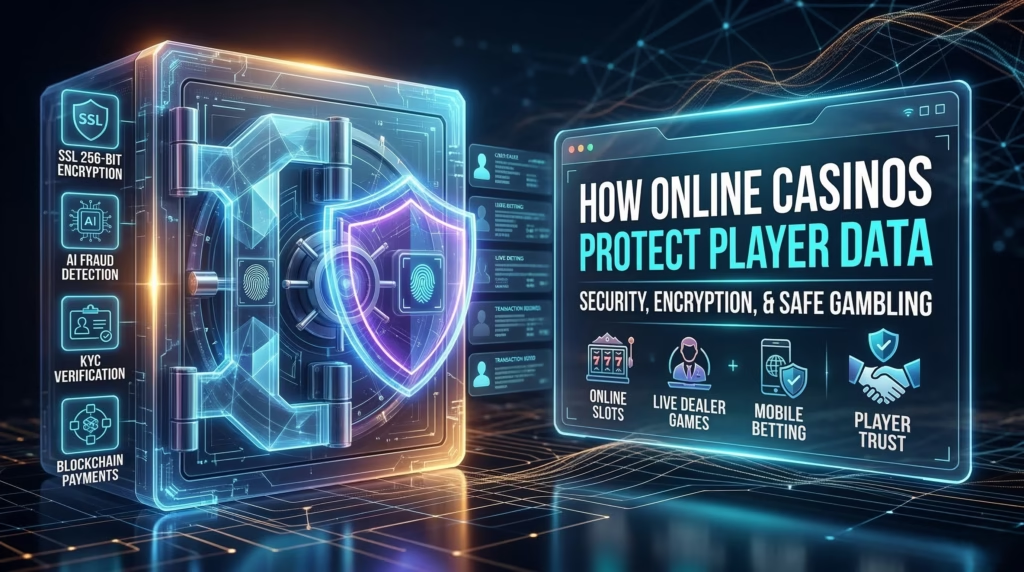
A Complete Guide to Security, Encryption, and Safe Online Gambling
Online gambling has come a long way over the past decade. There was a time when the biggest concern inside a casino was someone sneaking in a hidden camera or trying to manipulate a slot machine. Security meant watching the gaming floor.
Today the situation looks very different.
With the rise of online casinos, mobile betting platforms, and crypto gambling sites, the real concern isn’t cheating at the table — it’s protecting player data. Every time you sign up for a casino account, you share personal details like your name, ID verification documents, payment information, and sometimes even biometric authentication.
Naturally, that raises an important question:
How safe is your personal information when playing at an online casino?
Fortunately, the modern iGaming industry takes security very seriously. Licensed operators now use advanced technologies such as 256-bit encryption, AI fraud detection, blockchain payments, and strict regulatory compliance to protect players.
In this guide, we’ll break down exactly how secure online casinos protect player data and what you can do to stay safe while enjoying online gambling.
The Importance of Data Security in Online Casinos
Before diving into the technology, it’s worth understanding why casino cybersecurity matters so much.
Online casinos store large amounts of sensitive information, including:
Account login credentials
Personal identification details
Banking and payment information
Gaming activity and transaction records
Because of this, reputable casinos must follow strict online gambling security standards. If a platform fails to protect its users, the consequences can include regulatory fines, legal action, and a loss of player trust.
In short, data protection is now a core part of the online casino industry.
1. SSL Encryption: The First Line of Defense
The foundation of online casino security is SSL encryption.
Most licensed casinos use 256-bit SSL (Secure Socket Layer) encryption, the same level of security used by banks and financial institutions. This technology encrypts data as it travels between your device and the casino’s servers.
In simple terms, your personal information is converted into complex code before it’s transmitted online. Anyone attempting to intercept that data would only see unreadable characters.
Modern platforms often go a step further by implementing end-to-end encryption, meaning data remains encrypted throughout the entire system.
For players, this protection is usually visible through the secure padlock icon in the browser address bar, which confirms that the connection is encrypted.
2. KYC Verification Protects Player Accounts
Anyone who has played at an online casino has probably encountered the KYC verification process.
KYC, or Know Your Customer, requires players to verify their identity before withdrawals are processed. This usually involves uploading documents such as:
- Passport or driver’s license
- Proof of address (utility bill or bank statement)
- Selfie verification or biometric scan
While the process can sometimes feel inconvenient, it serves a very important purpose.
KYC checks prevent identity theft, fraud, and unauthorized withdrawals. Without these safeguards, someone who gained access to your login credentials could easily withdraw funds from your account.Many fast payout online casinos now use AI-powered verification systems that can confirm identity documents within minutes, making the process faster and more secure than ever.
3. Blockchain Technology and Crypto Casino Security
One of the biggest developments in recent years is the growth of crypto casinos and blockchain-based gambling platforms.
Blockchain technology allows transactions to be recorded on a decentralized digital ledger. Because of this system, the casino does not always need to store traditional banking information.
This approach provides several advantages:
- Reduced risk of payment data breaches
- Transparent transaction history
- Faster withdrawals
- Increased privacy for players
Many Bitcoin casinos and crypto gambling platforms now use blockchain technology to offer provably fair gaming, where players can independently verify that game outcomes are random and not manipulated.
For privacy-conscious players, crypto payments can offer an additional layer of protection.
4. Zero Trust Architecture in Casino Security Systems
Traditional cybersecurity systems relied on the assumption that users inside the network could be trusted. However, modern cybersecurity has moved toward a different philosophy known as Zero Trust Architecture.
Under this model, every user and system must verify their identity continuously.
Online casinos using Zero Trust security typically separate sensitive information across different systems, such as:
- Payment processing servers
- Player account databases
- Game activity records
This segmentation ensures that even if one part of the system is compromised, attackers cannot access all user data.
For players, this means that personal information, banking details, and gameplay data are stored in separate secure environments.
5. AI Fraud Detection and Behavioral Monitoring
Cybersecurity in 2026 isn’t only about blocking attacks — it’s about identifying suspicious activity early.
Many modern online casinos use artificial intelligence and machine learning systems to detect unusual behavior.
These systems analyze patterns such as:
- Login locations
- Device changes
- Betting behavior
- Account access times
For example, if an account suddenly logs in from another country and begins placing unusually large bets, the system may automatically trigger security checks.
In some cases, the casino may request two-factor authentication (2FA) or temporary account verification to confirm that the activity is legitimate.
This proactive monitoring helps prevent account takeovers and fraudulent transactions before they cause damage.
6. Gambling Regulations and Data Protection Laws
Technology alone isn’t enough to guarantee player safety. The online casino industry is also heavily regulated.
Reputable casinos typically operate under licenses from respected authorities such as:
- Malta Gaming Authority (MGA)
- UK Gambling Commission (UKGC)
- Gibraltar Regulatory Authority
These organizations enforce strict rules related to data protection, fair gaming practices, and anti-money laundering policies.
In addition, many operators must comply with international privacy laws such as GDPR, which requires companies to store personal data securely and give users control over how their information is used.
Failure to follow these rules can result in significant fines or loss of operating licenses.
Tips for Keeping Your Casino Account Secure
Even with advanced security systems, players should take basic precautions when gambling online.
Here are a few simple steps that can significantly improve your account security:
- Enable two-factor authentication (2FA) whenever possible
- Use a strong, unique password for your casino account
- Avoid logging into gambling sites on public Wi-Fi networks
- Only play at licensed and regulated online casinos
- Never share screenshots showing account details or balances
Security works best when both casinos and players take responsibility.
Conclusion: Trust Is the Foundation of Online Gambling
The online casino industry has evolved dramatically over the past decade. Today’s platforms operate in an environment where player trust and data protection are essential for long-term success.
To keep player information safe, modern casinos rely on a combination of:
- Advanced encryption technology
- AI-based fraud detection
- Blockchain payment systems
- Strict regulatory oversight
Together, these tools create a much safer environment for players who want to enjoy online slots, live dealer games, and digital casino platforms.
While no system can guarantee complete security, choosing licensed online casinos with strong security practices significantly reduces the risks associated with online gambling.
FAQ: Online Casino Security
Look for a valid gaming license, SSL encryption, transparent privacy policies, and positive player reviews.
Most reputable casinos use encrypted payment gateways and third-party processors, meaning your financial data is protected during transactions.
Some crypto casinos allow minimal personal data during registration, but most regulated platforms require identity verification for withdrawals.
Due to anti-money-laundering regulations, casinos usually retain certain records for several years before securely deleting them.