I’ve noticed lately that nobody really plays games the way we used to. No long sessions. No grinding for hours. It’s all quick hits now—five minutes here, eight minutes there.
And honestly? It makes sense.
Attention spans are cooked. Time feels tighter. And the gaming industry has adapted fast. That’s why quick games you can play in under 10 minutes aren’t just popular—they’re basically the default now.
But here’s the thing most people miss…
These games aren’t just “short.”
They’re designed differently. Smarter. Sometimes a little manipulative, if we’re being real.
Let’s break it down.
Why Short Games Hit Harder Than Long Ones
I remember when I used to sit down for a “quick game” and end up playing for two hours. Now? If a game takes more than 10 minutes, I’m already thinking about quitting.
That shift didn’t happen by accident.
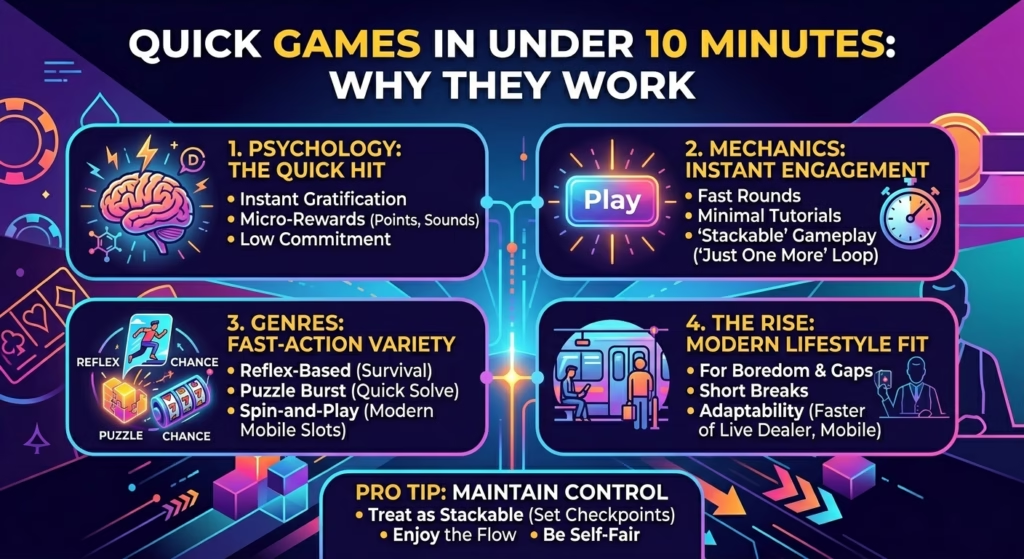
Quick games are built around instant engagement:
- No tutorials (or super short ones)
- Immediate action
- Fast outcomes
Vibe Check
Fast, punchy, no time wasted.
You’re not investing time—you’re sampling experiences.
And that’s addictive in its own way.
It’s kind of like the appeal behind fast payout casinos. You don’t want to wait. You want results now. Same psychology, just applied to gameplay instead of money.
Types of Quick Games You Can Play in Under 10 Minutes
Not all short games are equal. Some feel satisfying. Others feel like a waste of time.
I’ve noticed the ones that stick usually fall into a few categories:
A. Reflex-Based Games
- Tap, dodge, survive
- Super quick rounds
- Skill improves over time
Think endless runners or timing games.
B. Puzzle Burst Games
- Solve something fast
- Immediate feedback
- Reset quickly
Perfect when your brain wants just enough challenge.
C. Spin-and-Play Mechanics
This is where things start overlapping with casino-style design.
Modern mobile slots 2026 have basically mastered this format:
- Quick rounds
- Instant results
- Minimal thinking
Not saying they’re the same thing… but yeah, the influence is obvious.
Vibe Check
Simple mechanics, quick loops, easy to restart.
The “Just One More Game” Trap
Let’s be honest.
No one actually plays just one quick game.
I’ve caught myself saying, “Okay last round,” and then immediately starting another. Happens every time.
Why?
Because these games are built on micro-loops:
- Play
- Almost succeed
- Retry
That’s it.
Hot Take
Quick games aren’t short—they’re stackable.
Actually, scratch that—it’s more like they’re designed to feel short so you keep stacking them without noticing.
That’s how 5 minutes turns into 30.
Skill vs Luck: Where Do These Games Sit?
This part’s interesting.
Some quick games are skill-based. Others? Not so much.
I’ve noticed there’s a spectrum:
- High skill: Reflex games, puzzles
- Mixed: Timing-based mechanics
- Low skill: Pure chance systems
And yeah, some start feeling like simplified versions of gambling models.
You see similar ideas in crypto gambling trends, where speed and repetition drive engagement more than deep strategy.
But here’s the key difference:
Quick games usually don’t involve real stakes.
Which changes everything.
Vibe Check
Low commitment, low consequence, high repetition.
I remember waiting in line, pulling out my phone, and thinking, “I’ve got 3 minutes.”
That’s exactly the environment these games are built for.
- Short breaks
- Commutes
- Waiting rooms
- Even bathroom time (yeah, let’s not pretend otherwise)
They fill gaps.
Hot Take
Quick games aren’t competing with other games—they’re competing with boredom.
And they’re winning.
Even traditional formats are adapting. You’ll see faster rounds, simplified interfaces, even in things that used to require focus—like using a live dealer strategy, which now often gets streamlined for quicker decisions.
Speed is everything now.
The Psychology of “Quick Wins”
Here’s where it gets a bit deeper.
Quick games rely heavily on micro-rewards:
- Small points
- Visual feedback
- Sound effects
You don’t need a big win. You just need a constant trickle of progress.
Vibe Check
Small rewards, steady dopamine.
It’s subtle, but effective.
Your brain doesn’t care if the reward is big or small—it just cares that it happens.
That’s why losing doesn’t feel as bad either.
You’re always close to winning.
Alright, let’s not sugarcoat this.
Even though these games feel harmless, they can still mess with your time.
I’ve had sessions where I thought I played for 10 minutes… and it was actually 45.
No joke.
Vibe Check
Fun, but slippery.
This is where awareness matters.
Not in a preachy “set limits” way—but just being real with yourself.
Pro Tip
If you’re opening a game just to kill time, set a mental checkpoint:
“When I finish this round, I’m done.”
Simple. Not perfect—but it helps.
And yeah, this idea overlaps with fair play gaming in a broader sense. It’s not just about fairness from the game—it’s about fairness to yourself.
How to Choose the Right Quick Game for You
Not all quick games hit the same.
I’ve noticed your mood matters more than the game itself.
If You Want to Relax:
Go for simple, repetitive games
(No pressure, just flow)
If You Want a Challenge:
Pick reflex or puzzle games
(Short but intense)
If You Want Pure Distraction:
Low-effort, luck-based games
(No thinking required)
Pro Tip
Don’t force yourself to enjoy a game just because it’s popular.
If it feels like work, it’s not the right one.
Why This Trend Isn’t Going Anywhere
Let’s be real—this isn’t a phase.
Quick games are only getting better.
- Smarter design
- Faster loading
- More engaging loops
And as attention spans keep shrinking… yeah, these games will keep growing.
Hot Take
Long games aren’t dying—but quick games are taking over the daily habit slot.
Big difference.
You might still play a long game on weekends.
But during the day? It’s all about quick hits.
Final Thought: It’s Not About Time—It’s About Control
So yeah, quick games you can play in under 10 minutes sound simple on the surface.
But they’re not really about time.
They’re about control.
Control over:
- Your attention
- Your engagement
- Your decisions
And the tricky part?
They’re really good at taking that control without you noticing.
I still play them. Probably will keep playing them.
But now, at least, I know what’s happening under the hood.
And that changes the experience.
Just a little.