I’ve noticed lately that responsible gambling doesn’t feel like an “event” anymore.
It used to be something you planned—maybe a night out, maybe a weekend thing. Now? It’s just… there. In your pocket. One tap away.
You’re waiting for food, scrolling your phone, and suddenly you’re spinning a slot or sitting at a live table.
No buildup. No pause.
And that’s exactly why staying in control matters more now than it ever did.
Because the biggest risk today isn’t losing money fast—it’s losing track of how often you’re playing.
So let’s talk about this properly. Not like a warning label. Not like a lecture.
Just real talk—how control actually slips, and how you keep it.
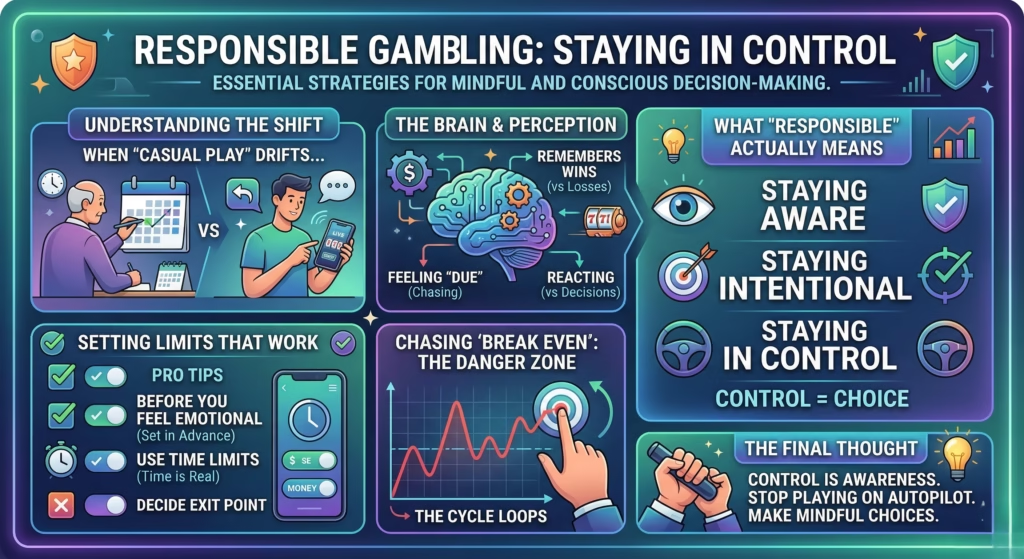
When “Casual Play” Stops Being Casual
I remember when I used to tell myself, “It’s just for fun.”
And most of the time, it was.
But then I started noticing patterns.
Not big, dramatic changes. Small ones:
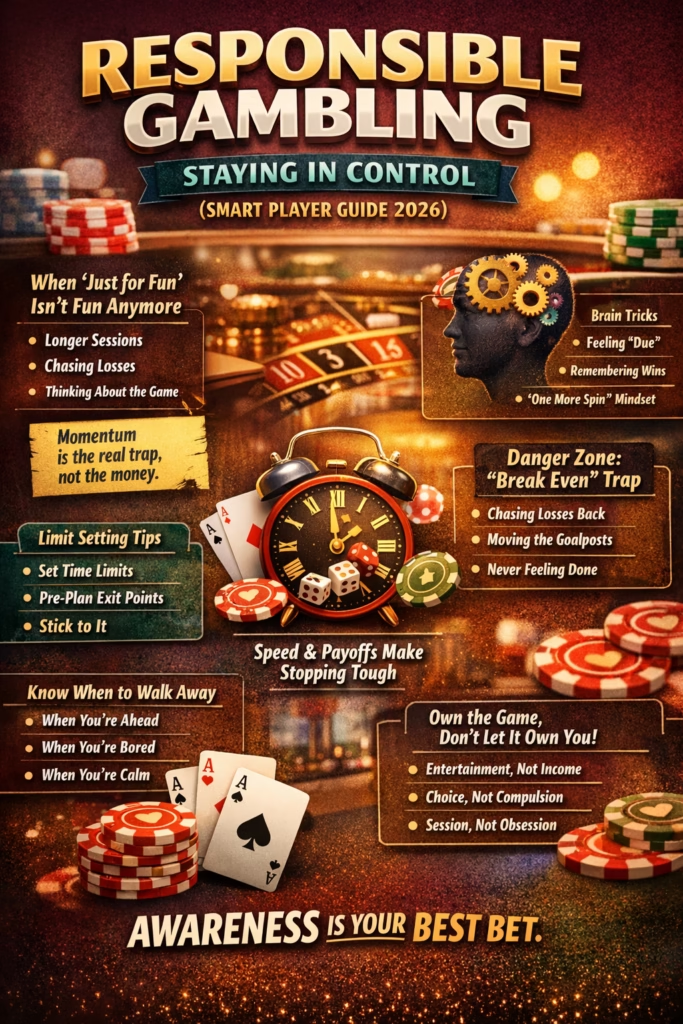
- Playing a little longer than planned
- Jumping back in after a loss
- Thinking about the game even after logging out
Nothing extreme. But consistent.
And that’s the thing—losing control doesn’t happen all at once. It builds quietly.
Actually, scratch that—it drifts.
You don’t notice it because each step feels normal.
Vibe Check
Subtle shift. Nothing feels wrong, but something feels… different.
The Real Risk Isn’t Money—It’s Momentum
People think responsible gambling is about budgeting.
It is—but that’s not the full picture.
I’ve noticed that what really gets people isn’t how much they lose. It’s how long they stay in the cycle.
You start playing → you lose a bit → you keep going → you almost win → you keep going again.
That loop builds momentum.
And once you’re in it, stopping feels harder than continuing.
This is especially true now with mobile slots 2026, where everything is designed to be fast, smooth, and always available.

No friction. No delay. Just constant access.
💥 Hot Take
Gambling doesn’t pull you in with losses—it pulls you in with momentum.
And momentum is harder to break than habit.
Why Your Brain Doesn’t Play Fair
I remember thinking I could stay logical while playing.
Set limits. Stick to them. Easy.
Yeah… not quite.
Because your brain isn’t wired for “fair play gaming” in the way you think.
Even if the games themselves are statistically fair, your perception isn’t.
Here’s what happens:
- You remember wins more than losses
- You feel “due” for a win after losing
- You chase that one moment where everything clicks
And suddenly, you’re not making decisions—you’re reacting.
That’s the shift.
Vibe Check
Awareness kicks in. You realize the game isn’t just numbers—it’s psychology.
The Illusion of Control (And Why It Feels So Real)
I’ve noticed this especially with table games.
You sit down, you make choices, you feel involved.
And if you’re using something like a live dealer strategy, it adds another layer of confidence.
You’re not just clicking—you’re deciding.
But here’s the catch:
Control in gambling is limited.
You can control:
- Bet size
- Game choice
- Session length
But you can’t control outcomes.
And when those outcomes don’t go your way, the illusion cracks.
That’s when people:
- Increase bets
- Stay longer
- Try to “fix” the session
Hot Take
Feeling in control isn’t the same as being in control.
And mixing those up? That’s where things go sideways.
How the System Keeps You Playing
Let’s zoom out for a second.
Modern gambling platforms aren’t just about games—they’re about experience.
I’ve noticed:
- Faster load times
- Instant deposits
- Smooth transitions between games
Even payment systems have evolved, especially with crypto gambling trends, making everything quicker and more seamless.
And yeah, even discussions around fast payout casinos highlight speed as a benefit.
But speed isn’t neutral.
It removes friction.
And friction used to be your safety net:
- Waiting for deposits
- Thinking before playing
- Pausing between sessions
Now? Those pauses are gone.
Vibe Check
Everything feels easier. But easier doesn’t always mean better.
Setting Limits That Actually Work
I remember setting limits before and thinking, “That’s enough.”
Then breaking them five minutes later.
So yeah—just setting limits isn’t enough.
You need limits that hold up under pressure.
Pro Tip
Set limits before you feel emotional.
If you set them mid-session, you’re already compromised.
Pro Tip
Use time limits, not just money limits.
Money can feel abstract. Time is real.
Pro Tip
Decide your “exit point” in advance.
Not when you’re losing. Not when you’re winning. Before you start.
Because once you’re in the flow, decision-making changes.
And not in your favor.
The Quiet Danger: Chasing “Break Even”
I’ve noticed this is where most players slip.
Not chasing a big win.
Just trying to get back to zero.
It sounds reasonable:
“I’ll stop once I recover what I lost.”
But here’s the problem:
That target keeps moving.
You get close → lose again → adjust the goal → keep playing.
And suddenly, what was supposed to be a short session turns into something else entirely.
Hot Take
Breaking even is the most dangerous goal in gambling.
Because it feels responsible—but it keeps you locked in.
Vibe Check
Frustration mixed with determination. You’re not playing for fun anymore—you’re playing to fix something.
Knowing When to Step Away (Before It Feels Urgent)
This is the part no one really talks about.
Most people don’t stop when they should.
They stop when they have to.
Big difference.
I’ve learned that the best time to walk away is:
- When you’re ahead
- When you’re bored
- When you’re neutral
Not when you’re frustrated. Not when you’re chasing.
Because at that point, your decisions are already influenced.
Pro Tip
If you’re asking yourself “Should I stop?”—that’s your answer.
It’s Not About Avoiding Gambling—It’s About Owning It
Let’s be real.
Most people reading this aren’t trying to quit gambling entirely.
They just want to keep it under control.
And that’s possible.
But only if you shift how you see it.
I remember when I started treating gambling like:
- Entertainment, not income
- A choice, not a reaction
- A session, not a cycle
Everything changed.
I played less.
Enjoyed it more.
Stopped when I said I would.
Not perfectly—but consistently.
Vibe Check
Clarity. You’re not avoiding the game—you’re setting the terms.
So… What Does “Responsible” Actually Mean?
It’s not about:
- Never losing
- Always winning
- Playing perfectly
It’s about:
- Staying aware
- Staying intentional
- Staying in control
That’s it.
And control doesn’t mean restriction—it means choice.
Final Hot Take
Responsible gambling isn’t about discipline—it’s about awareness.
Because once you’re aware, your decisions change naturally.
Final Thought
I remember when I thought control meant willpower.
Now I see it differently.
Control isn’t about fighting the system.
It’s about understanding it.
Because once you understand:
- How games are designed
- How your mind reacts
- How easily habits form
You stop playing on autopilot.
And that’s the real win.
Not beating the casino.
Not chasing a payout.
Just knowing when to stop—and actually doing it.
Because in the end, the only thing you really control here…
Is whether you keep playing.