Stake Zoo is one of the latest Stake Originals-style games, built around a simple animal-prediction format. Instead of spinning reels or playing cards, players choose animals and wait to see which trio appears as the winning result.
The game looks simple at first, but the real interest comes from its risk levels. Some animals appear more often and offer lower payouts, while rare animals can trigger much bigger multipliers. According to available game details, Stake Zoo has a reported 98% theoretical return and a maximum multiplier of 1,000x.
What Is Stake Zoo Game?
Stake Zoo is a prediction-based Stake Originals game where players choose animals from a 20-position setup. The goal is to predict which animals will appear in the winning trio.
The game uses six animals:
- Lion
- Cheetah
- Elephant
- Crocodile
- Rhino
- Penguin
Each animal does not appear in the same quantity. For example, Lion and Cheetah are rare, while Penguin appears the most. This is what creates different risk and payout levels inside the game.
How Stake Zoo Works
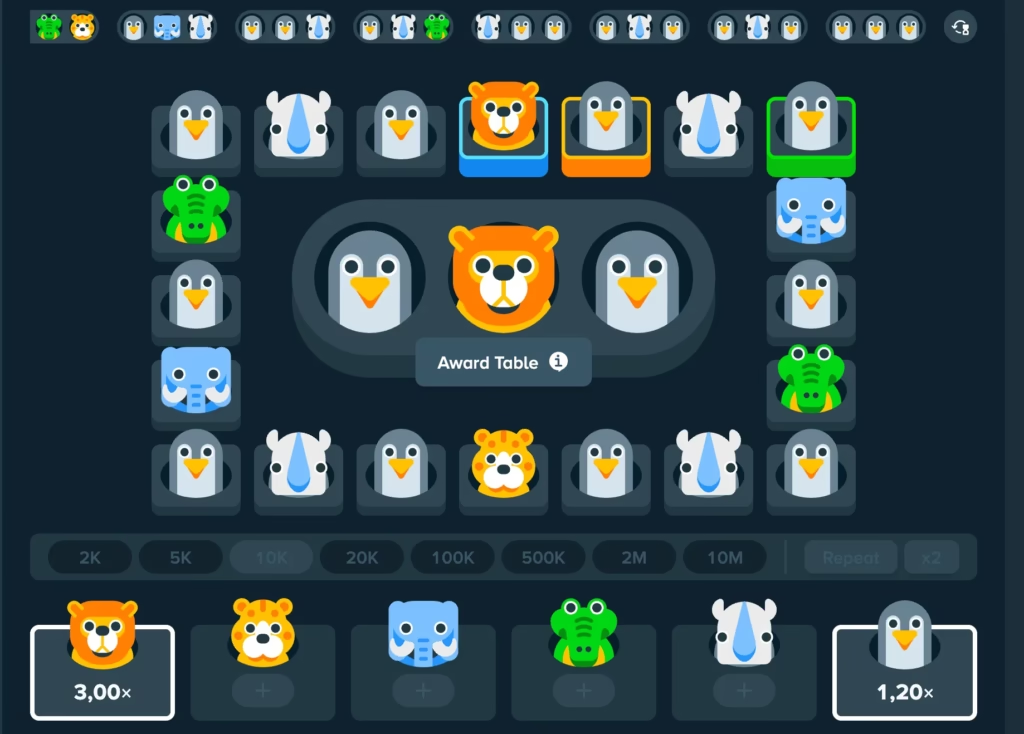
The basic idea of Stake Zoo is simple. You select one or more animals, place your play amount, and wait for the result. If your chosen animal appears in the winning trio, the payout depends on the animal and how many times it appears.
A common animal like Penguin has a higher chance of appearing, but its payout is smaller. A rare animal like Lion or Cheetah has a much lower chance, but it can offer a much higher multiplier.
This makes Stake Zoo a risk-choice game. You are not controlling the result, but you are choosing the type of risk you want to take.
Stake Zoo Animals and Their Risk Levels
Here is a simple breakdown of how the animal setup works:
| Animal | Number on Track | Risk Level | Payout Style |
|---|---|---|---|
| Lion | 1 | Very High | Biggest multiplier potential |
| Cheetah | 1 | Very High | Biggest multiplier potential |
| Elephant | 2 | High | Strong payout potential |
| Crocodile | 2 | High | Strong payout potential |
| Rhino | 4 | Medium | Balanced risk |
| Penguin | 10 | Low | More frequent, lower payout |
Lion and Cheetah are the riskiest picks because each appears only once in the 20-position setup. Penguin is the safest-looking option because it appears 10 times, but the multiplier is much smaller.
So, if you want lower risk, Penguin and Rhino are easier to understand. If you want high multiplier potential, Lion and Cheetah are the main picks — but they are also much harder to hit.
Stake Zoo Multipliers Explained
The multiplier in Stake Zoo depends on the animal and the result. Rare animals pay more because they are harder to land. Common animals pay less because they appear more often.
According to the available paytable details, three Lions or three Cheetahs can reach the 1,000x multiplier. Three Elephants or three Crocodiles can reach 224x, while Rhino and Penguin combinations offer smaller payouts.
This is the main attraction of Stake Zoo. The game gives players a clear choice between safer low-payout picks and risky high-payout picks.
But it is important to understand one thing: a bigger multiplier usually means a lower chance of hitting. The 1,000x result may look exciting, but it is tied to rare outcomes.
What Is the RTP of Stake Zoo?
Stake Zoo has a reported 98% theoretical return. RTP means “Return to Player.” In simple words, it is a long-term theoretical percentage that shows how much a game may return over a very large number of rounds.
However, RTP does not mean you will win 98 out of 100 rounds. It also does not mean every player will get 98% of their money back. The result of each round is still random, and short-term outcomes can be very different.
This is why players should not treat RTP as a winning guarantee. It is only a theoretical figure used to understand the game’s long-term return model.
Can Stake Zoo Really Hit 1,000x?
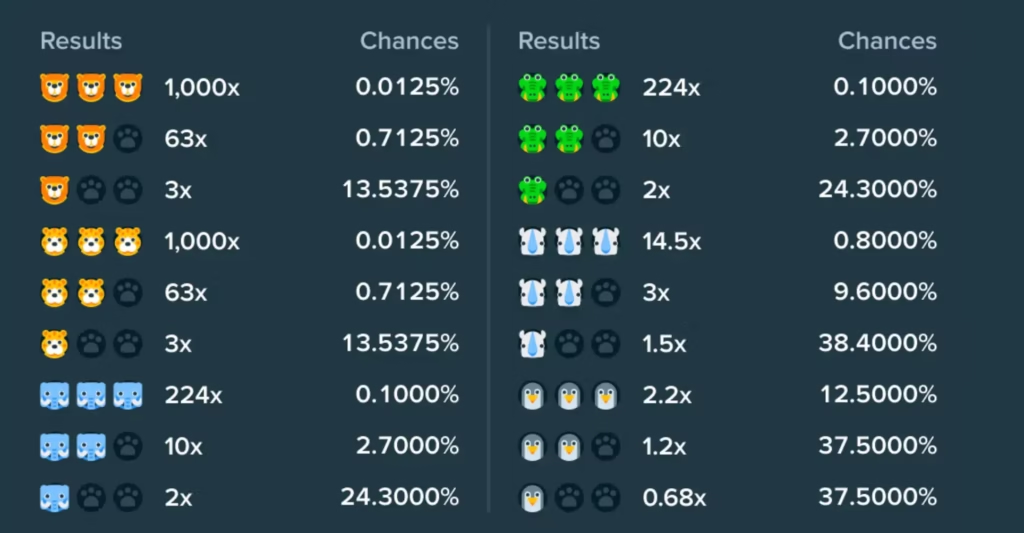
Yes, Stake Zoo can reportedly reach a 1,000x maximum multiplier, but only through rare combinations. The highest multiplier is linked to outcomes such as three Lions or three Cheetahs.
This means the 1,000x win potential is real in the paytable, but it is not something players should expect often. The rarest animals carry the biggest reward because they are much harder to land.
For beginners, this is the simplest way to understand it:
Low-risk animals = more frequent results, smaller multipliers.
High-risk animals = rare results, bigger multipliers.
So, if you are playing Stake Zoo, your animal choice should match your risk comfort. Do not chase the 1,000x multiplier without understanding that it comes with high volatility.
How to Play Stake Zoo
Stake Zoo is easy to play, especially if you already understand simple prediction games.
Here is the basic process:
- Open the Stake Zoo game.
- Choose the animal or animals you want to select.
- Set your play amount.
- Confirm your picks before the round starts.
- Wait for the winning trio to appear.
- Your payout depends on the animal result and multiplier.
The game also uses a short selection window. Available details mention a 10-second selection window, so players need to make their picks quickly before the round begins.
Is Stake Zoo Worth Playing?
Stake Zoo may be worth trying if you enjoy simple, fast, multiplier-based games. It does not require complex rules, card knowledge, or slot features. You only need to understand the animal risk levels and how multipliers work.
The best part of the game is its simplicity. You can quickly understand which animals are safer and which ones are risky. The 1,000x multiplier also gives the game a strong high-risk appeal.
However, Stake Zoo is still a chance-based game. Animal selection can change your risk level, but it cannot guarantee a win. The rarest outcomes are difficult to hit, and even a high RTP does not remove the risk of losing.
A smart way to approach Stake Zoo is to play with a fixed limit, understand the paytable first, and avoid increasing your play amount just to chase rare multipliers.
Stake Zoo FAQs
What is Stake Zoo?
Stake Zoo is a Stake Originals-style prediction game where players choose animals and try to match the winning trio. The game includes animals like Lion, Cheetah, Elephant, Crocodile, Rhino, and Penguin.
What is the max multiplier in Stake Zoo?
The maximum multiplier in Stake Zoo is reportedly 1,000x. This is linked to rare outcomes such as landing three Lions or three Cheetahs.
Which animals have the highest multiplier in Stake Zoo?
Lion and Cheetah have the highest multiplier potential because they are the rarest animals in the game setup. Each appears only once in the 20-position track.
What is the RTP of Stake Zoo?
Stake Zoo has a reported 98% theoretical return. This is a long-term RTP figure, not a guarantee that players will win 98% of their rounds.
Is Stake Zoo based on skill or luck?
Stake Zoo is mainly based on luck and random outcomes. Choosing different animals changes your risk and payout style, but it does not give you control over the final result.