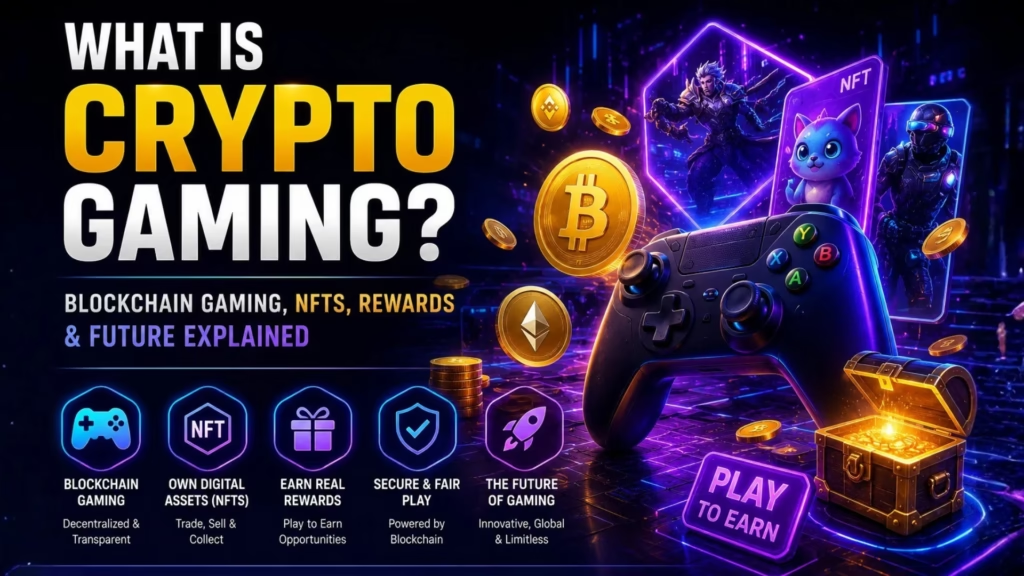
Crypto gaming is online gaming that uses blockchain, cryptocurrencies, NFTs, and smart contracts inside the game economy. Players may own digital items, trade in-game assets, earn tokens, or use a crypto wallet to connect with the game.
The basic idea is simple: traditional games keep most items inside the company’s own server, while crypto games can record some items or rewards on a blockchain. Ethereum explains Web3 as an internet model where blockchains, cryptocurrencies, and NFTs can give users more ownership over digital assets.
For players, crypto gaming can mean more control over items and rewards. It also brings risk. Token prices can fall, NFT values can drop, wallets can be hacked, and some games may shut down before building a strong player base.
What is crypto gaming?
Crypto gaming means video games or online games that use blockchain-based assets. These assets can include crypto tokens, NFTs, digital land, skins, characters, weapons, cards, or reward points that may exist outside the game’s internal database.
In a normal game, you may buy a skin or character, but the item usually stays locked inside that game account. In crypto gaming, some items can be recorded on a blockchain. If the game allows it, players may trade, sell, rent, or move these items through crypto wallets or NFT marketplaces.
A crypto game may include:
| Element | Meaning |
|---|---|
| Crypto token | A digital currency used inside the game |
| NFT | A unique digital item such as a character, skin, card, or land |
| Wallet | An app used to store crypto assets and connect with Web3 games |
| Smart contract | Code that controls ownership, transfers, rewards, or marketplace actions |
| Marketplace | A place where players can buy, sell, or trade game assets |
Crypto gaming is also called blockchain gaming, Web3 gaming, NFT gaming, or GameFi. These names are similar, but they do not always mean the same thing.
How does crypto gaming work?
Crypto gaming works by connecting the game with blockchain technology. The game itself may still run on normal servers, but selected assets or reward systems can be linked to a blockchain.
A player usually creates or connects a crypto wallet. The wallet stores tokens and NFTs. When the player buys, earns, sells, or transfers an asset, the transaction may be recorded on a blockchain.
Smart contracts handle many of these actions. Ethereum defines smart contracts as programs that run on the blockchain and contain code plus data at a blockchain address.
Here is a simple flow:
- The player creates a wallet.
- The player connects the wallet to the game.
- The player earns or buys a blockchain-based asset.
- The asset appears in the wallet or game account.
- The player may use, trade, sell, or hold the asset, depending on the game rules.
Some games require NFTs before playing. Some games are free and give rewards later. Some games hide the crypto side in the background so the player can start with an email or social login.
Good crypto games focus on gameplay first. Weak crypto games depend only on token hype.
Crypto gaming vs traditional gaming
Crypto gaming and traditional gaming can look similar on the screen. The difference is usually in ownership, economy, and asset control.
| Point | Traditional gaming | Crypto gaming |
|---|---|---|
| Item ownership | Controlled by the game company | May be recorded on blockchain |
| Asset trading | Usually limited or restricted | May allow open trading |
| Rewards | Usually in-game only | May include tokens or NFTs |
| Login | Email, phone, console account | Wallet, email, or both |
| Game economy | Fully controlled by publisher | Can include player-driven markets |
| Risk | Account bans, item loss, server shutdown | Market risk, wallet risk, scam risk, token price risk |
Traditional gaming is usually simpler for beginners. You download the game, create an account, and play.
Crypto gaming can give more ownership options, but it needs more care. Players must understand wallets, private keys, gas fees, token prices, and security.
Key elements of crypto gaming
Blockchain
Blockchain is the technology that records transactions across a network. In crypto gaming, it can record ownership of items, token transfers, NFT trades, and other game-related actions.
A blockchain record can show who owns a token or NFT. This is why blockchain is often used for digital ownership in Web3 games.
Not every part of a crypto game needs to be on-chain. Many games keep gameplay, graphics, matchmaking, and player data on normal servers. The blockchain part may only handle assets, payments, or marketplace records.
Cryptocurrencies
Cryptocurrencies are digital tokens used inside or around crypto games. A game may use tokens for rewards, upgrades, trading fees, governance, crafting, staking, or marketplace purchases.
Example uses:
| Token use | Meaning |
|---|---|
| Rewards | Players earn tokens for activity |
| Purchases | Players buy in-game items |
| Upgrades | Tokens are used to improve characters or assets |
| Governance | Token holders may vote on some game decisions |
| Marketplace | Tokens are used for buying and selling NFTs |
Token rewards can attract players, but they also create financial risk. If too many tokens are created and demand falls, the token price can drop sharply.
NFTs
NFTs are unique digital tokens recorded on a blockchain. Ethereum describes NFTs as a way to represent anything unique as an Ethereum-based asset, powered by smart contracts.
In gaming, NFTs can represent:
| NFT type | Example |
|---|---|
| Character | A unique hero or avatar |
| Skin | A rare outfit or weapon look |
| Card | A collectible battle card |
| Land | A virtual plot inside a game world |
| Item | Sword, vehicle, badge, pet, or pass |
NFT gaming does not mean every item has real value. Value depends on demand, utility, rarity, game popularity, and market conditions.
A rare NFT in a dead game may have little demand. A common NFT in an active game may still be useful if players need it for gameplay.
Smart contracts
Smart contracts are blockchain programs that follow written rules. In crypto gaming, they may control NFT minting, marketplace trades, token rewards, staking, breeding systems, or item upgrades.
Ethereum also explains smart contracts as programs stored on the blockchain that follow “if this then that” logic and run according to the rules in the code.
Smart contracts reduce manual control in some parts of the game economy. They also create technical risk. If the contract has a bug, attackers may exploit it. Players should prefer games that use audited contracts and clear security practices.
Popular crypto gaming models
Play-to-earn
Play-to-earn games reward players with crypto tokens, NFTs, or other assets for playing. The model became popular because it gave players a way to earn from game activity.
Axie Infinity is one of the best-known examples of play-to-earn gaming. It used NFTs for in-game creatures and tokens such as AXS and SLP for parts of its economy.
The problem with many early play-to-earn games was weak sustainability. If new players stopped joining or token demand dropped, rewards became less attractive. This pushed the market toward better gameplay and more balanced reward systems.
Play-and-earn
Play-and-earn focuses on the game first and rewards second. The player should want to play because the game is enjoyable. Rewards become an extra layer.
This model is more practical for long-term growth because it does not depend only on earning hype. Players stay when the game is good, the community is active, and rewards are balanced.
In 2026, many serious Web3 gaming projects are moving toward this model because pure earning-based games often struggle when token prices fall.
NFT ownership
NFT ownership means players can hold blockchain-based in-game items in a wallet. These items may be used in the game, traded with other players, rented, upgraded, or sold.
This model works best when the NFT has real utility inside the game. A skin, character, card, or land asset should have a clear use. Without utility, NFT value depends mostly on speculation.
Players should check:
| Checkpoint | Why it matters |
|---|---|
| Is the NFT required to play? | Entry cost may be high |
| Can the NFT be sold? | Liquidity matters |
| Does the NFT improve gameplay? | Utility matters |
| Is supply limited? | Oversupply can reduce value |
| Is the game active? | Demand depends on players |
GameFi rewards
GameFi combines gaming with finance-style systems. These may include staking, yield rewards, token farming, NFT rental, guilds, marketplaces, and governance.
GameFi can be attractive, but it is also complex. Players should understand the reward source. If rewards depend only on new users buying tokens, the model may become unstable.
A healthy GameFi model needs active gameplay, real demand for assets, controlled token supply, and a reason for players to spend inside the game.
Benefits of crypto gaming
Crypto gaming can give players more control over digital assets. A player may be able to own a character, card, skin, or land asset outside the game’s private database.
It can also create open trading. Players may buy and sell items with others through marketplaces if the game permits it.
Another benefit is reward flexibility. Players may earn tokens or NFTs that have use inside the game or across connected platforms.
Crypto gaming can also support community-led economies. Some projects allow token holders to vote on certain decisions, though the quality of governance varies by project.
Main benefits:
| Benefit | Explanation |
|---|---|
| Digital ownership | Some assets can be held in a wallet |
| Trading options | Players may sell or trade items |
| Reward systems | Games may pay tokens or NFTs |
| Open marketplaces | Assets may move beyond one closed store |
| Community participation | Some games use governance tokens |
| Creator opportunities | Artists and developers can sell game assets |
These benefits depend on the game’s design. A crypto label alone does not make a game better.
Risks and challenges of crypto gaming
Crypto gaming has real risks. Players should understand them before adding money.
The first risk is price volatility. Crypto tokens and NFTs can rise and fall quickly. The SEC warns that crypto asset investments can be volatile, speculative, and may lack important investor protections.
The second risk is scams. Fake games, fake airdrops, fake NFT mints, phishing links, and wallet-draining websites are common in crypto. The CFTC and SEC have warned users about digital asset fraud where scammers promise high returns with little or no risk.
The third risk is wallet security. If a player loses the private key or signs a malicious transaction, assets can be lost.
The fourth risk is game failure. Many crypto games launch tokens before building strong gameplay. If players leave, asset prices can collapse.
The fifth risk is regulation. Crypto gaming may involve securities law, tax law, gaming law, gambling law, consumer protection law, and anti-money laundering rules.
Common risks:
| Risk | What can happen |
|---|---|
| Token crash | Rewards lose value |
| NFT illiquidity | You may not find buyers |
| Wallet hack | Assets can be stolen |
| Smart contract bug | Funds or NFTs can be exploited |
| Scam links | Fake websites can drain wallets |
| Legal issues | Some reward models may face restrictions |
| High entry cost | Players may spend more than they can afford |
A safe approach is to start free, use a separate wallet, avoid unknown links, and never treat game rewards as guaranteed income.
Crypto gaming trends in 2026
Crypto gaming in 2026 is more focused on quality, onboarding, and sustainable rewards.
The early market focused heavily on play-to-earn. Many players joined only for income. That model struggled when token prices fell. Current Web3 gaming projects are moving toward play-and-earn, where gameplay quality matters more.
DappRadar’s Q2 2025 blockchain gaming report said gaming activity reached 4.8 million daily unique active wallets after a 17% quarter-over-quarter drop, while Q3 2025 data described blockchain gaming activity as more consistent after the early-2025 decline.
Key 2026 trends include:
| Trend | What it means |
|---|---|
| Better gameplay | Games need to compete with normal games |
| Play-and-earn | Rewards support gameplay instead of replacing it |
| Mobile-first games | Easier access for casual users |
| Invisible wallets | Email login with wallet created in the background |
| NFT utility | Assets need real in-game use |
| Cross-chain support | Games may use multiple blockchains |
| Lower fees | Layer 2 and gaming chains reduce transaction cost |
| Stronger compliance | Projects must handle taxes, KYC, and local laws carefully |
Another trend is better user onboarding. Many players do not want to manage seed phrases, gas fees, and network settings. Games that make wallet use simpler may have a better chance of reaching mainstream players.
Is crypto gaming the future of online games?
Crypto gaming will likely become part of the future of online games, especially for digital ownership, player economies, and tradable assets. It may not replace traditional gaming.
The strongest use case is ownership. Players already spend money on skins, cards, passes, and digital items. Blockchain can make some of these items tradable and verifiable.
The challenge is gameplay. Players will not stay only because a game has NFTs. They stay when the game is fun, fair, secure, and active.
Crypto gaming also needs better regulation, safer wallets, lower fees, and clearer tax rules. Without those, many casual players will avoid it.
A practical view: crypto gaming has future potential, but only the games with strong gameplay, real utility, safe systems, and balanced economies will survive.
FAQs
What is crypto gaming in simple words?
Crypto gaming means games that use blockchain, crypto tokens, NFTs, or wallets. Players may own digital items, trade assets, or earn rewards through gameplay.
How do players earn money in crypto games?
Players may earn through token rewards, NFT sales, tournaments, marketplace trading, staking, renting assets, or selling rare items. Earnings are never guaranteed because token prices, NFT demand, and game activity can change quickly.
Are crypto games safe?
Some crypto games are safer than others. Check the team, smart contract audits, wallet permissions, community activity, legal status, and marketplace history. Avoid games that promise fixed income or ask you to connect your wallet to unknown links.
What is the difference between crypto gaming and NFT gaming?
Crypto gaming is the broader category. It can include tokens, wallets, blockchain rewards, and NFTs. NFT gaming mainly focuses on unique blockchain-based items such as characters, cards, skins, or land.
Is crypto gaming legal?
Crypto gaming legality depends on the country, game model, and reward structure. A free game with collectible NFTs may be treated differently from a game involving betting, staking, or real-money prizes.