I’ve noticed lately something weird about the way we play games. It’s not about grinding levels anymore. It’s not about storylines either. It’s quick. Disposable. Almost… mindless.
And yet, here we are.
Still playing.
Still tapping.
Still going “one more round” on games that barely last 30 seconds.
So yeah—why hypercasual games feel so satisfying even when you lose isn’t just a random question. It’s the whole point of their design. These games aren’t built to reward you in the traditional sense. They’re built to hook you into the experience itself.
And honestly? It works a little too well.
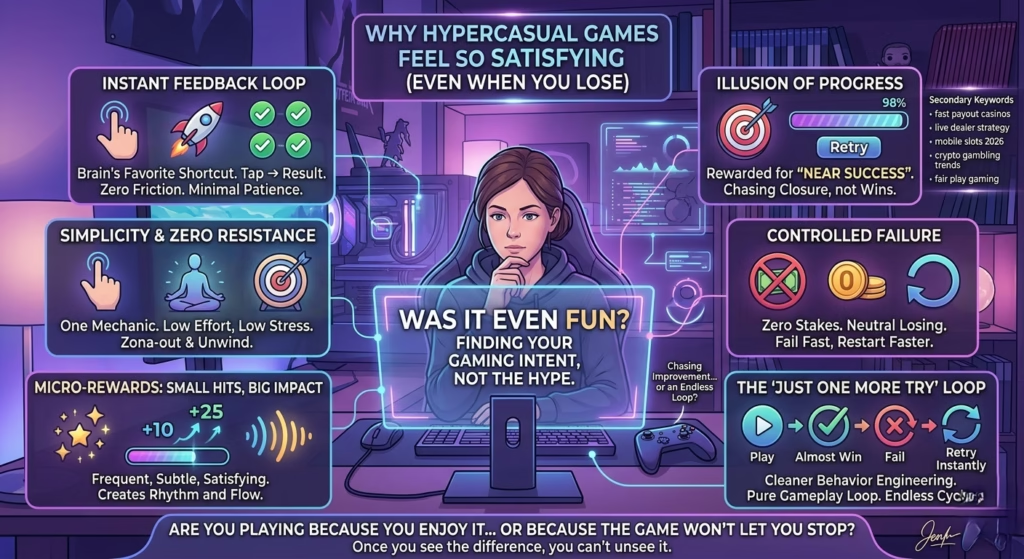
Instant Feedback: Your Brain’s Favorite Shortcut
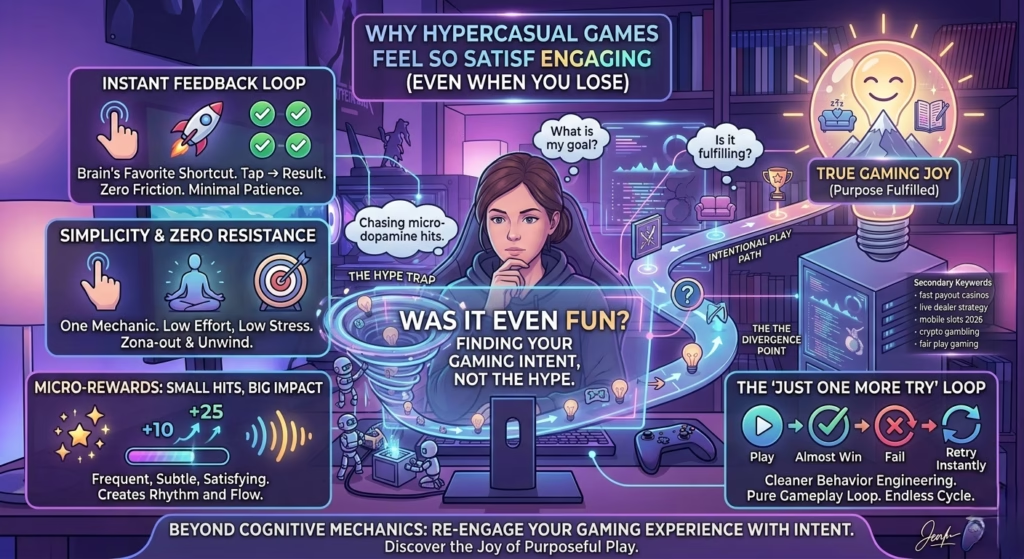
I remember when games used to take time. Tutorials, menus, loading screens… you had to earn the fun.
Now? You tap once and you’re in.
Hypercasual games remove friction. No thinking. No setup. Just action.
- Tap → Result
- Swipe → Reaction
- Fail → Retry
That loop is tight. Like, dangerously tight.
Vibe Check
Fast, responsive, zero patience required.
Your brain loves immediate feedback. It’s the same reason scrolling social media feels addictive. There’s always something happening.
Even losing feels… active.
Compare that to waiting for results in something like fast payout casinos. There’s a delay, a process. Here? It’s instant. You lose, and within a second, you’re already trying again.
No pause. No reflection.
The Illusion of Progress (Even When You’re Failing)
I’ve noticed this trick in almost every hypercasual game.
You lose… but it doesn’t feel like a loss.
Why?
Because the game subtly tells you:
“You were close.”
- Almost beat your high score
- Almost cleared the level
- Almost nailed the timing
That “almost” is powerful.
Hot Take
Hypercasual games don’t reward success—they reward near success.
Actually, scratch that—it’s more like they manufacture near success.
And it works better than actual winning.
Because when you win, the loop ends. When you almost win, the loop continues.
Pro Tip
If a game constantly makes you feel “just one more try,” you’re not chasing a win—you’re chasing closure.
And closure is way harder to get.
Simplicity = Zero Mental Resistance
Let’s be honest.
Most of us don’t want to think when we play these games.
I remember trying a complex strategy game after a long day… and quitting in 5 minutes. Too much effort.
Hypercasual games understand that.
- One mechanic
- One goal
- One input
That’s it.
Vibe Check
Low effort, low stress, oddly calming.
It’s the opposite of something like a live dealer strategy session, where every move matters and you actually have to pay attention.
Here, you can zone out. Play while watching something else. Play while waiting in line. Play without commitment.
And that’s the appeal.
Controlled Failure (Why Losing Doesn’t Hurt Here)
This is where things get interesting.
In most games—or gambling in general—losing feels bad. Obviously.
But in hypercasual games?
Losing feels… neutral.
Why?
Because the stakes are basically zero.
No money on the line. No long-term consequences. Just a quick reset.
Vibe Check
Fail fast. Restart faster.
I’ve noticed this is similar to how some players approach trends like crypto gambling trends, where the speed and volatility reduce the emotional weight of individual losses.
But here’s the difference:
Hypercasual games remove real risk entirely.
That’s why losing doesn’t trigger the same reaction. It’s not failure—it’s part of the loop.
Hot Take
Losing in hypercasual games isn’t a penalty—it’s a feature.
Think about it. If you didn’t lose, the game would end too quickly. No replay value. No engagement.
Failure keeps you playing.
Where It Crosses the Line (Yeah, It Happens)
Alright, let’s not pretend this is all harmless fun.
I’ve noticed sessions that were supposed to be “5 minutes” turning into 30… or more.
Time disappears.
And that’s where it gets tricky.
Because even without money involved, the behavior pattern is similar to gambling.
- Chasing improvement
- Ignoring time
- Repeating loops
Vibe Check
Fun… until it’s not.
This is why understanding your own limits matters.
Not in a preachy way. Just in a real way.
Pro Tip
Set a soft boundary before you start. Not a strict rule—just awareness.
If you lose track of time, the game is doing exactly what it was designed to do.
Why We Keep Coming Back (Even Knowing All This)
Here’s the weird part.
Even when you know all this… you still play.
Why?
Because hypercasual games aren’t about winning.
They’re about feeling engaged without commitment.
No pressure. No stakes. No long-term thinking.
Just moment-to-moment interaction.
I remember thinking, “Why am I even playing this?” mid-session.
And then immediately hitting retry.
That’s the loop.
That’s the design.
Final Thought: It’s Not About Winning—It’s About Frictionless Fun
So yeah—why hypercasual games feel so satisfying even when you lose comes down to one thing:
They remove everything that gets in the way of playing.
No barriers. No pressure. No consequences.
Just action.
And in a world where everything else feels complicated, that simplicity hits different.
But here’s the real question you should ask yourself:
Are you playing because you enjoy it…
or because the game won’t let you stop?
There’s a difference.
And once you see it, you can’t really unsee it.