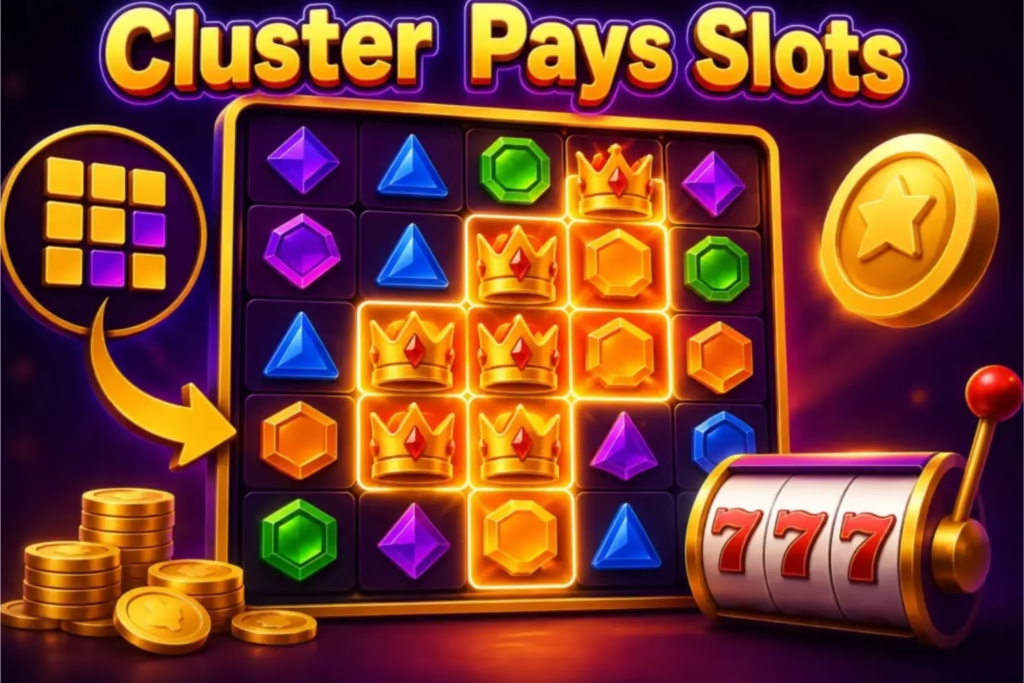
Cluster pay slots are slot games where symbols win by connecting in groups on a grid, rather than landing on a fixed payline. This proximity-based mechanic gives the games a faster, more modern feel than classic reel slots, and it is one reason they have become so popular with players who enjoy dynamic gameplay.
Understanding Cluster Pays: How It Works
Cluster pays replace the traditional “line” structure with a grid. Instead of matching symbols across a pre-set payline, you win when a group of matching symbols touches horizontally or vertically. Diagonal connections usually do not count unless the game rules say otherwise.
Most cluster slots use larger layouts such as 5×5, 6×6, or 7×7 grids. That design gives the game more open space for symbols to land and combine, which creates a different rhythm from a standard 5-reel, 20-payline slot.
If you want to keep learning about slot structures more broadly, it can also help to compare cluster games with **standard payline slots** and **ways-to-win slots**. Each model pays in a different way, and each creates a different player experience.
Cluster Pays vs. Traditional Paylines: A Quick Comparison
| Feature | Traditional Payline Slots | Cluster Pay Slots |
|---|---|---|
| Winning Condition | Matching symbols must land on a fixed payline pattern | Matching symbols must connect in a touching group |
| Grid Structure | Usually 3 reels or 5 reels with set paylines | Usually a larger square or rectangular grid, such as 6×6 or 7×7 |
| Payout Logic | Wins depend on symbol combinations across predefined lines | Wins depend on the size of the connected cluster |
| Pacing | Usually more familiar and steady | Often faster, more visual, and more chain-reaction driven |
Important safety note: both formats are governed by RNG, or random number generation. Neither cluster pays nor paylines gives you a built-in better chance of winning. The difference is in how the game displays and awards wins, not in any “lucky” pattern.
What is a Winning Cluster?
A winning cluster is a group of matching symbols that connects through touching sides. In many games, you need five or more matching symbols to form a win, but the exact minimum can vary by title. Some games may pay from four, while others require a larger group.
Imagine a screen filled with symbols. If enough matching ones land next to each other like tiles in a puzzle, the game counts them as one cluster. That cluster is then evaluated for a payout according to the paytable.
The key idea is adjacency. A symbol does not need to appear in a straight line. It only needs to touch the other matching symbols in the group, usually up, down, left, or right. That is why cluster slots can feel less rigid than traditional reel games.
The Role of Cascading Reels and Modifiers
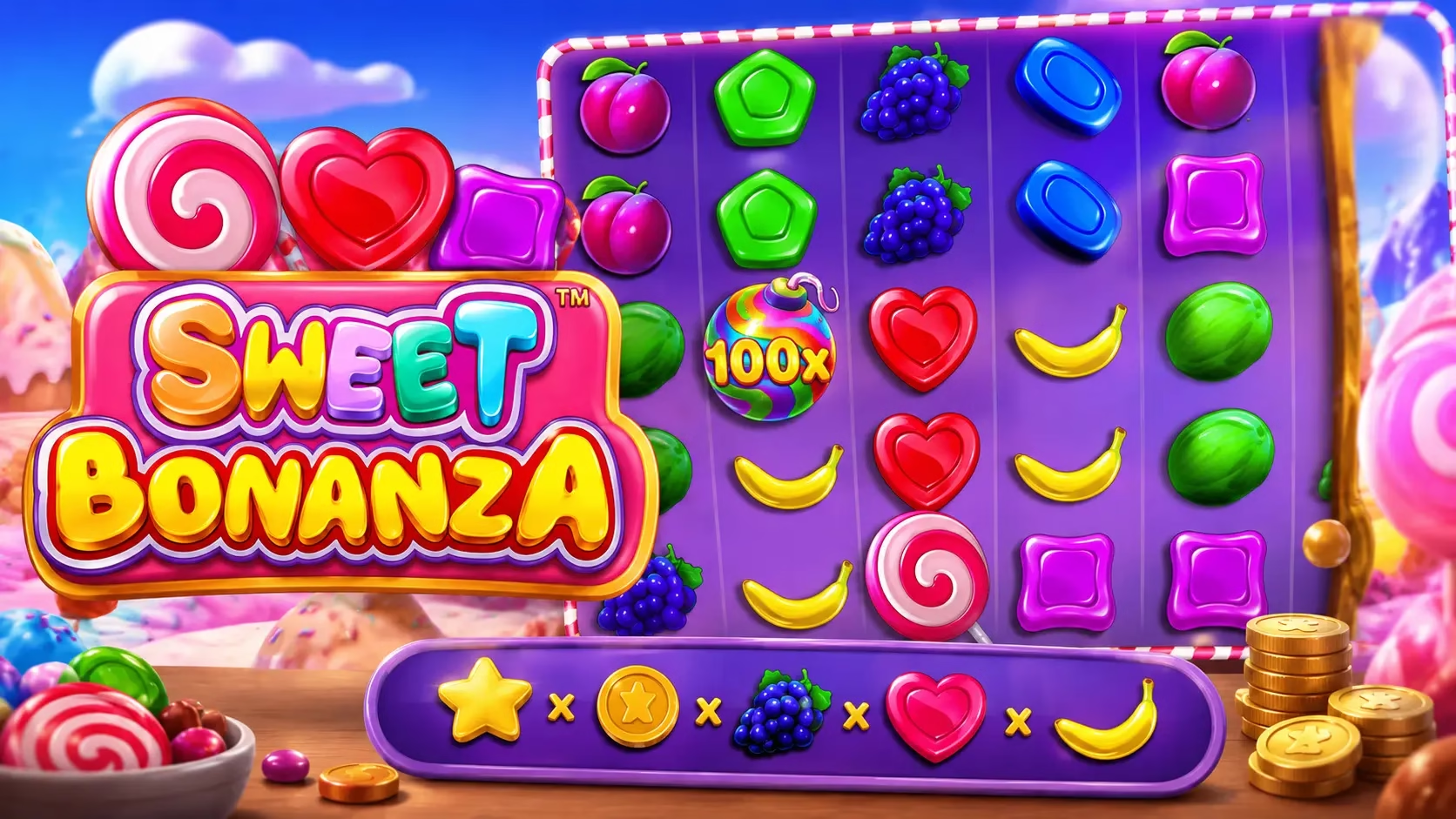
Many cluster pay slots use cascading or tumbling reels, sometimes called Avalanche mechanics. When a winning cluster appears, those symbols disappear from the grid. New symbols then fall into the empty spaces, which can create another win without you having to spin again.
This is one of the main reasons cluster games feel energetic. A single spin can lead to several consecutive wins if the new symbols keep forming clusters. That chain reaction is also why these games often feel more volatile than standard slots.
Cluster slots may also include extra features such as:
- Multipliers that increase after each cascade
- Mega symbols that take up multiple spaces on the grid
- Wild symbols that help complete clusters
- Expanding features that enlarge the grid during bonus rounds
These features are designed to make the screen feel active and unpredictable. They do not remove randomness; they just give the game more ways to present results and build tension between spins.
Why Players Choose Cluster Slots
Players often choose cluster slots because they feel lively and interactive. The screen usually changes more dramatically than in a classic slot, especially when several symbols vanish at once and new ones drop into place.
That visual style can make even smaller wins feel more engaging. Many players also enjoy the chance of trigger chains, where one cluster leads to another and another. That structure creates a sense of momentum that is different from a simple line payout.
From a game-design point of view, cluster mechanics also give studios more room to build variety. Developers can use bigger grids, changing symbol sizes, and special modifiers without being locked into a traditional reel layout.
The result is a game type that often feels faster and more modern, with more movement on screen and more frequent small results. At the same time, bigger win potential is usually balanced by higher volatility, so long dry spells can still happen.
Pros and Cons
Like any slot format, cluster games have strengths and trade-offs. Understanding both helps set realistic expectations before you play.
- Pros: chain reactions can create exciting sessions, the visuals are easy to follow once you learn the format, and the gameplay often feels more dynamic than classic slots.
- Pros: bonus features like multipliers and tumbling reels can add variety and bigger win potential during the right sequence of spins.
- Cons: the rules can feel unfamiliar at first if you are used to paylines, and some games have higher volatility, which means results may swing sharply.
- Cons: the screen effects can make the game look “close” to a win even when the payout is modest, so beginners should always check the paytable carefully.
As with all casino games, there is financial risk involved. A game that looks exciting can still produce losing sessions, and no layout can change the basic randomness of the outcome.
Responsible Play and Slot Mechanics
Cluster mechanics are a design choice, not a winning system. The layout may change how the game feels, but it does not make the slot fairer, easier, or more predictable than any other RNG-based game.
Every spin is determined by the random number generator built into the game. That means past results do not influence future results, and there is no reliable way to predict when a cluster will land or when a cascade will continue.
It is also important to separate visual excitement from real value. A long tumbling sequence can feel impressive, but the game’s long-term return is still governed by its RTP, volatility, and rules. The grid shape does not override those core math settings.
Before playing with real money, check the basics:
- Whether the operator is licensed in your region
- Whether you meet the legal age requirement
- The game’s RTP, volatility, and bonus rules
- Any wagering terms if you are using a promotion
- The provider’s official game information for exact mechanics
For accurate technical details, it is best to check the official provider pages for each game. Studios such as NetEnt and Play’n GO often list the exact grid size, cluster rules, bonus features, and RTP for each title. Those details can change by version or market, so the official info should always be your first reference.
 How to Find and Play Cluster Slots
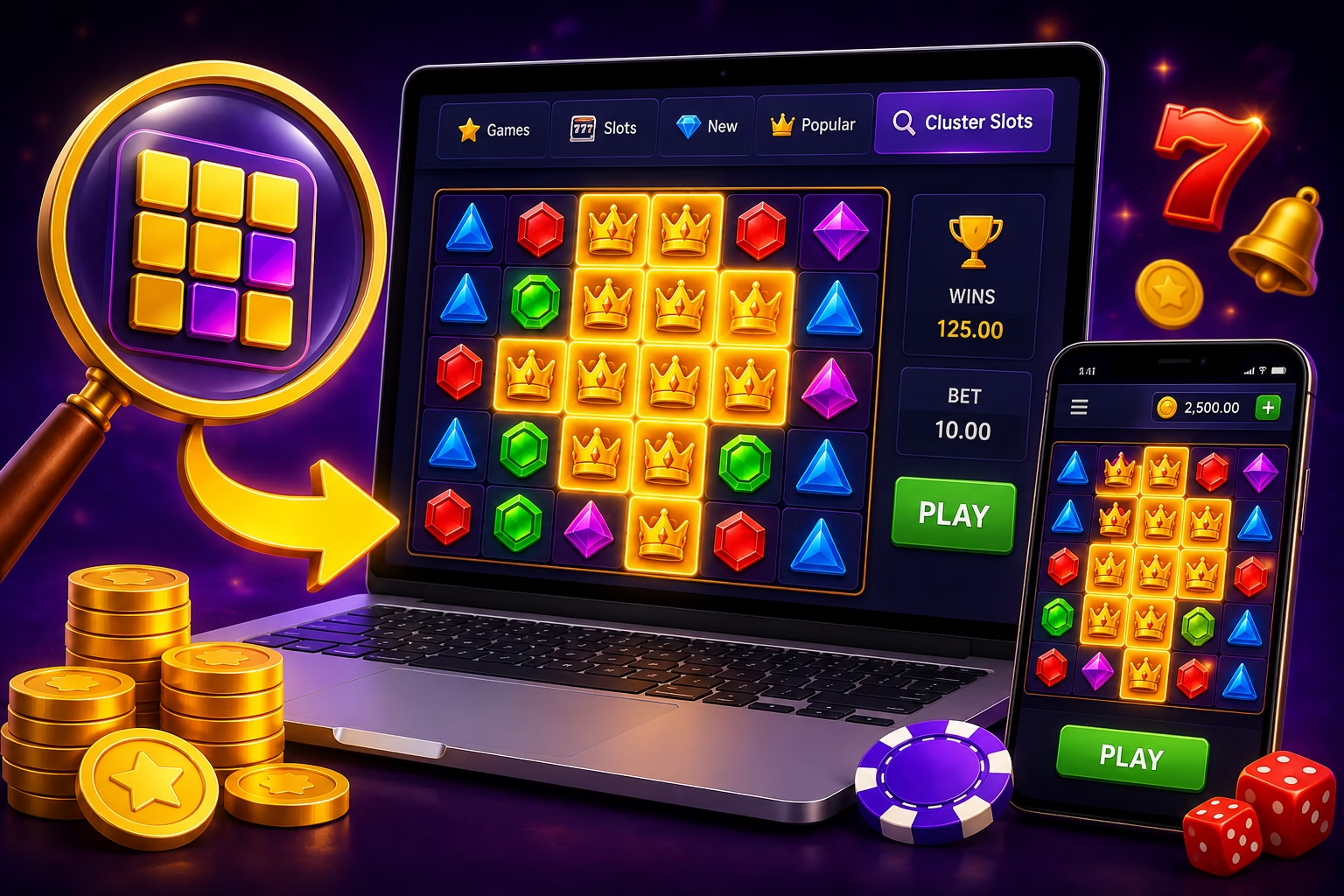
You can usually find cluster slots in casino lobbies by browsing the slot category list or by searching provider names known for this style of game. Some lobbies label them clearly, while others place them under “megaways,” “cascading,” or “video slots,” so the easiest clue is often the paytable itself.
Before you wager real money, open the game’s Info or Paytable section. Look for the following details:
- The minimum number of matching symbols needed for a cluster
- Whether diagonal connections count or not
- Whether the game uses tumbling or avalanche reels
- Any multipliers, wilds, or special symbols
- The RTP and volatility rating
If you are new to the format, try the demo version first. Free play mode lets you see how clusters, cascades, and modifiers work without risking money. That is a useful way to learn the game rhythm before deciding whether it suits your preferences.
For readers who want more slot basics, our related guide on **how slot RTP works** can help you understand why two games with similar-looking screens can feel very different in practice.
FAQ
Are cluster slots better than normal slots?
Neither type is objectively better. Cluster slots are a matter of preference. They often feel faster and more visual, while normal slots may feel simpler and more familiar. Your choice should depend on the kind of gameplay you enjoy most.
Can I win more money with cluster pays?
Not necessarily. Long-term return is driven by the game’s RTP and volatility, not by whether it uses clusters or paylines. Cluster games may offer higher peak payout potential in some cases, but they can also have bigger swings.
Do all cluster slots have cascading reels?
Usually, but not always. Many cluster games include tumbling or avalanche mechanics because they fit the format well, but some titles use the cluster layout without a full cascade system.
Is there a specific strategy to get larger clusters?
No. Cluster formation is random. There is no proven method to force larger groups or predict when they will appear. If you play, focus on understanding the rules and managing your budget rather than chasing patterns.
Can I play cluster slots for free?
Yes. Many online casinos and game providers offer demo versions. Free play is a good way to learn how the grid, cluster rules, and bonus features work before risking real money.