Aviator is not a traditional slot. It is a crash game, which means the round starts at 1.00x and keeps rising until it suddenly stops at a bust point. When people ask about aviator odds, they are really asking how the multiplier behaves, how likely a round is to end before a chosen cash-out point, and how much risk they take by waiting longer.
That makes Aviator very different from games where you simply spin and wait. Here, the timing of your cash out changes your exposure, but it does not change the outcome already built into the round. There is no hidden pattern to exploit, and there is no safe way to predict the next crash. Understanding the math behind the game is the real starting point.
What Are Aviator Odds and How Do They Work?
In Aviator, the main number on the screen is the multiplier. It begins at 1.00x and rises in real time. If you cash out before the round ends, your bet is paid at the multiplier shown at that moment. If the plane crashes first, the round ends and the stake is lost.
That is why the word “odds” can be a little misleading here. In sports betting, odds describe the price of an outcome. In a crash game, the more useful idea is the payout curve: how long the multiplier stays alive, how quickly it rises, and how much risk you accept by waiting for a bigger number.
A simple example helps. If you cash out at 1.50x, you need the round to survive long enough to reach that point. If you wait for 10.00x, the round has to survive much longer, which is much less common. Higher targets can pay more, but they also fail more often.
One important experience-based detail: crash games like Aviator give the player some control over volatility through cash-out timing. That does not mean the player controls the result. It only means you choose how much risk to take before the game ends the round for you.
 The Math Behind the Crash: Provably Fair Technology
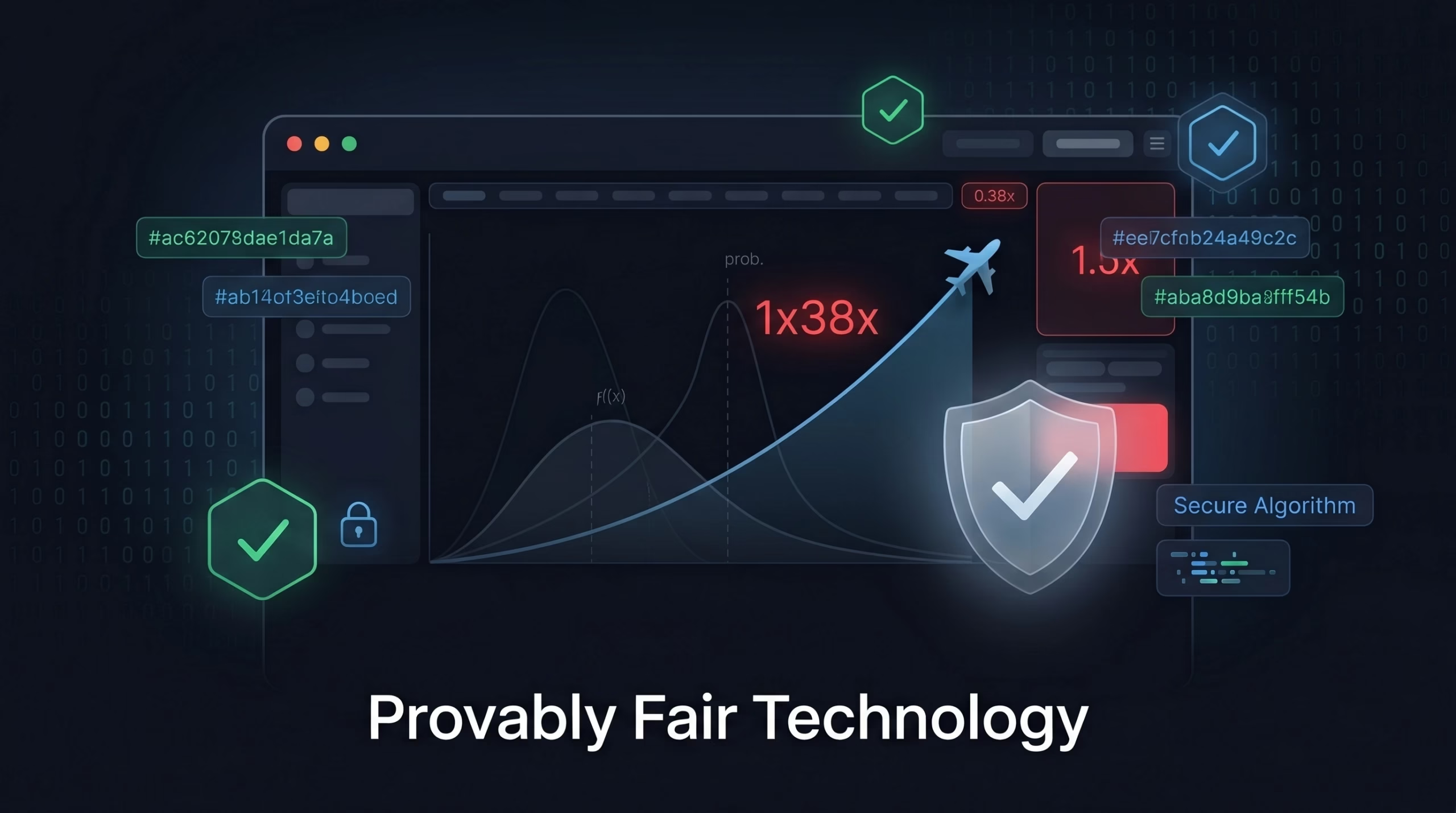
Modern crash games are usually built with Provably Fair systems. This is a transparency method that helps players verify that the outcome was not changed after the round started. In simple terms, the game uses a server seed, a client seed, and often a nonce or round counter to generate the result in a way that can be checked later.
Here is the plain-language version. Before the round begins, the software has already committed to a result. The visible multiplier animation is not being decided by human judgment in real time. The outcome is generated by software, usually through a secure hash-based process and RNG-related logic, then revealed through the game’s fairness tools.
That matters because it removes the idea that a dealer, operator, or player can “feel out” the next result. The machine does not react to the room, your bet size, or the last few rounds. The crash point is determined by the game logic, not by intuition or a visible pattern on the screen.
Provably Fair does not mean you can predict the next round. It means the round can be audited after the fact. If a licensed operator offers the game properly, you should be able to verify the seeds and confirm that the result matches the published algorithm.
For trust and safety, always check that the platform is licensed and that the game’s fairness information is available. Rules, fairness tools, and certification details can vary by operator and jurisdiction, so it is worth reviewing the latest official information before you play.
Understanding Probability and the “Bust” Factor
The most common mistake players make is assuming that recent results affect the next one. They do not. Every round is independent. A long run of low multipliers does not make a high multiplier “due,” and a few big crashes do not make the next round safer.
This is the gambler’s fallacy in action. The game history may look interesting, but it does not create a memory in the algorithm. What matters is the theoretical probability tied to the chosen target multiplier and the built-in house edge.
The table below shows a simplified way to think about risk. It does not predict any specific round. It only shows how the chance of reaching a target typically falls as the target gets higher.
| Target Multiplier | Risk Level | Theoretical Frequency | Payout Potential |
|---|---|---|---|
| 1.20x | Low | More likely to be reached | Small profit |
| 2.00x | Moderate | Less likely than 1.20x | Moderate return |
| 5.00x | High | Much less likely | Large return if hit |
| 10.00x+ | Very high | Rare in comparison | Very large return, but infrequent |
What this table shows is simple: the higher the target, the lower the success rate. That is the core trade-off in crash games. You are not searching for a pattern. You are choosing how much risk you want to accept for a possible payout.
Important: the game’s short-term results can feel streaky, but streaks do not prove a trend. A run of fast busts does not make a win more likely on the next round, and a run of long multipliers does not mean the game is “hot.”
Helpful Interactive Tool or Visual to Add
Use the simple simulator below to visualize how a target multiplier changes the theoretical chance of success. This is for educational purposes based on theoretical game math.
Important: This simulator shows theoretical probability. It cannot predict the outcome of any specific round, and all crash games carry a high risk of total stake loss.
| Crash Game Risk Simulator | Output |
|---|---|
| Target Multiplier: 2.0x | Success Rate: around 49% to 50% Frequency of Bust: around 50% to 51% |
| Target Multiplier: 3.0x | Success Rate: lower than 2.0x Frequency of Bust: higher than 2.0x |
| Target Multiplier: 5.0x | Success Rate: much lower Frequency of Bust: much higher |
The practical takeaway is not that one target is “safe.” The takeaway is that every step upward in multiplier usually comes with a meaningful drop in success rate. A cash-out plan should reflect that reality instead of fighting it.
Why Strategy Cannot Overcome the House Edge
Many crash game myths sound clever, but they do not change the underlying math. Martingale, pattern tracking, streak spotting, and “wait for the next big one” systems all run into the same problem: the house edge is built into the game design.
The house edge is the built-in advantage that keeps the game profitable for the operator over time. It does not mean every round is a loss, and it does not mean every high multiplier is impossible. It means the long-term math favors the house, even if a player sometimes has a strong session.
That is why no betting pattern can turn Aviator into a predictable income source. A system may change how often you bet, how fast you lose a bankroll, or how emotionally comfortable you feel. It cannot remove the built-in edge from the game.
It also helps to remember that volatility is not the same as skill. You can control when to cash out, but you cannot control the crash point. That is why claims about “beating” Aviator usually confuse risk management with prediction.
Managing Your Bankroll in Crash Games
If you choose to play, bankroll management is the only practical discipline that matters. It does not improve the game’s odds, but it can help you avoid making emotional decisions and losing more than you planned.
Start with a session budget. Decide the total amount you are willing to lose before you begin, and treat that number as the cost of entertainment. Do not move money from bills, rent, debt payments, or essential savings into a crash game session.
Next, decide on a fixed stake size. Small, consistent bets are usually easier to control than large swings. In a high-volatility game, oversized bets can wipe out a balance quickly, especially if you try to chase a higher target multiplier.
Auto-cashout can also help enforce discipline. If you know you tend to hesitate, setting a pre-determined exit point may reduce impulsive decisions. Just remember that auto-cashout does not improve the math. It only helps you stick to your plan.
Check the platform’s rules, minimum and maximum bet limits, bonus conditions, withdrawal requirements, age restrictions, and licensing details before playing. If anything is unclear, verify it on the operator’s official site or support pages.
Common Mistakes to Avoid
A lot of losses in crash games come from behavior, not misunderstanding the multiplier. These are the most common mistakes to avoid:
- Chasing losses: Increasing stakes after a bad run usually makes losses worse, not better.
- Waiting for a “sure” high multiplier: Higher targets are possible, but they are less frequent and more volatile.
- Reading meaning into game history: Past rounds do not predict the next one.
- Using borrowed money: If you cannot afford to lose it, do not play with it.
- Assuming a tool or app can forecast the crash: No reliable app can predict a provably fair round.
- Ignoring the license: Always verify that the platform is licensed and that the game is available in your region.
A good rule is to step away as soon as the session stops being entertaining. If you find yourself increasing stakes to recover losses or breaking your own limits, that is a sign to stop.
Aviator odds are best understood as a risk curve, not as a puzzle to solve. The multiplier rises, the bust point eventually arrives, and your chosen cash-out point determines how much risk you are taking. Once you understand that, the game becomes much easier to evaluate honestly.
The most useful mindset is simple: outcomes are software-driven, each round is independent, and no pattern can override the house edge. If you play at all, do it on licensed platforms, use strict limits, and treat bankroll management as a safety tool rather than a winning strategy.
FAQ
Is Aviator a game of skill or luck?
Aviator is mainly a game of luck. You can choose when to cash out, which changes your risk, but you cannot control or skillfully predict the crash point.
Can I predict when the plane will crash?
No. Crash outcomes are generated by software using RNG and Provably Fair mechanics, so you cannot reliably predict any specific round.
What is the best strategy for Aviator?
There is no winning strategy that guarantees profit. The safest practical approach is bankroll management, fixed stakes, and pre-set cash-out limits.
Does past game history help me win?
No. Each round is independent, so past results do not make the next result more likely to win or lose.
Is it possible to lose my bet immediately?
Yes. If the plane crashes at 1.00x or very close to it, your bet can be lost before you have a chance to cash out.