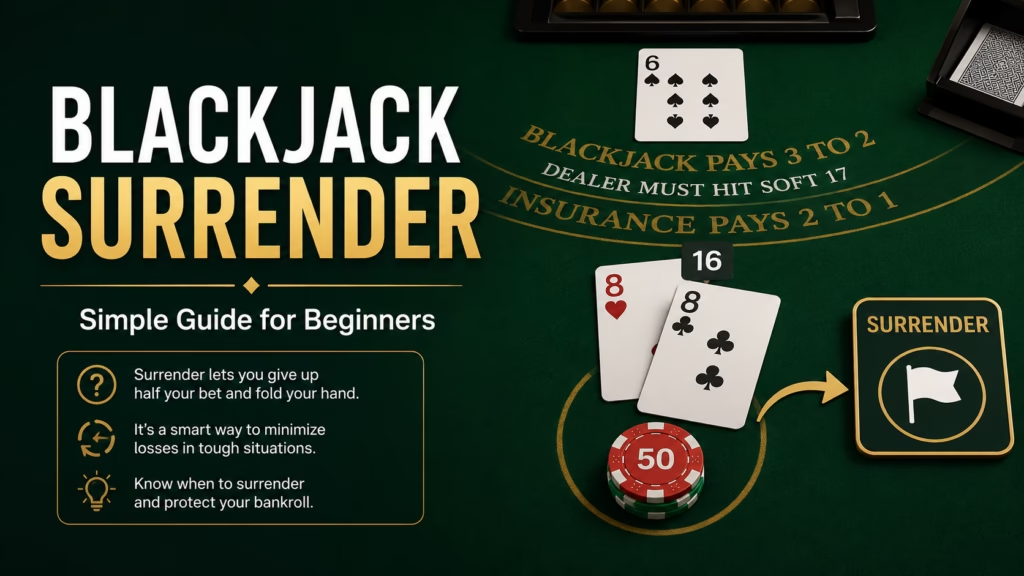
What does surrender mean in blackjack? It means you give up your hand, lose half of your original bet, and keep the other half instead of playing the hand out.
This option is not about trying to win more money. It is a defensive move used to limit losses when your hand is in a weak spot. Because blackjack is a chance-based game, surrender can be a smart bankroll-management tool in the right situations, but it does not remove the house edge or guarantee a better result.
What Does It Mean to Surrender in Blackjack?
 Surrender in blackjack is an optional rule that lets you fold your hand before taking any other action, such as hitting or doubling down. If you choose it, the casino keeps half of your wager and returns the other half to you.
Think of it as a controlled exit. You are saying the hand has such a poor expected value that it is better to accept a smaller loss now than risk losing the full bet. That is why surrender is often described as a professional-level risk-management option rather than a “winning” move.
For example, if you wager $20 and surrender, you lose $10 and get $10 back. You do not play the hand further. You also cannot surrender after you have already hit, doubled, split, or taken another action, because surrender must be your first decision on that hand.
Early vs. Late Surrender: Understanding the Difference
The difference between early and late surrender matters because it changes when you are allowed to use the rule and how much protection it gives you. Many beginners miss this detail, but it can make a real difference to the value of the option.
| Rule Type | When You Surrender | Dealer Checks for Blackjack First? | How Common Is It? |
|---|---|---|---|
| Early Surrender | Before the dealer checks for blackjack | No | Very rare in modern casinos |
| Late Surrender | After the dealer checks for blackjack | Yes | More common version |
What is Early Surrender?
Early surrender allows you to give up your hand before the dealer confirms whether they have blackjack. That means you can sometimes surrender even when the dealer later reveals a natural blackjack. This makes early surrender more favorable to the player, which is one reason it is uncommon today.
Because it gives the player extra flexibility, many casinos do not offer it. If you ever see it listed at a table, treat it as a special rule and read it carefully. The exact wording can vary by casino, jurisdiction, or table type.
What is Late Surrender?
Late surrender is the most familiar version of the rule. The dealer first checks for blackjack when their upcard is an Ace or 10-value card. If the dealer has blackjack, you cannot surrender and you lose your full bet. If the dealer does not have blackjack, you may surrender before making another move.
This is the version most beginners will encounter. It still helps reduce losses in selected hands, but it offers less protection than early surrender because it does not apply against a dealer natural blackjack.
When Should You Surrender?
Surrender is usually considered when your hand is weak and the dealer shows a strong upcard. The idea is not to “save” a winning hand, but to reduce the damage from a hand that is mathematically unlikely to recover.
In basic strategy, surrender decisions are most often tied to hard 15s and hard 16s. A hard hand means there is no Ace counted as 11 in the total. These hands often sit in the danger zone against dealer 9, 10, or Ace upcards.
- Hard 16 vs. dealer 9, 10, or Ace: Common surrender candidate in many rule sets.
- Hard 15 vs. dealer 10: Often a surrender candidate, especially in late surrender games.
- Other weak totals: In some rule variations, surrender may also be recommended in a few other close spots, but those depend on the table rules and deck conditions.
The practical goal is simple: if your expected loss from continuing is worse than giving up half the bet, surrender may be the better choice. This is why experienced players treat surrender as a house-edge reduction tool, not a shortcut to profit.
Helpful Interactive Table: Basic Surrender Guide
The table below shows common basic strategy surrender situations. Use it as a quick reference, but always remember that specific house rules can change the correct decision.
| Player Hand Total | Dealer Upcard | Recommended Action | Why? |
|---|---|---|---|
| Hard 16 | 10 | Surrender | This hand is often too weak to continue against a strong dealer card. |
| Hard 16 | Ace | Surrender | The dealer has a strong chance of making a high total or blackjack. |
| Hard 16 | 9 | Surrender | Basic strategy often prefers cutting losses over playing the hand out. |
| Hard 15 | 10 | Surrender | Continuing usually has poor expected value in this spot. |
| Hard 15 | Ace | Usually Play the Hand | Many rules sets do not recommend surrender here, so check the table rules. |
| Hard 14 or lower | 10, Ace, or 9 | Usually Play the Hand | These totals are generally not standard surrender spots in basic strategy. |
One important note: surrender charts can vary depending on whether the game uses one deck, multiple decks, dealer hits or stands on soft 17, and whether early or late surrender is offered. For the most accurate advice, match the chart to the exact table rules you are playing.
Helpful Interactive Tool or Visual to Add
Surrender Decision Card
Hand to Surrender: Hard 15 vs Dealer 10
Recommended Action: Surrender
Hand to Surrender: Hard 16 vs Dealer 9, 10, or Ace
Recommended Action: Surrender
Hand to Play: Any hand when surrender is not offered or when the table rules do not allow it
Recommended Action: Play the Hand
Safety note: Surrender is a defensive play. Always check if the table allows it before starting your session. Surrender rules vary by casino. This is for educational purposes and does not guarantee results.
Common Mistakes When Surrendering
 One common mistake is thinking surrender means you “lost badly.” That is not the right way to view it. If the hand is a poor one, surrender can be a disciplined way to preserve bankroll and avoid putting the full wager at risk.
Another mistake is surrendering too often out of fear. This is sometimes called panic surrender. Beginners may be tempted to fold any hand that looks uncomfortable, but surrender should only be used in specific situations where basic strategy supports it. If you surrender too many playable hands, you can give up value unnecessarily.
A third mistake is using surrender without checking the table rules. Some casinos do not offer the option at all, and others only allow late surrender. If you assume the rule is available and it is not, you may make the wrong play or lose time at the table.
Finally, some players think surrender is a way to avoid losing altogether. It is not. You still lose half your wager, and that loss is part of the game. The benefit is that you reduce the damage when the hand is especially bad.
Important Things to Remember About Blackjack Rules
Blackjack rules are not identical from one table to another. The availability of surrender, whether it is early or late, and the exact strategy value can change based on the casino, the game variant, and even the table felt or game information screen.
Before you play, check for wording such as “surrender allowed,” “late surrender,” or “early surrender.” If the rules are not obvious, ask the dealer or check the posted table rules. This is especially important if you are trying to follow basic strategy closely.
Also remember the bigger picture: no blackjack move eliminates the house edge completely. Surrender is helpful because it can lower expected losses in certain spots, but it does not create a guaranteed win. Responsible play matters, especially when real money is on the line.
If you are playing online or at a regulated casino, verify the game rules, license, age requirements, and any special conditions before betting. If you feel pressure to chase losses, take a break. Surrender is best used as part of a calm, planned approach, not emotional decision-making.
FAQs
Can I surrender after I hit?
No. Surrender must be your first action on the hand. Once you hit, double, split, or take another action, the surrender option is no longer available.
Is surrender available in all blackjack games?
No. Some blackjack games do not offer surrender at all, and others offer only late surrender. Always check the table rules before you play.
Does surrendering count as a loss?
Yes. You lose half your bet when you surrender. The benefit is that you keep the other half instead of risking the full amount.
Is surrender a good move for beginners?
Yes, if you understand when it applies. Surrender is a useful part of basic strategy because it helps reduce the house edge in certain weak-hand situations.
What happens if the dealer has a blackjack?
In late surrender games, you cannot surrender if the dealer has blackjack after checking for it. You lose your full bet. Early surrender is different, but it is rare in modern casinos.