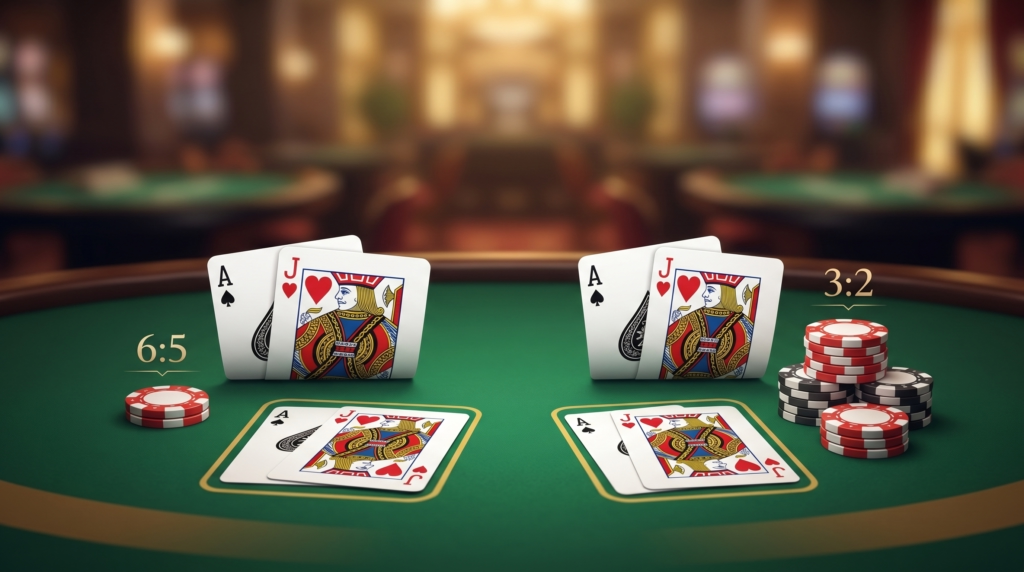
The payout for a blackjack, also called a natural 21, is the single most important rule to check before you sit down. If a table pays 3:2, that is the standard players usually want. If it pays 6:5, the casino takes a much bigger share of each blackjack win, which raises the house edge and reduces your long-term expected return.
That difference may sound small, but it adds up fast. On the surface, 6:5 vs 3:2 blackjack can look like a minor table-rule detail. In practice, it can change how much value you get from every hand and how long your bankroll lasts. If you want the most favorable table, 3:2 is almost always the better choice.
The Core Difference: Breaking Down the Payouts
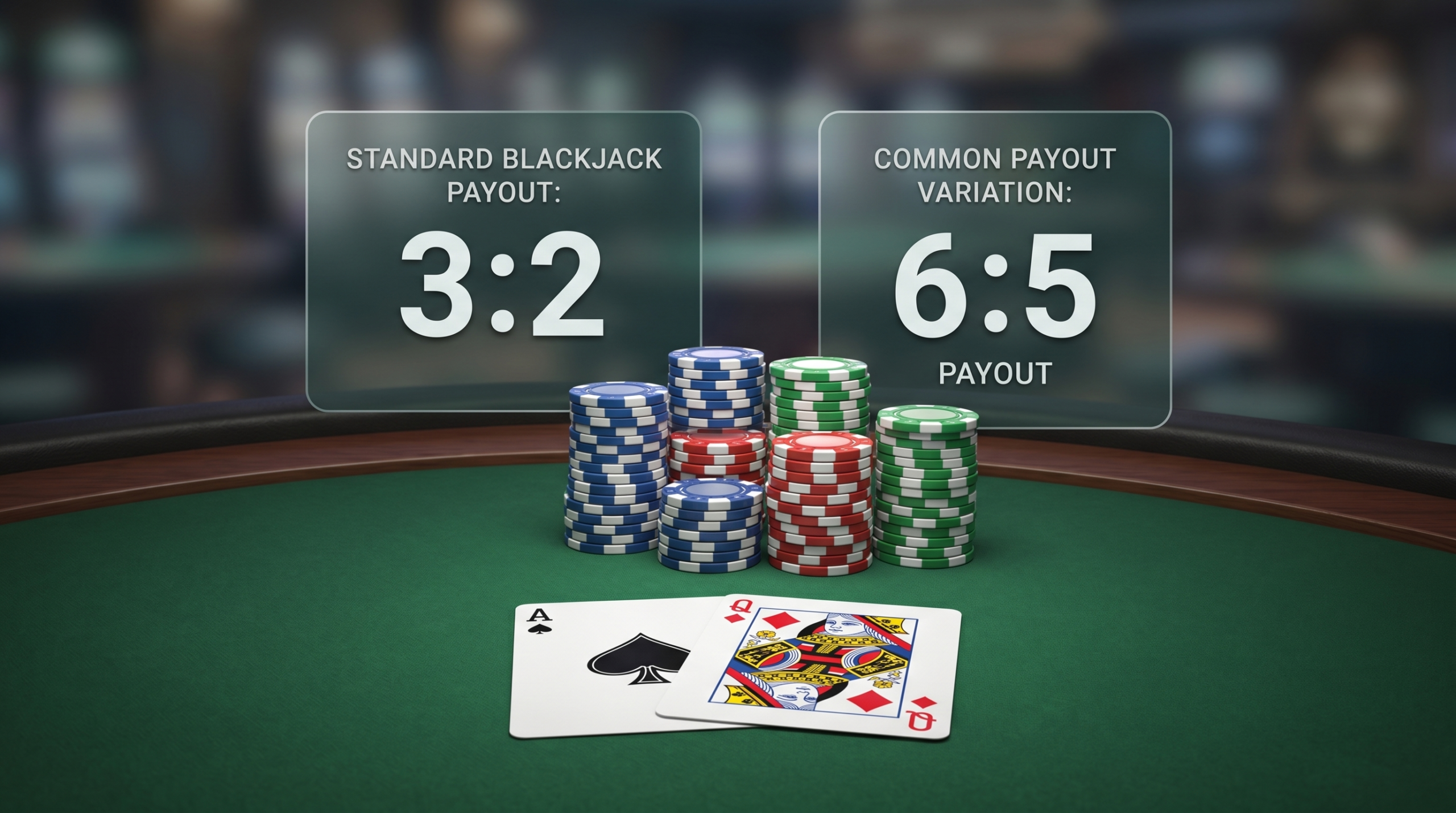 The math is simple once you look at the payout on a natural blackjack. A 3:2 payout means you win 3 units of profit for every 2 units wagered. A 6:5 payout means you win 6 units of profit for every 5 units wagered.
For a $10 bet, a blackjack at a 3:2 table pays $15 in profit. The same $10 bet at a 6:5 table pays only $12 in profit. That $3 gap may not look dramatic on one hand, but across an entire session it becomes a real cost to the player.
Casinos use 6:5 because it quietly increases their advantage without changing the basic feel of the game. Many players focus on the minimum bet or how busy the table looks, but the payout on blackjack is one of the biggest value differences you can find on the felt.
What 3:2 Payouts Mean for Your Bankroll
Three-to-two is the traditional and player-friendlier blackjack payout. It helps keep the house edge lower, which matters because blackjack is a game of long-run expected value. Even if you play well, the game is still designed to favor the casino over time.
For your bankroll, lower house edge usually means slower losses and more hands played for the same amount of money. That gives you more time at the table and a better chance to experience normal swings instead of burning through your stack quickly.
This is why experienced players pay attention to payout rules before anything else. A favorable payout does not guarantee profit, but it improves the quality of the game you are buying with your money.
Why 6:5 Payouts Are Bad for Players
Six-to-five blackjack is often described as a hidden cost, and that phrase fits. The rule reduces the value of your blackjack wins, which increases the house edge by roughly 1.3% to 2% depending on the other table rules. In casino math, that is a major shift.
Why does that matter so much? Because blackjack hands happen constantly, and naturals are one of the most valuable outcomes in the game. When the payout drops from 3:2 to 6:5, the casino extracts more value from one of the player’s best results.
That is why many analysts and seasoned players treat 6:5 as a stealth tax on wins. It does not change the rules in an obvious way like removing a card from the deck would, but it weakens the game in a measurable way.
The practical effect is simple: with 6:5, you need more favorable outcomes just to reach the same result you would get at a 3:2 table. Over time, that difference can be the gap between a longer session and a much faster loss of bankroll.
Payout Comparison Table
| Payout Type | Payout Ratio | $10 Bet Profit | $100 Bet Profit | Impact on House Edge (Approx.) |
|---|---|---|---|---|
| 3:2 | 3 units won for every 2 wagered | $15 | $150 | Lower, player-friendlier baseline |
| 6:5 | 6 units won for every 5 wagered | $12 | $120 | Roughly 1.3% to 2% higher house edge, depending on other rules |
This table shows the immediate difference in blackjack payout. The profit gap becomes much larger as your bet size rises, which is why the payout rule matters so much for regular players and not just high rollers.
Helpful Interactive Tool: The Payout Impact Calculator
You can also think about the difference in a more direct way: how much does the table pay you back when you hit a blackjack? A simple calculator makes the contrast obvious.
Payout Impact Calculator
Enter your bet amount, then compare the blackjack win value at 3:2 versus 6:5.
Bet Amount: [Your input]
Win at 3:2: Bet × 1.5
Win at 6:5: Bet × 1.2
Note: This calculator shows payout variance only; it does not account for the house edge or overall game outcomes.
Example: If you enter $20, a blackjack pays $30 at 3:2 and $24 at 6:5. That $6 difference is the amount you give up on a single natural.
How to Identify 6:5 vs 3:2 blackjack Tables
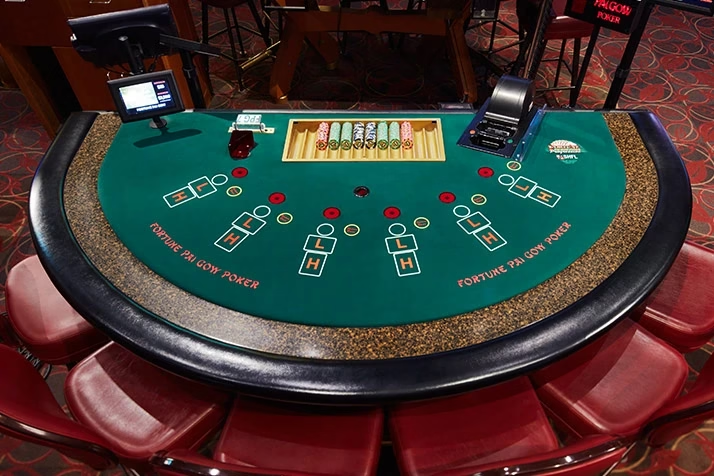
Knowing the math helps, but you also need to spot the table before you play. In live casinos, the payout is often printed right on the felt or listed on a rule placard near the table. This is one of the easiest details to check, yet many players overlook it.
Here is what to look for:
- Check the table felt: The blackjack payout is often printed in small text near the dealer or betting area.
- Check the placard: Rules are usually displayed on a sign at the table, including the payout for a natural.
- Ask the dealer: It is completely normal to ask, “Does this table pay 3:2 for blackjack?”
Online, the process is similar. Open the game rules, help menu, or information panel before placing a bet. Good operators list the payout clearly, but it is still worth checking because the difference affects value right away.
From personal observation in live rooms, the payout is not always obvious from a distance. The felt text may be small, and some tables are crowded enough that players sit down before reading the fine print. Taking ten seconds to verify the rule can save a lot of frustration later.
Other Rules That Influence the Table Choice
The payout on blackjack matters most, but it is not the only rule that affects the table’s value. A better payout can still be diluted by other unfavorable rules, while a decent table may become more attractive if the rest of the rules are friendly.
Three common rules to compare are:
- Dealer hits soft 17: This usually favors the house slightly more than standing on soft 17.
- Double after split: Allowing this gives players more flexibility and can improve the player’s position.
- Resplit aces: If allowed, this can improve player options in specific situations.
These rules work alongside the payout, not instead of it. A 3:2 table is generally better than a 6:5 table, but it still helps to look at the full rule set when you have a choice between two tables.
Common Mistakes When Choosing a Blackjack Table
 One of the most common mistakes is chasing a lower minimum bet and ignoring the payout. A 6:5 table may look attractive because the entry price seems cheaper, but the weaker blackjack payout can erase much of that advantage over time.
This is a classic case of shiny object syndrome. Players see a table with a smaller minimum, sit down quickly, and only realize the payout difference after a few hands. By then, the session has already started on worse terms.
Another mistake is assuming all blackjack is basically the same. It is not. Two tables can both say “blackjack,” yet the payout rules can make one materially better for your bankroll than the other.
A simple way to avoid the trap is to compare the expected value, not just the minimum wager. A slightly higher minimum at a 3:2 table can be better than a lower minimum at a 6:5 table, especially if you plan to play for more than a few hands.
Responsible Play and Managing Expectations
Even at a 3:2 table, the house still has an edge. That means blackjack remains a game of financial risk and chance-based outcomes. No table rule removes the casino advantage completely, and no strategy can guarantee a win.
The healthiest approach is to treat blackjack as entertainment, not as a dependable income source. Set a budget before you play, avoid chasing losses, and stop when the session is no longer fun or affordable.
It also helps to check local age rules, gaming laws, and table rules before you play, especially if you are gambling online or visiting a new jurisdiction. Rules and availability can change, and not every venue offers the same table options.
In general, 3:2 blackjack gives you the better mathematical starting point, while 6:5 blackjack asks you to accept a worse deal for the same game. If your goal is to protect bankroll value, the choice is usually clear.
FAQ
Does 6:5 blackjack ever make sense to play?
Yes, but mostly for entertainment if it is the only table available or if you specifically accept the weaker math for a lower minimum bet or a convenient seat. It is not the optimal choice for player value.
Is it legal for casinos to offer 6:5 payouts?
Yes. A 6:5 payout is a game rule, not an illegal practice. Casinos can offer it as long as they follow local gaming regulations and disclose the rules properly.
Do online casinos clearly label these payouts?
They should. Check the game rules, paytable, help section, or information menu before you start playing. If the payout is not clearly shown, do not assume it is 3:2.
Can I find 3:2 tables with low minimums?
Yes, but they are becoming less common in some major gambling hubs. You may still find them, especially outside peak hours or at tables that are not positioned as low-cost “quick play” games.
Does card counting work on 6:5 tables?
It is generally far less effective, and in many cases virtually impossible to overcome the weaker house edge on 6:5 games. The payout penalty makes the game much less favorable even before other rule adjustments are considered.