If you have ever wondered what does low volatility mean in slots, the simplest answer is this: it usually means a game pays smaller wins more often. That makes the experience feel steadier, with fewer dramatic swings in your bankroll.
For beginners, low volatility can be a comfortable way to play because it often stretches a session and creates a calmer rhythm. But it is not a shortcut to profit, and it does not change a slot’s house edge or guarantee better results. The real value is knowing whether this play style fits your budget, your patience, and your entertainment goals.
Understanding Slot Volatility: The Basics
To understand what does low volatility mean, it helps to first understand how slot volatility works overall.It is about how often a game tends to pay and how large those wins usually are. It does not mean the game is “good” or “bad.” It just describes the style of play the studio designed.
A useful way to think about it is this: volatility is the rhythm of the game. Some slots feel like a drip of small payouts. Others feel like a flood of silence followed by a sudden big hit. Both can be perfectly legitimate slot designs, and both are still controlled by random number generation.
From an experience standpoint, I have seen this difference clearly across many provider styles. Some studios build games that keep the meter moving with frequent small returns, while others create long dry spells to support bigger payout peaks. In both cases, the provider confirms the game’s volatility in the paytable or info section, because it is part of the game’s math and design.
What Does Low Volatility Mean for Your Gameplay?
Low volatility means you are more likely to see frequent, smaller wins rather than long stretches of nothing followed by a huge payout. Your balance may still go down over time, but the movement usually feels less sharp.
For a beginner, that often translates into a more relaxed session. You may get enough small hits to keep spinning longer, which can make the game feel more entertaining if your goal is time-on-device rather than chasing a massive spike.
That said, low volatility does not mean “easy wins.” It simply changes the shape of the experience. You can still lose quickly if your stake is too high for your bankroll, and you can still have a session where the game goes cold for a while.
The “Steady Ride” Experience
Many players like low volatility because it feels steadier and less stressful. Instead of big swings, you often get a sequence of minor dips and small recovery moments. That can make it easier to enjoy the game as entertainment.
This style is often preferred by players who want:
- Longer play sessions on a fixed budget
- Less dramatic bankroll movement
- A calmer, more predictable-feeling pace
- Frequent small feedback from the game
For example, if you have a $100 bankroll and are betting small amounts, a low-volatility slot may keep you in the game longer than a high-volatility title. That does not guarantee anything, but it does tend to smooth out the ride.
Low Volatility vs. RTP: Why They Are Not the Same
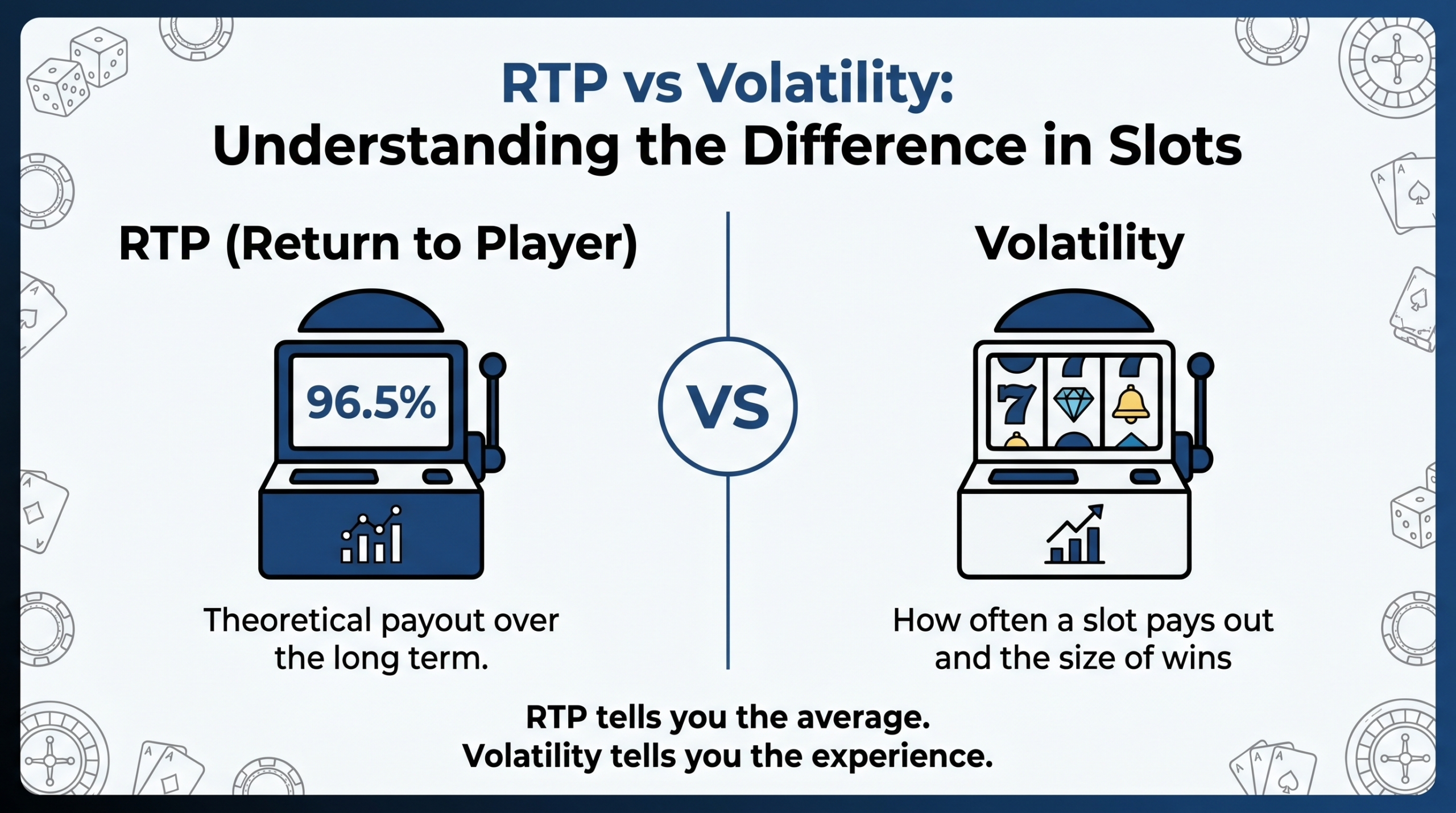
Volatility and RTP are related to slots, but they are not the same thing. This is one of the most common beginner mistakes.
Volatility is about the size and frequency of wins. RTP, or return to player, is the long-term theoretical percentage of stakes a game is designed to return over time. A slot can be low volatility and still have a modest RTP. Another game can be high volatility and still offer a strong RTP.
That means low volatility is not the same as a better payout rate. A game may feel friendlier because of the smaller, more frequent wins, but that does not mean it has a lower house edge or a guaranteed advantage for the player. The casino still has the edge, and outcomes remain chance-based.
Comparing Volatility Levels
Here is a simple way to compare the three common volatility levels. This is a general guide, since exact behavior can vary by game and provider.
| Volatility Level | Win Frequency | Win Size | Best For | Bankroll Impact |
|---|---|---|---|---|
| Low | Frequent | Smaller | Longer, steadier sessions | Usually slower swings, but still losses are possible |
| Medium | Balanced | Moderate | Players who want a mix of excitement and stability | Moderate swings |
| High | Less frequent | Larger | Players chasing bigger hit potential and willing to accept risk | More volatile swings, with longer dry spells possible |
If you are choosing between these types, think about your session goals first. Do you want more playtime and a gentler ride, or are you comfortable with bigger swings in exchange for a chance at larger payouts? That question matters more than a generic label like “good” or “bad.”
Helpful Interactive Tool: The Volatility Spectrum Visual
Use this conceptual visual to understand how a $100 bankroll might feel over around 100 spins when the spin size is kept consistent. This is only a simple illustration. Actual results depend on RNG, game rules, stake size, and long-term RTP, so it does not guarantee any specific outcome.
| Volatility | Session Rhythm | Example Feeling |
|---|---|---|
| Low | Frequent minor dips and gains | A steadier line with small bumps up and down |
| Medium | Balanced movement | Some pauses, some recovery, some noticeable swings |
| High | Long periods of loss with sudden spikes | A rougher line that can stay low before a larger hit appears |
Volatility Spectrum
Low —▮▮▮▮▮ steady rhythm — Medium —▮▮▮▮ irregular rhythm — High
If you prefer a visual summary, imagine a smooth, short wave for low volatility, a more varied wave for medium volatility, and a jagged rollercoaster for high volatility. The key point is pacing, not certainty.
For readers who want to compare bankroll behavior more carefully, a practical approach is to test how long a fixed budget lasts at a small stake size. If you are trying to understand session length, you may also find our casino bankroll management guide useful for setting realistic limits before you spin.
Pros and Cons of Playing Low-Volatility Slots
Low-volatility slots have clear strengths, but they also have trade-offs. Knowing both helps you avoid unrealistic expectations.
Pros:
- Often extends entertainment time on a modest bankroll
- Feels less intense than high-volatility games
- Frequent small wins can make the session feel active
- May suit beginners who want a calmer experience
Cons:
- Usually offers fewer big-win moments
- Can feel repetitive if you prefer bigger spikes
- Still does not protect you from losing the bankroll
- Does not mean the slot is more profitable
The psychology matters here too. Some players enjoy a steady stream of small feedback because it feels like the game is “doing something” more often. Others find that same pattern less exciting because the payoff peaks are smaller. Your preference is personal, and that is completely normal.
How to Choose the Right Volatility for Your Goals
The right volatility level depends on what you want from the session, not on what sounds smartest in theory.
If you have a small bankroll: low volatility is often the practical choice because it may help your balance last longer. That can be useful if your goal is entertainment and you want more spins for your money. Still, you should set a limit before you start and avoid increasing stakes just because the session feels “safe.”
If you are hunting for bigger wins: high volatility may match that goal better, because those games are designed around larger but less frequent payouts. The trade-off is clear: longer dry spells are common, so you need to be comfortable with higher risk and more patience.
If you want a middle ground: medium volatility can offer a balanced experience. It is often the most flexible option for beginners who do not yet know whether they prefer a calmer session or a higher-risk style.
When I evaluate slot mechanics across different studios, the most useful question is always the same: “What kind of session am I trying to have?” If the answer is “stretch my budget and enjoy some small wins,” then low volatility usually makes sense. If the answer is “I am okay with fewer hits if the upside is bigger,” then a higher-volatility game may suit you better.
For a smoother experience, choose your stake size carefully. A low-volatility slot can still burn through a bankroll quickly if each spin is too expensive. Your bet size matters just as much as the volatility label.
Responsible Gambling and Volatility Myths
One of the biggest myths is that low volatility means you will win more money in the long run. That is not true. Low volatility changes the pattern of wins, not the fact that the game is still governed by random outcomes and a built-in house edge.
Another common mistake is confusing “frequent wins” with “profitable play.” A slot can pay small amounts often and still leave you down overall. That is why it is important to treat slots as entertainment, not income.
Here are a few responsible gambling checks to keep in mind:
- Set a budget before you play and stick to it.
- Do not chase losses by raising stakes after a bad run.
- Check the game’s rules, paytable, and info section from the provider or operator.
- Verify the operator is licensed in your jurisdiction and that you meet age and local legal requirements.
- Remember that RNG controls outcomes, so no pattern guarantees the next result.
Also keep in mind that volatility is a game design choice. You cannot switch a slot from low to high volatility during play. If a game offers different features, that does not mean the underlying volatility has changed. It is baked into the math of the title and confirmed by the studio.
If you want to understand a slot better before playing, look for the developer’s official game information. That is the most reliable place to check volatility, RTP, bonus features, and any special rules that could affect your session.
FAQ
Is a low volatility slot a guaranteed win?
No. Low volatility does not guarantee wins. All slots have a house edge, and results are determined by RNG, so you can still lose money.
How do I check a game’s volatility?
Look in the game’s info, paytable, or help section from the developer or provider. Some studios label volatility directly, while others describe it with words like low, medium, or high.
Does low volatility mean a higher RTP?
Not necessarily. Volatility and RTP are separate. A game can be low volatility with average RTP, or high volatility with stronger RTP.
Can I switch the volatility of a slot game?
No. Volatility is built into the game’s design and math. You cannot change it during play.
What is the opposite of low volatility?
The opposite is high volatility. High-volatility slots usually pay less often, but the wins can be larger when they land.
What does low volatility mean in online slots?
It means the slot is designed to give smaller wins more frequently, creating a steadier gameplay experience with less dramatic bankroll swings.