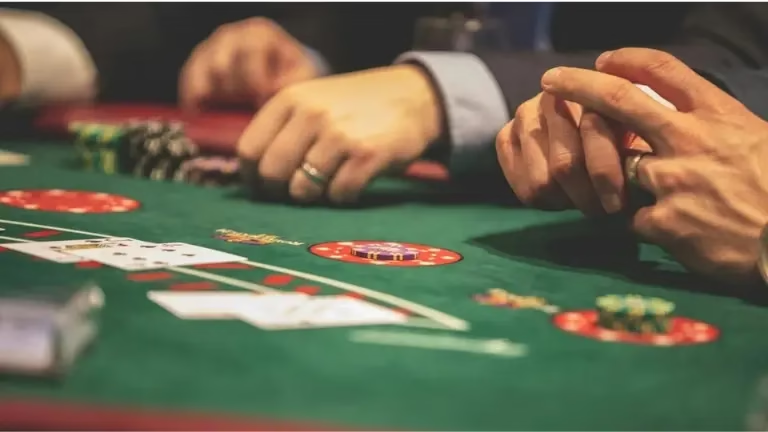
A stiff hand in blackjack is any hard total from 12 through 16. It is called “stiff” because you are stuck in an awkward middle zone: if you hit, you can bust easily; if you stand, you may leave yourself with a hand that is too weak to beat the dealer. That tension is exactly why many beginners ask, what is a stiff in blackjack and what should they do with it?
The short answer is that a stiff hand is one of the hardest spots in the game. The better answer is that your choice depends on the dealer’s upcard, the rules of the table, and the basic strategy math behind the game. If you understand why 12–16 is so tricky, you will make calmer, more consistent decisions.
What Exactly Is a Stiff Hand?
A stiff hand is a blackjack hand totaling 12, 13, 14, 15, or 16. These hands are hard totals, which means they do not contain an ace counted as 11. For example, a hand like 10-6 is a hard 16, and 9-3 is a hard 12.
The reason these totals matter so much is simple: they are not strong enough to feel comfortable, but they are close enough to 21 that one bad hit can ruin the hand. That makes them the most stressful hands for many players, especially in a live casino where the table is moving fast and every decision feels public.
By contrast, pat hands are totals where players often stand, such as 17, 18, 19, 20, and 21. Those hands already have enough value to compete more naturally against the dealer. A stiff hand does not.
Why 12–16 Is the “Danger Zone”
 Hands from 12 to 16 are dangerous because a large share of possible next cards will bust you. The higher your stiff total, the fewer cards you can safely draw. If you hold 16, any card from 6 through 10, plus most face cards, will push you over 21. Even with 15, many hits are still dangerous.
That sounds bad, but the real issue is not only bust risk. Blackjack is not about making the biggest total possible. It is about ending with a hand that beats the dealer. Sometimes a weak-looking total is actually the right hand to stand on because the dealer is in a worse spot.
For beginners, this is the key mindset shift: your goal is not to “avoid busting at all costs.” Your goal is to make the play with the best expected value over time. Standard basic strategy comes from computer simulations and probability analysis, which is why it is the best mathematical baseline for most players.
When you sit at a real table, that can feel uncomfortable. Online play may feel calmer, but the math does not change. Whether you are in a live casino or playing digitally, your stiff hand still faces the same probabilities.
The Role of the Dealer’s Upcard
The dealer’s upcard is the most important clue in the decision to hit or stand on a stiff hand. A stiff total does not have one fixed correct move. What you should do depends on whether the dealer shows a weak card or a strong card.
That is because the dealer must follow rigid rules. In standard blackjack, the dealer usually hits until reaching 17, and often stands on all 17s if the table follows the common “dealer stands on soft 17” rule. The dealer does not make emotional decisions. The dealer follows the rules every time, which is why the upcard matters so much.
When the Dealer Shows a Weak Card (2–6)
When the dealer shows a 2, 3, 4, 5, or 6, the dealer is in a vulnerable position. These are weak upcards because the dealer is more likely to bust while trying to build a final hand. In standard basic strategy, that often means you should stand on certain stiff hands and let the dealer make the mistake.
For example, if you have 12 against a dealer 2 or 3, standing is often correct. You do not need to beat a strong made hand right away. You only need the dealer to fail more often than not. The dealer’s bust chance is higher with these upcards because they must keep drawing cards until they reach the required total.
This is the part many new players miss. Standing on a weak stiff hand does not mean you “like” your hand. It means the dealer’s position is even more fragile. In other words, you sometimes win with a mediocre total because the dealer’s rules work against them.
When the Dealer Shows a Strong Card (7–Ace)
When the dealer shows a 7, 8, 9, 10, or ace, the picture changes. These are strong upcards because the dealer is more likely to end with a hand in the high teens or twenties. Against that kind of pressure, a stiff total often needs help.
That is why basic strategy usually tells you to hit more often against strong dealer upcards. Yes, hitting 15 or 16 can feel scary. But standing and hoping the dealer breaks is usually a losing plan when the dealer already has a strong starting point. You need a chance to improve your total.
The emotional trap here is fear. Many players stand because they do not want to bust. The problem is that a safe-looking stand can still lose almost every time if the dealer ends with 18, 19, 20, or 21. Basic strategy accepts the risk of busting because, over time, it is usually the better trade-off.
Helpful Interactive Tool or Visual to Add
Use this simple Stiff Hand Decision Visual as a quick reference. It is based on standard basic strategy and is meant for common blackjack rules, including the usual setup where the dealer stands on soft 17. Always check the specific house rules at your table, because small rule changes can slightly affect the right play.
| Your Hand | Dealer Upcard 2–6 | Dealer Upcard 7–Ace |
|---|---|---|
| 12 | Stand | Hit |
| 13 | Stand | Hit |
| 14 | Stand | Hit |
| 15 | Stand | Hit |
| 16 | Stand | Hit |
Safety note: This chart assumes standard blackjack rules. House rules can vary, including whether the dealer hits or stands on soft 17, so verify the table before you play.
Why You Should Never Bet Based on “Gut Feelings”
Many beginners try to guess the next card based on what has already appeared. They think, “There have been a lot of low cards, so a 10 must be coming,” or “I haven’t seen a face card in a while, so I should stand.” That is an emotional reaction, not a sound strategy.
In standard blackjack, each hand is independent unless you are using a strategy that changes based on the remaining deck composition, and that is far beyond what most beginners need to worry about. For ordinary play, the fact that previous hands felt “cold” or “hot” does not change the basic math of your current stiff hand.
Gut feeling also creates a dangerous habit: it makes players chase patterns that do not really help them. If you want reliable decision-making, use basic strategy as your baseline, then adjust only when you fully understand the table rules and the game conditions.
Common Mistakes When Playing a Stiff Hand
One of the biggest mistakes is mirroring the dealer. Some players think, “The dealer has to hit too, so I’ll just stand and hope they bust.” That logic can be partly true when the dealer shows a weak card, but it is not a universal rule. Against a strong dealer upcard, standing on a stiff hand is often too passive.
Another common mistake is treating a stiff hand as if it were a “nearly made” hand. A total of 15 or 16 feels close to something useful, but in blackjack that feeling can be misleading. A hand can look decent and still be mathematically weak against the dealer’s likely finish.
Players also underestimate the house edge. Blackjack is not a game where every decision can produce a win if you just play carefully enough. Even good choices still lose sometimes. Basic strategy simply improves your long-term odds compared with random decisions.
In a live environment, emotion can make these mistakes worse. The pressure of other players, chips moving, and a dealer waiting for your decision can push you into impulse plays. Online simulation removes some of that stress, but it can also tempt players to click quickly without thinking. In both settings, a calm basic strategy decision is better than a rushed guess.
Responsible Gambling and the Reality of Blackjack
 Even if you use perfect basic strategy, blackjack still involves risk and chance. No strategy removes the house edge entirely, and no hand guarantees a win. Standard strategy can reduce the edge and make your decisions more efficient, but it cannot change the fact that the game is random.
That is why responsible play matters. Set a budget before you play, do not chase losses, and stop if gambling stops being fun. If you are playing online or in a casino, make sure the operator is properly licensed in your jurisdiction and that you understand the table rules before you sit down. Local age limits, legal restrictions, and game variations can also affect what is available to you.
Basic strategy is the best starting point for most players because it is built on probability, not superstition. Still, it is a guide, not a promise. The goal is better decisions, not guaranteed profit.
FAQ
Is 16 the worst hand in blackjack?
Yes. A hard 16 is usually the weakest stiff hand because it is high enough to bust easily, but still often too low to compete well against the dealer.
Should I always hit 12 against a dealer’s 2?
No. Standard basic strategy usually says to stand on 12 against a dealer 2 in most common rule sets.
What is the difference between a “soft” and “hard” hand?
A soft hand includes an ace counted as 11, so it can change value without busting right away. A hard hand has no flexible ace, so every hit carries the full bust risk.
Can I count cards to help with stiff hands?
Card counting is not practical for most beginners, and it is often not useful in many online games that reshuffle frequently. For most players, basic strategy is the better place to start.
If I follow the chart, will I stop losing?
No. The chart can reduce the house edge and improve your decisions, but it does not guarantee wins. Blackjack outcomes still depend on chance.